

If you want the short answer: prebiotics feed gut microbes, probiotics add live microbes, and synbiotics do both in one formula.
That one difference changes what you should buy, how you should use it, and what to look for on the label. The article also points out a few numbers worth knowing: most Americans get only about 15 grams of fiber a day, while many sources suggest 25–35 grams, and at least 5 grams of prebiotic fiber may help support gut bacteria.
Before I buy any gut supplement, I’d keep these points in mind:
- Prebiotics are fibers like inulin, FOS, GOS, and resistant starch
- Probiotics need the exact strain name and a stated CFU count
- Synbiotics should pair live microbes with a matching fiber, not just toss both into one product (you can use a synbiotic dosage calculator to find your ideal balance)
- More fiber or more CFUs do not always mean a better fit
- Gas and bloating are common when starting prebiotic fiber, so a slow ramp-up often helps
- People who are pregnant, immunocompromised, or dealing with severe GI issues should talk with a clinician first
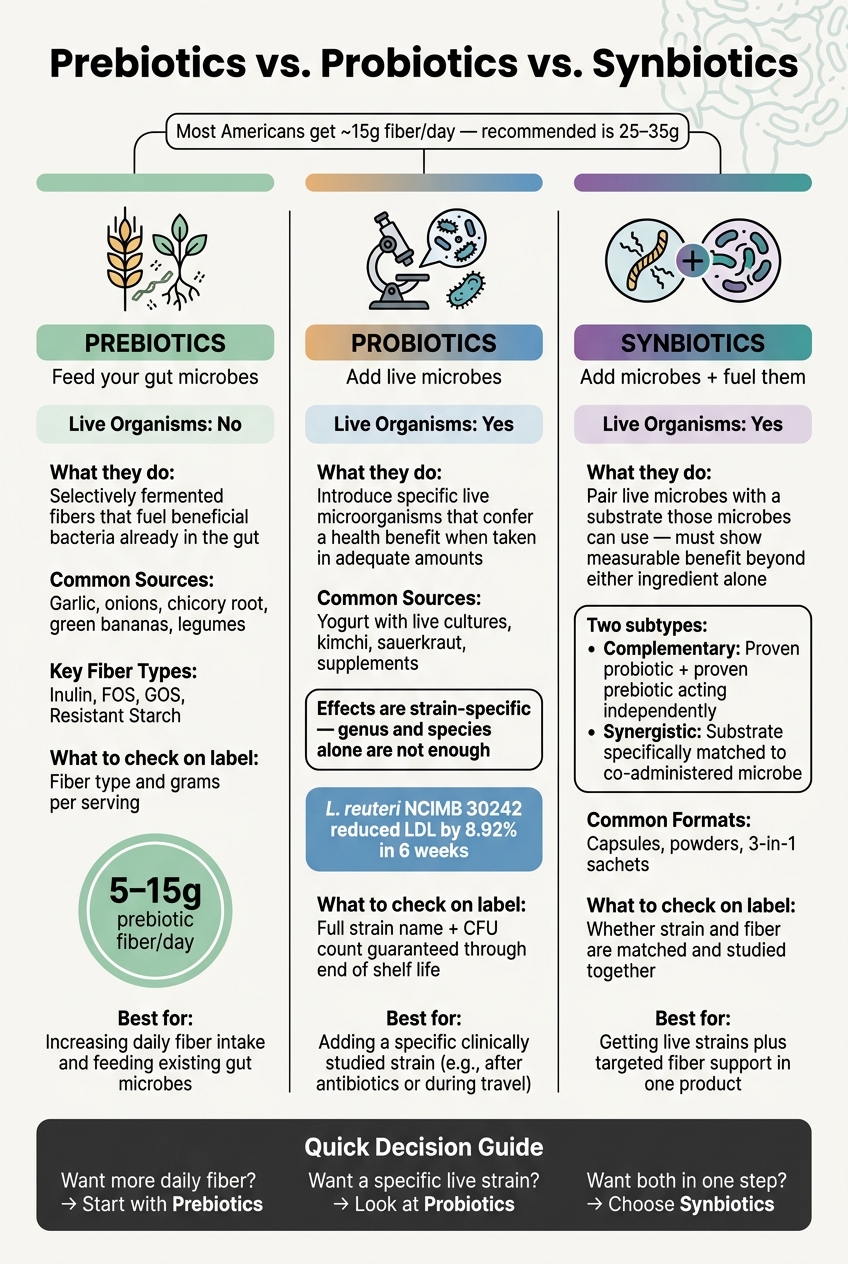
Prebiotics vs Probiotics vs Synbiotics: Key Differences at a Glance
What Are Synbiotics? | GutDr Mini-Explainer
sbb-itb-1bbfe7f
Quick Comparison
| Type | What it does | Live microbes | Common sources | What I’d check first |
|---|---|---|---|---|
| Prebiotics | Feed microbes already in the gut | No | Garlic, onions, chicory root, green bananas, legumes | Fiber type and grams per serving |
| Probiotics | Add live microbes | Yes | Yogurt with live cultures, kimchi, sauerkraut, supplements | Full strain name and CFU through shelf life |
| Synbiotics | Add live microbes plus the fiber that feeds them | Yes | Some powders, capsules, and combo supplements | Whether the strain and fiber are matched and studied together |
Bottom line: if your goal is more daily fiber, start with prebiotics. If your goal is a specific live strain, look at finding your ideal probiotic strain. If you want both in one step, synbiotics may fit better. You might also consider postbiotics for additional support. Not sure where you stand? Use a microbiome balance checker to assess your current gut health and see if you need a microbiome reset.
What Are Prebiotics?
A prebiotic is a selectively fermented, non-digestible fiber that helps gut microbes. That’s the key difference between prebiotics and probiotics.
How Prebiotic Fibers Feed Beneficial Bacteria
Prebiotics feed the microbes already living in your gut. They don’t add new ones. These fibers move through the stomach and small intestine without being digested, then reach the colon intact. There, resident bacteria ferment them. That process produces short-chain fatty acids, or SCFAs, mainly butyrate, acetate, and propionate. Beyond the gut, these short-chain fatty acids also impact brain health and mood. These compounds help support colon cells, metabolism, and liver processing [6].
SCFAs also lower colonic pH, which may help the body absorb more calcium and iron [4]. They also support the tight junctions between gut cells, which helps keep harmful substances from leaking into the bloodstream [8].
That said, more isn’t always better. Higher doses can lead to gas and bloating, especially for people with sensitive digestion. You can take a microbiome balance quiz to see if your gut health is on track. Inulin and FOS are more likely to set off symptoms, while GOS and partially hydrolyzed guar gum are often easier to handle [4][6].
Common Food and Supplement Sources of Prebiotics
Most Americans don’t get enough fiber to properly feed their gut microbes. The average Western diet provides about 15 grams of fiber per day, while research points to a target of 25–35 grams [6]. Researchers also suggest getting at least 5 grams of prebiotics each day [1].
Because prebiotics are selectively fermented, the best sources tend to be certain fibers, including inulin, FOS, GOS, and resistant starch.
| Prebiotic Type | Common U.S. Food Sources | Primary Benefit |
|---|---|---|
| Inulin | Chicory root, Jerusalem artichoke, garlic, asparagus | Selectively feeds Bifidobacterium; supports SCFA production |
| FOS | Bananas, onions, garlic, leeks | Rapidly fermented; stimulates beneficial bacteria growth |
| GOS | Dairy-derived (from lactose) | Increases Bifidobacterium and Lactobacillus; often easier to tolerate |
| Resistant Starch | Cooked-and-cooled potatoes, green bananas, legumes | Main precursor for butyrate production |
If you’re shopping for a supplement, check the label for the exact ingredient names: inulin, fructooligosaccharides (FOS), galactooligosaccharides (GOS), or partially hydrolyzed guar gum [6][4].
If you’re just starting out with prebiotic supplements, a slow ramp-up usually goes better. Start with 3–5 grams per day, then work up to 10–15 grams over 2–3 weeks, and drink plenty of water [6][7].
Probiotics work in a different way: they add live microbes instead of feeding the ones already there.
What Are Probiotics?
Probiotics are live microorganisms which when administered in adequate amounts confer a health benefit on the host [9][5].
That definition is tighter than it looks. For something to count as a probiotic, it has to be alive, taken in an effective amount, and shown to support immune health and overall well-being. And there’s another layer to it: what makes a probiotic work often comes down to the strain, the dose, and the delivery format.
Fermented foods can contain live cultures, but that doesn’t automatically make them probiotics. They only meet that standard when the strains and dose are documented to provide a benefit [1][9].
What Makes a Probiotic Work
Probiotic effects are strain-specific. Genus and species alone aren’t enough [1]. So if a label lists only the genus and species, without a strain code, you’re not getting the full picture.
For example, Lactobacillus reuteri NCIMB 30242 has been shown to reduce LDL cholesterol by 8.92% and total cholesterol by 4.81% over six weeks. That result is linked to that exact strain, not to the species as a whole [5].
Dose matters too, but not in the way many people think. More isn’t always better. As Kristina Campbell of the Canadian Digestive Health Foundation notes, a higher amount does not always mean a better effect [1].
Where Probiotics Come From and How They Are Used
Probiotics are often found in fermented foods and dietary supplements. Supplements have one big edge: they can give you a specific, measured dose of a clinically studied strain, which fermented foods usually can’t do [1][9].
If you’re shopping for a supplement in the U.S., check the label for CFU (Colony Forming Units). Also make sure the CFU count is guaranteed through the end of shelf life, not just at the time of manufacture [9].
Use probiotics in a steady way for the strain and goal you’re targeting. Most don’t stay in the gut for the long haul [1][2]. That’s why they tend to work best as part of a gut recovery routine after antibiotics, or when paired with a prebiotic substrate in a synbiotic.
What Are Synbiotics?
Synbiotics bring the two ideas together: feeding microbes and adding microbes.
A synbiotic pairs live microbes with a substrate those microbes can use to benefit the host [10]. Put simply, the combo has to show a measurable benefit. Just putting both ingredients in the same capsule doesn't count - the mix needs human clinical evidence [2].
This can matter because probiotics enter a gut that's already busy and crowded. When you give the incoming microbe a substrate it can use, the synbiotic helps it settle in more easily. At the same time, the prebiotic part also supports microbes already living in the gut [2][11].
Complementary vs. Synergistic Synbiotics: What Is the Difference?
The main issue is simple: do the ingredients just sit side by side, or do they work together in a direct way?
The International Scientific Association for Probiotics and Prebiotics (ISAPP) recognizes two types: complementary and synergistic synbiotics [10].
| Feature | Complementary Synbiotic | Synergistic Synbiotic |
|---|---|---|
| Definition | A proven probiotic and a proven prebiotic that act independently [10][11] | A combination where the substrate specifically supports the co-administered microbe [10][11] |
| Design Goal | Deliver two independent health benefits in one product [10] | Help the included strain survive, stick around, or stay active [10] |
| Prebiotic/Probiotic Relation | Components are not specifically matched to each other [10] | The substrate is selectively utilized by the co-administered microorganism [10] |
For synergistic synbiotics, the standard is stricter. The health effect must go beyond what the substrate or the microbe could do on its own - a higher bar, and a more targeted one [10].
A Synbiotic in Practice: Begin Rebirth RE-1™
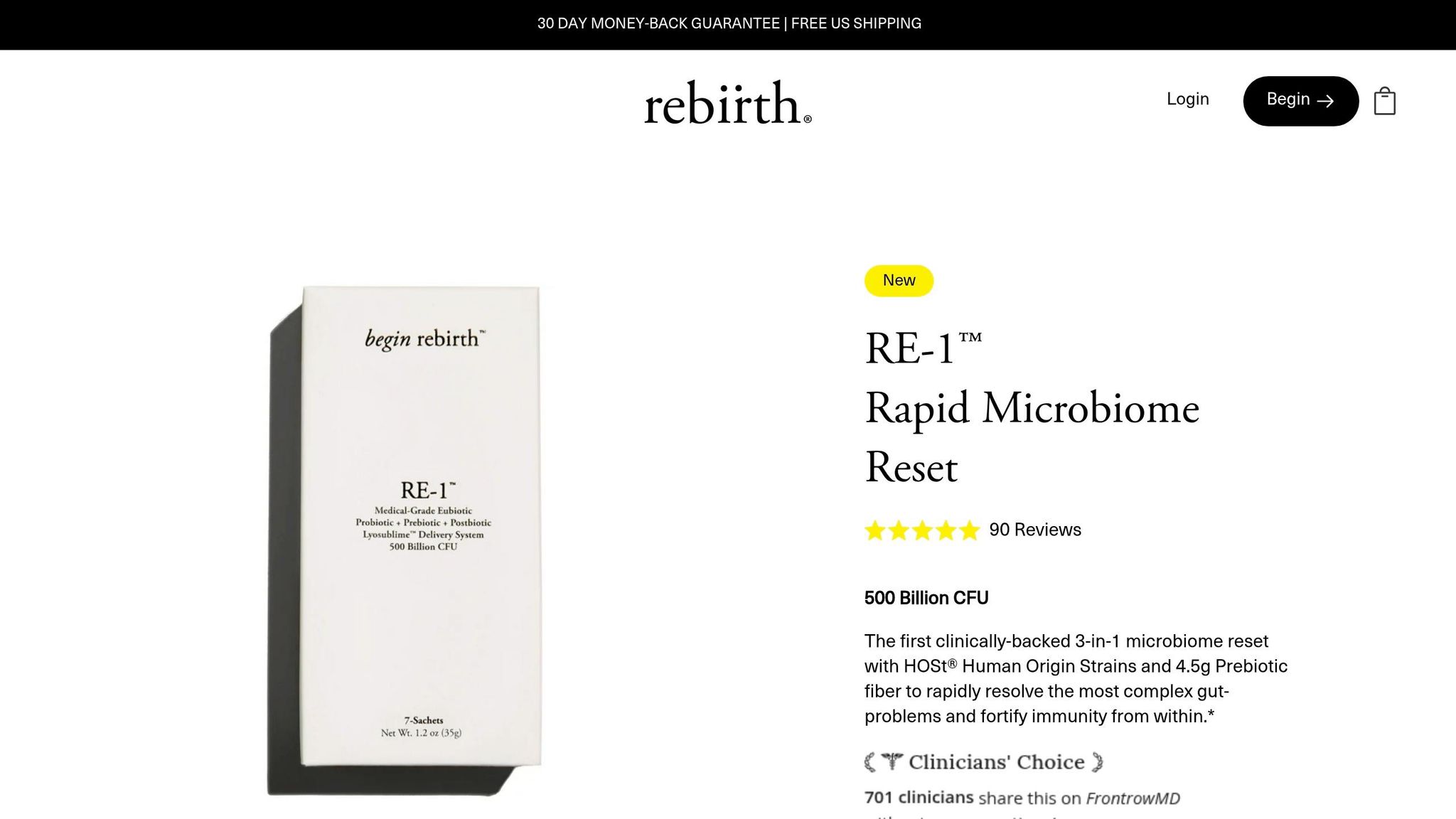
Begin Rebirth RE-1™ is a synbiotic that combines prebiotics, probiotics, and postbiotics in one sachet [3]. Each serving delivers 500 billion CFU plus 4.5 g of fiber from galacto-oligosaccharides (GOS) and inulin [3]. It's shelf-stable, doesn't need refrigeration, and uses the proprietary Lyosublime™ delivery system [3]. RE-1™ is built around three reset protocols: 7-day, 4-week, and 12-week microbiome reset routines [3].
Picking the right synbiotic still comes down to fit. The formula should match your goal, the dose should make sense for you, and your tolerance matters too.
How to Choose and Use Prebiotics, Probiotics, and Synbiotics
Now that the terms are clear, choose based on your goal, not just the product label.
Matching Each Category to Your Goal
Start with what you want the product to do.
If your main goal is daily fiber support and feeding the microbes already living in your gut, prebiotics, probiotics, and postbiotics are a solid first step. Foods like garlic and onions already do part of that job, and supplements can help if your diet falls short. Using a microbiome diet planner can help you organize these food choices.
If the goal is to add live strains on purpose - like after antibiotics or during travel - probiotics make more sense. Strains such as Lacticaseibacillus rhamnosus GG and Saccharomyces boulardii CNCM I-745 have clinical backing for antibiotic-associated diarrhea and traveler's diarrhea, respectively [1][11]. Here’s the big thing: strain specificity matters. The effect is tied to the exact strain, not just the species name.
Synbiotics make sense when you want a live strain plus the fiber that helps feed it in one product. If you’re dealing with severe GI conditions, it’s smart to check with a healthcare professional before picking one. These conditions are often linked to gut dysbiosis, an imbalance that can impact your overall health.
Use this quick comparison to narrow things down.
| Prebiotics | Probiotics | Synbiotics | |
|---|---|---|---|
| Core Purpose | Feed beneficial microbes already in the gut | Introduce live beneficial microbes | Combine microbes with targeted fuel |
| Live Organisms | No | Yes | Yes |
| Intake Format | High-fiber foods or supplements | Fermented foods or supplements | Capsules, powders, or 3-in-1 formulas |
| Storage | Generally shelf-stable | Varies; some require refrigeration to maintain viability | Varies; often shelf-stable if freeze-dried |
Safety, Tolerance, and Label Details to Check
Once you know the category, the next step is the label. That’s where a lot of products either pass the test or fall apart.
For probiotics and synbiotics, check for the exact strain name and the CFU count [2]. The dose should line up with what was used in clinical studies for that same strain [1]. For prebiotics, look at the fiber type - common ones include inulin, GOS, and FOS - and check the grams per serving.
Storage matters for live strains. Some probiotics need refrigeration to stay viable. Others are freeze-dried and can stay on the shelf. If the label doesn’t tell you how to store it, move on. It’s also worth checking allergen disclosures [6].
Immunocompromised individuals, pregnant people, and people with severe GI conditions should consult a healthcare professional before starting any new supplement routine involving live microorganisms [1][3].
Conclusion: Prebiotics, Probiotics, and Synbiotics at a Glance
Prebiotics feed helpful microbes. Probiotics add live microbes. Synbiotics do both. That simple difference makes it much easier to pick the option that lines up with your goal.
Start with the goal. If you want to feed the microbes already in your gut, look at prebiotics and how they work. If you want to add a specific strain, choosing the right probiotic makes more sense. If you want both in one product, synbiotics are the fit. Once that part is clear, the label becomes a lot easier to read.
Before you buy, check the exact strain, the dose, and the type of fiber. Those details matter more than the front-of-package claims. In the end, the choice comes down to the product’s formula, the amount used, and how well your body handles it.
For long-term microbiome support, food should come first. Supplements work best when they fill a clear, specific gap.
FAQs
How do I know which one I need?
Which biotic you need depends on your health goals and the current state of your microbiome. In plain English, there isn’t a one-size-fits-all answer here. What works for one person may not fit someone else, which is why a healthcare professional can help point you toward the right approach for your body.
If you want an all-in-one option, Begin Rebirth RE-1™ brings together prebiotics, probiotics, and postbiotics to help restore microbiome balance and support gut and immune health.
Can I take prebiotics and probiotics together?
Yes. Taking prebiotics and probiotics together is generally safe, and they often work better side by side.
Here’s the simple version: probiotics add live microorganisms, and prebiotics feed them with the fibers they need to do well.
This pairing is called a synbiotic. Begin Rebirth RE-1™ is a clinically backed 3-in-1 eubiotic synbiotic that brings together prebiotics, probiotics, and postbiotics in one sachet.
How long does it take to notice results?
Results can differ based on your body and what you’re trying to improve. Some people notice changes in digestion or bowel habits within a few days or a couple of weeks. Other effects may take more time.
If you haven’t seen the results you want after four weeks, it may be worth trying a different product. If you want a more guided plan, Begin Rebirth RE-1™ offers a 7-day, 4-week, or 12-week microbiome reset protocol.