

Here’s the short answer: prebiotics feed gut microbes, while probiotics add live microbes to your gut.
If you want a simple gut-health plan, this is it:
- Eat more fiber-rich plant foods
- Add fermented foods most days
- Increase both slowly over 2 to 3 weeks if you’re new to them
- Aim for 25 to 38 grams of fiber per day, since most U.S. adults still fall short
This matters because your gut microbiome helps with digestion, immune function, and the gut lining. And when you use prebiotics and probiotics together, you support both sides of the system: food for the microbes already there, and extra live strains from foods like yogurt or kefir.
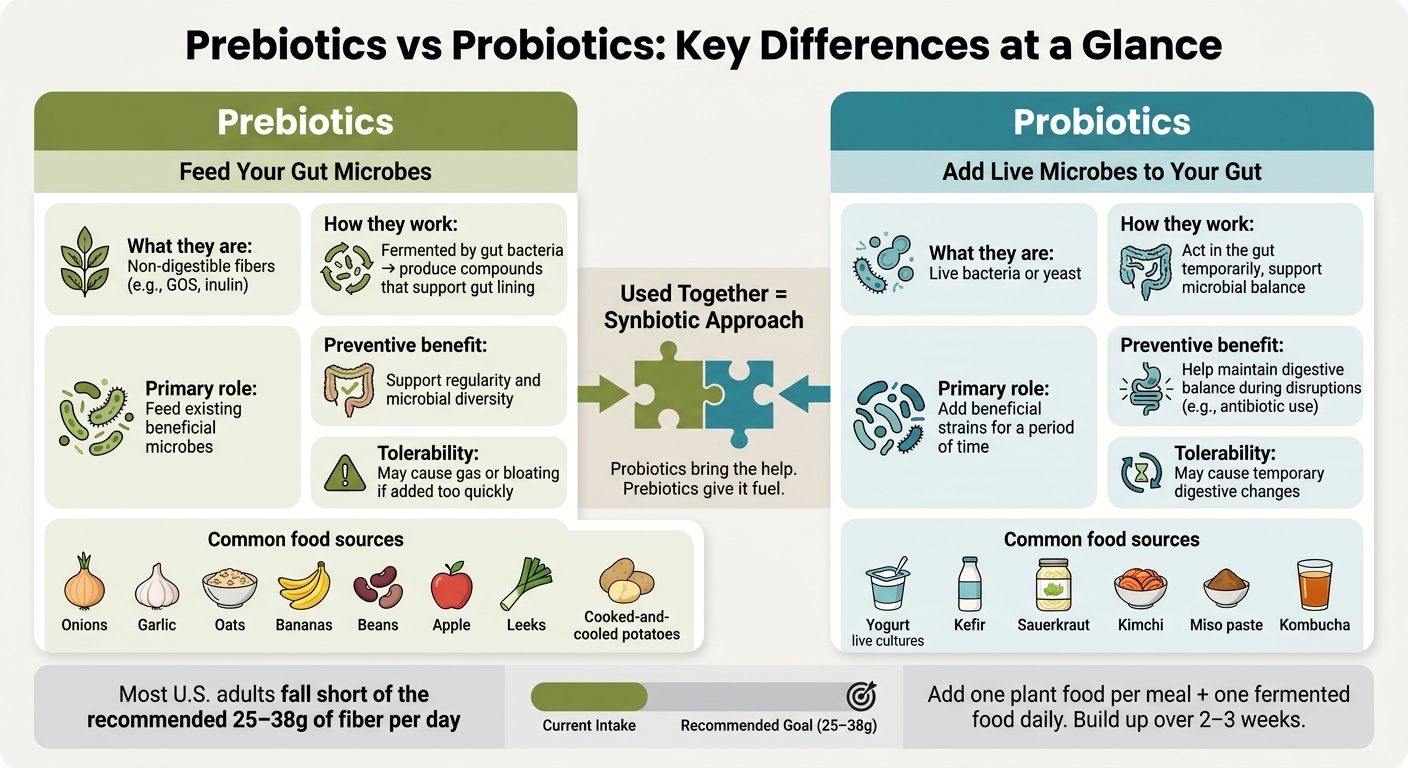
Prebiotics vs Probiotics: Key Differences at a Glance
Prebiotics vs Probiotics - Which Is Best for Gut Health?
Quick Comparison
| Prebiotics | Probiotics | |
|---|---|---|
| What they are | Fibers your body can’t break down | Live bacteria or yeast |
| Main job | Feed gut microbes | Add live microbes |
| Common foods | Onions, garlic, oats, beans, bananas, apples | Yogurt with live cultures, kefir, sauerkraut, kimchi, miso, kombucha |
| Why people use them | Support regularity and gut diversity | Help keep gut balance, including during changes like antibiotic use |
| Common issue | Too much too soon may lead to gas or bloating | Some people notice short-term digestive changes |
Bottom line: I’d keep it simple. Start with meals, not pills. A mix of plant foods and fermented foods covers the basics for many people, and a synbiotic option may help if you want a more structured routine.
Prebiotics: How They Work and Where to Find Them
Prebiotics are nondigestible fibers, including GOS and inulin, that feed helpful gut bacteria. When microbes ferment these fibers, they make compounds that help support the gut barrier and immune function [4]. And you don’t need a supplement to get them. These fibers show up in plenty of everyday foods.
What Prebiotics Do in the Gut
Prebiotics help helpful bacteria grow and make useful byproducts in the colon. GOS, for example, can increase bifidobacteria while reducing less helpful microbial groups [4].
Common U.S. Food Sources of Prebiotics
In the U.S., common food sources of prebiotics include:
- Onions
- Garlic
- Leeks
- Asparagus
- Oats
- Bananas
- Beans
- Apples
- Cooked-and-cooled potatoes
Prebiotics feed the gut ecosystem; probiotics add live microbes directly.
sbb-itb-1bbfe7f
Probiotics: How They Work and Where to Find Them
Probiotics are live microbes that can help support gut balance when you consume enough of them. In preventive care, the idea is simple: support that balance before symptoms show up.
What Probiotics Do in the Gut
In the gut, probiotics help keep the microbial mix in better shape. They compete with unwanted microbes and help support immune function. They also help regulate immune activity and inflammation [4].
You can think of them as reinforcements for your gut ecosystem. They don't do all the work alone, but they can help keep things from drifting off course.
Common U.S. Food Sources of Probiotics
In the U.S., common food sources of probiotics include:
- Yogurt with live cultures
- Kefir
- Sauerkraut
- Kimchi
- Miso
- Kombucha
That leads to the next practical point: when do probiotics work best on their own, and when do they do more when paired with prebiotics?
Prebiotics vs Probiotics: Key Differences and How They Work Together
See them side by side: prebiotics and probiotics work together. They’re not opposites, and they’re not in competition.
Prebiotics and Probiotics: Side-by-Side Comparison
| Prebiotics | Probiotics | |
|---|---|---|
| What they are | Non-digestible fibers and other compounds | Live microorganisms, usually bacteria or yeast |
| How they work | Fermented by gut microbes to produce compounds that support the gut lining [6][7] | Act in the gut for a limited time and help support microbial balance [5][9] |
| Primary role | Feed existing beneficial microbes | Add beneficial strains for a period of time |
| Preventive role | Support regularity and microbial diversity [7][15] | Help maintain digestive balance during disruptions, including antibiotic use [12][13][14] |
| Tolerability note | May cause gas or bloating if introduced too quickly | May cause temporary digestive changes; some people need medical guidance first |
Prebiotics don’t contain live bacteria. Instead, they feed the microbes already living in the gut.
With that distinction in place, the next move is making both part of your day-to-day routine.
Why Using Both Supports a More Balanced Gut Plan
Here’s a simple way to look at it: probiotics bring in extra help, while prebiotics give that help something to eat. If there’s no prebiotic fuel around, helpful microbes have less support to do their job and make metabolites that help the gut. [8][11]
This combo is called a synbiotic approach. When prebiotics and probiotics are used together, the prebiotic can support the probiotic strains more directly. That may help with steadier microbiome balance, better barrier function, and stronger immune regulation compared with using either one on its own. [8][10][11]
For many people, a fiber-rich diet plus fermented foods can cover both bases. If you want a more structured reset after antibiotics or travel, Rebiirth RE-1™ is built for that kind of synbiotic support.
Putting It Into Practice: Daily Food Habits and Synbiotic Support
The main takeaway is simple: start with your meals.
A Simple Daily Routine for Gut Health
Most U.S. adults still don't get the recommended 25 to 38 grams of fiber per day.[25][27][29][26] One easy fix is to add one plant food to each meal.
For breakfast, that could look like oatmeal with berries and chia seeds. Lunch might be a salad with beans or lentils. Dinner can lean on vegetables, brown rice, or whole-wheat pasta. Taken together, those small choices can move you much closer to your daily fiber goal.[21][22]
It also helps to add one serving of fermented food on most days. Plain yogurt with live cultures, sauerkraut, and kefir are simple places to start.[18][28]
If fermented foods or extra fiber are new for you, go slowly. Build up over 2 to 3 weeks to help cut down on gas or bloating.[16][23]
If food habits need a bit more structure, a synbiotic reset can step in.
When a Structured Microbiome Reset Makes Sense
Food habits come first, but sometimes people need more directed support. If day-to-day food changes aren't doing enough, a structured synbiotic option may be a good fit.[2][21][1]
Rebiirth RE-1™ is a 3-in-1 synbiotic sachet that combines prebiotics, probiotics, and postbiotics in one daily format.[3][19][20] It comes in 7-Day, 4-Week, and 12-Week reset formats, so people can choose a timeline that matches their goals.[3][17][20]
Conclusion: What to Remember About Prebiotics and Probiotics
The goal is balance, not complexity. For most people, gut support starts with fiber-rich meals and fermented foods. A structured synbiotic like Rebiirth RE-1™ can serve as a guided next step, rather than a replacement for those daily habits.[2][21][22][23][24]
FAQs
Can I take prebiotics and probiotics together?
Yes. Taking prebiotics and probiotics together is often recommended. This mix is called a synbiotic.
Here’s the simple idea: probiotics add good bacteria, and prebiotics help feed those bacteria so they can grow and stick around longer.
Used together, they can support:
- a more balanced gut
- digestion
- immune function
- long-term gut health
Rebiirth RE-1 brings together prebiotics, probiotics, and postbiotics in one formula.
How long does it take to notice gut changes?
Many people notice gut changes fast, like less bloating or more regular bowel movements, within 24 to 48 hours. Bigger shifts in abdominal comfort and day-to-day digestion often show up during the first seven days if use stays consistent.
Some changes take more time. Things like fuller microbiome recovery, stronger immune support, and improvement in long-term imbalances may take up to 3 months. If added fiber or supplements cause short-term digestive discomfort, that usually eases within days to weeks.
Who should check with a doctor before using probiotics?
Check with a healthcare professional before starting probiotics if you have immune system conditions or long-term digestive issues like IBS or SIBO.
It’s also smart to talk to your doctor if you’re pregnant or nursing, recently had surgery, have a serious illness, are going through chemotherapy, take multiple medications, or are taking antibiotics now or just finished a course.