

My starting point: try 1–2 minutes of meditation, breathe comfortably, and slow down at one meal. Mindfulness may help with stress and digestive symptoms, but it does not prove or guarantee a microbiome reset.
A 7-day study of 35 healthy adults reported that 94% had less bloating and abdominal pain. It tested a reset protocol - not mindfulness alone - so I wouldn’t treat that number as proof.
Here’s the approach I outline:
- Start small: Choose meditation, a body scan, or gentle breathing. Stop breathing exercises if you feel dizzy or uncomfortable.
- Support meals: Eat slowly, add fiber gradually, and learn how prebiotics, probiotics, and postbiotics differ.
- Track patterns: Review stress, sleep, meals, and symptoms over 7 days, 4 weeks, and 12 weeks. Change one thing at a time.
- Keep supplements in perspective: If you use Rebirth RE-1, follow its current label and ask your clinician about any risks.
- Know when to get help: Persistent or worsening symptoms need medical advice; bleeding, severe pain, or severe dehydration need prompt care.
<u>My rule: mindfulness supports food choices and medical care - it doesn’t replace them.</u>
Northwestern Medicine Gastrointestinal Medicine Guided Meditation
sbb-itb-1bbfe7f
Daily Meditation, Body Scans, and Breathing
These practices can help lower stress and support better eating habits. Direct effects on signs of a healthy gut microbiome remain unproven, so focus on a steady routine rather than claims.[2][3][4] Choose one practice and do it daily before adding another.
Meditate for 5–10 Minutes
Sit comfortably with your feet supported and your hands resting naturally. You can also lie down if you’ll stay alert. Set a timer for 5–10 minutes, or begin with 1–2 minutes.
Notice your breath without making it deeper or slower. When thoughts or sensations draw your attention away, gently return to your breath without judging yourself. Try this after waking, during lunch, or before bed.[10]
Try a Brief Body Scan
Take 3–5 minutes during a break to move your attention from your feet through your legs, hips, abdomen, chest, shoulders, neck, face, and head. Notice warmth, pressure, tension, movement, fullness, or no clear sensation. Let abdominal sensations be there without trying to change them.
If focusing inward feels distressing, keep your eyes open. Instead, notice three sounds, three visible objects, or how your feet feel on the floor.[6][7]
Breathe Comfortably for 2–5 Minutes
Sit or stand comfortably, then relax your jaw, tongue, and shoulders. Place one hand on your chest and, if it helps, the other on your abdomen. Breathe in gently through your nose or mouth, letting your lower ribs or abdomen move outward gently. Keep your exhale relaxed, making it slightly longer only if that feels comfortable.
Continue for 2–5 minutes without forcing a count, taking oversized breaths, or holding your breath. Try it between meetings, before meals, or after a stressful moment.[5][8][9]
Stop and breathe normally if you feel dizzy, tingly, breathless, uncomfortable, or panicky. Seek medical care for severe breathlessness, faintness, or chest pain.[5][8]
Bring that same calm attention to meals: slow down, notice the flavor, and stop when you feel comfortably full.
Mindful Eating and Nutrition for Gut Health
How to Eat Mindfully
Slow down, chew thoroughly, and pause halfway through your meal to check how full you feel. Add fiber gradually to help limit bloating.[1] Build meals around foods that feed and support your gut microbes.
Understand Prebiotics, Probiotics, and Postbiotics
Prebiotics include fibers that feed your gut microbes. Probiotics add live microbes that provide health benefits. Postbiotics are preparations of inactivated microbes or microbial components that provide health benefits.[1]
These differences can help guide your meal choices and daily habits. A daily breathing pause can also serve as a cue to take your supplement.
Use mindfulness to anchor your Rebirth RE-1 routine
If you use Rebirth RE-1, pair it with a 2–5 minute morning breathing pause. Follow the label’s mixing and timing instructions. If you’re pregnant or breastfeeding, get guidance from your clinician.[1]
Build and Track Your Routine
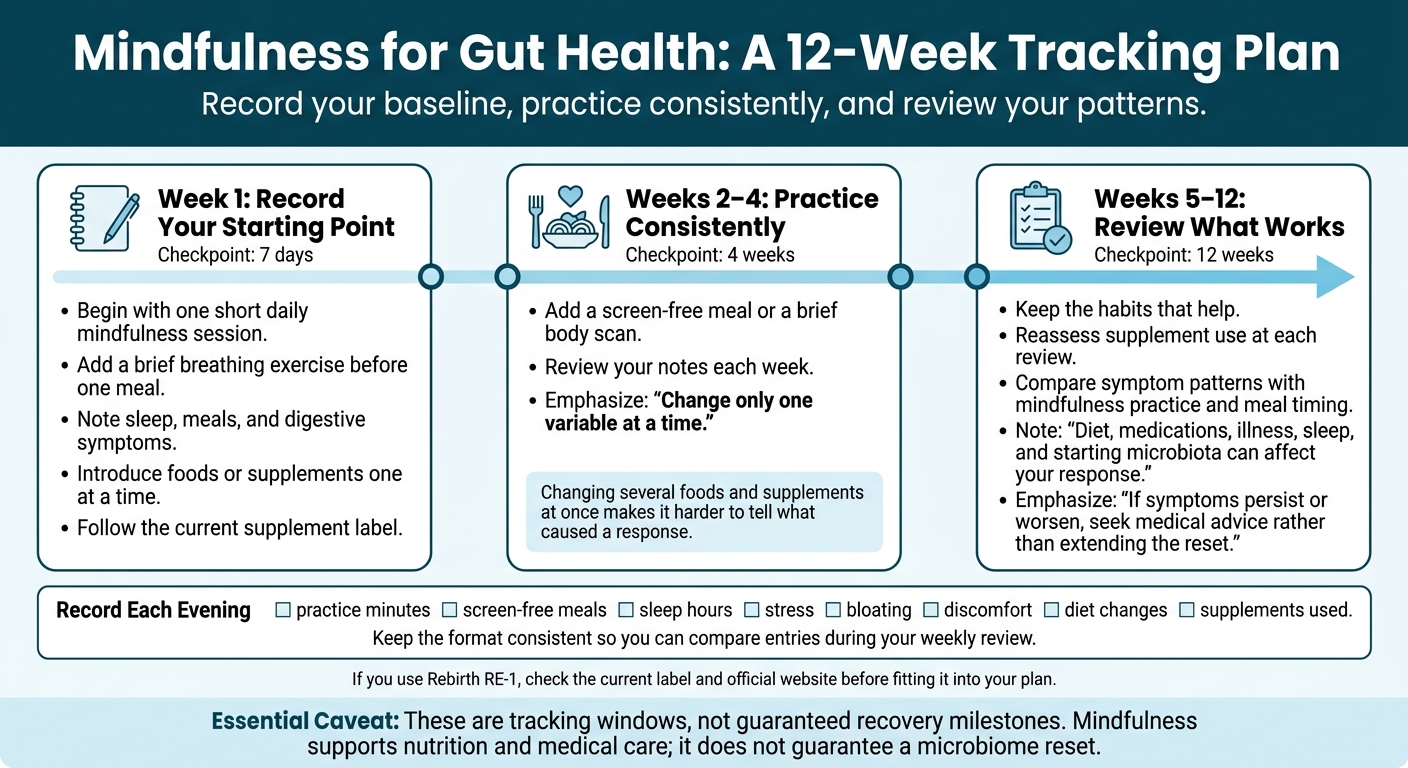
Mindfulness for Gut Health: A 12-Week Tracking Plan
Once your core mindfulness habits are in place, use a simple timeline to see which changes help most. Plan your microbiome reset routine around 7-day, 4-week, and 12-week windows. If you use Rebirth RE-1, check the current label and official website before fitting it into your plan.
Week 1: Record Your Starting Point
Use the first week to record your baseline so you can compare changes later. Begin with one short daily mindfulness session using mindfulness techniques for stress and a brief breathing exercise before one meal. Note your sleep, meals, and digestive symptoms. Introduce foods or supplements one at a time, and follow the current supplement label.
Weeks 2–4: Practice Consistently
Add a screen-free meal or a brief body scan, then review your notes each week. Change only one variable at a time. Changing several foods and supplements at once makes it harder to tell what caused a response.
Weeks 5–12: Review What Works
Keep the habits that help, and reassess supplement use at each review. Your diet, medications, illness, sleep, and starting microbiota can all affect your response.
Compare symptom patterns with your mindfulness practice and meal timing to decide what stays in your routine. If symptoms persist or worsen, seek medical advice rather than extending the reset.
Keep a Daily Log
Each evening, record your practice minutes, screen-free meals, sleep hours, stress, bloating, discomfort, diet changes, and any supplements used. Keep the format consistent so you can compare entries during your weekly review.
Conclusion: Next Steps and Safety
After reviewing your logs, keep your routine simple: meditate, breathe comfortably, and eat one mindful meal. Add fiber slowly, and track any bloating or stool changes. Following a gut health guide can help you implement these changes safely. Take supplements only as directed, and look at weekly patterns rather than single symptoms. Mindfulness supports nutrition and medical care; it does not guarantee a microbiome reset.
When to Seek Medical Advice
If symptoms don’t improve or warning signs appear, stop self-experimenting and get medical advice. Seek medical evaluation for persistent abdominal pain, unexplained weight loss, persistent constipation, or persistent diarrhea recorded in your logs. NIDDK advises adults to contact a doctor if diarrhea lasts more than 2 days or involves six or more loose stools a day.[11]
Seek urgent care for blood in your stools or black, tarry stools; severe or worsening abdominal pain; fever with digestive symptoms; persistent vomiting; or signs of dehydration, such as low urine output or dizziness. Fainting, confusion, heavy bleeding, severe dehydration, or an inability to keep fluids down require emergency care, not more self-treatment.[11][14]
Do not stop prescribed treatment because mindfulness or a supplement seems to help. Before starting probiotics or other microbiome supplements, consult a healthcare professional if you are pregnant or breastfeeding, immunocompromised, severely ill, managing a complex gastrointestinal condition, or taking multiple medications. Risks are greater for people with severe illness or weakened immunity.[12][13]
FAQs
How does stress affect my gut microbiome?
Chronic stress activates the HPA axis, leading to the release of hormones like cortisol and norepinephrine [1][2]. These hormones can reduce helpful gut bacteria, including Lactobacillus and Bifidobacterium, while promoting harmful pathogens [2].
Stress also weakens the gut barrier - a condition often called “leaky gut” - allowing bacterial components to enter the bloodstream [1][2]. This can trigger inflammation throughout the body and brain, which can worsen mood, impair immune function, and lower sleep quality [1][2][3].
Does less bloating mean my microbiome has changed?
Yes, less bloating can be a positive sign that your gut microbiome is becoming more balanced. In one clinical trial of a 3-in-1 eubiotic synbiotic like Rebiirth RE-1, 94% of participants reported less bloating and abdominal pain after 7 days [1][2][3]. This drop in discomfort often reflects less dysbiosis - an imbalance in gut microbes - and steadier digestion as your gut ecosystem regains balance [1][2].
How can I tell which habit helps my digestion?
Focus on weekly trends, not day-to-day changes [1]. Keep a simple weekly note on your phone tracking bowel regularity, bloating, abdominal discomfort, food tolerance, sleep quality, energy, and how well you handle stress. Review your notes each week to spot patterns and check your overall progress [1].
As you add habits like eating more fiber or increasing your prebiotic intake, pay attention to how your body responds. Your gut may need time to adjust [2].