

Your gut can affect how you handle stress. The main point is simple: gut health is one part of mood, stress recovery, and day-to-day coping, but it is not the whole story.
Here’s the short version:
- The gut-brain axis links your gut and brain through nerves, hormones, immune signals, and gut microbes.
- Stress can disturb this system, and gut imbalance can make stress feel harder to recover from.
- Common pressure points include antibiotics, poor sleep, chronic stress, low-fiber diets, ultra-processed foods, and life-stage changes.
- About 25% of people who take broad-spectrum antibiotics get antibiotic-associated diarrhea.
- Food first usually makes sense: beans, oats, barley, onions, garlic, asparagus, berries, greens, nuts, seeds, yogurt, kefir, kimchi, sauerkraut, and miso can help support gut variety.
- A simple reset plan often starts with tracking symptoms for 1 to 2 weeks, then making small changes over 7 days, 4 weeks, and 12 weeks.
- Prebiotics, probiotics, and postbiotics do different jobs, and results can vary by strain and by person.
- Gut support may help, but it does not replace care for mental health or other medical needs.
If I strip the article down to what matters most, it comes to this: watch your symptoms, improve sleep, add fiber slowly, move most days, and be careful with supplements if you’re pregnant, breastfeeding, helping a child, taking medication, or dealing with a health condition.
This guide explains how that gut-brain link works, who may be more affected, what food and supplement options do, and how to think through a simple reset plan without overcomplicating it.
Seminar: "Stress and the Brain-Gut-Microbiota Axis" (prof. John F. Cryan, PhD)
sbb-itb-1bbfe7f
How the Gut-Brain Axis Affects Stress, Mood, and Coping
Most gut-brain communication runs through four main routes: the vagus nerve, the HPA axis, immune activity, and microbial metabolites. Together, they shape how well you bounce back from stress, how steady your mood feels, and how well you cope day to day [1]. When these routes get thrown off, dysbiosis can make stress recovery less efficient.
Nerve and Hormone Pathways: Vagus Signaling and the HPA Axis
Signals from the gut reach the brain through the vagus nerve and the enteric nervous system. At the same time, stress activates the hypothalamic-pituitary-adrenal (HPA) axis, which releases cortisol. That creates a two-way loop between the gut and the brain [1].
Put simply, the gut sends messages up, and stress signals come back down. If that loop stays out of sync, it can make it harder for the body to settle after stress.
Immune Activity, Gut Barrier Function, and Inflammation
When the gut barrier weakens, inflammatory signaling goes up, and stress tolerance often drops [1].
That matters because the gut barrier works a bit like a screen door. When it does its job, it helps keep things in balance. When it starts to fail, the immune system can become more reactive, and that can add to the body’s stress load.
Microbial Metabolites That May Affect Resilience
Gut bacteria make metabolites and neurotransmitter precursors that influence the gut-brain axis. Prebiotics such as galactooligosaccharide (GOS) and inulin can help increase the production of short-chain fatty acids like acetate and other postbiotic metabolites [1].
These changes don’t happen overnight. Their effects are gradual, not immediate, which is worth keeping in mind if you’re looking at gut support as part of a coping plan.
How Digestive Symptoms Can Make Coping Harder
Persistent bloating, pain, and irregular bowel habits can add to stress load and make coping harder [1]. And that makes sense. It’s hard to stay calm, focused, or flexible when your body feels off all day.
Lowering that symptom burden can make everyday coping feel more manageable. Even small relief can take some pressure off.
The next section shows what drives that disruption, including early-life factors and modern exposures.
Dysbiosis, Early-Life Factors, and Who May Be More at Risk
Dysbiosis means the gut microbiome is out of balance or not working the way it should. That can include losing foundational Human Origin Strains (HOSt), which help support immune balance. When that balance starts to slip, the same gut-related systems tied to emotional steadiness may not work as well. Stress signaling can get shakier, inflammation may be harder to keep in check, and coping can feel less steady.
Common Drivers of Dysbiosis in Modern Life
The microbiome changes with daily life. Diet, sleep, antibiotics, stress, and a person’s surroundings all play a role. In most cases, dysbiosis doesn’t come from just one thing. It tends to build from several pressures over time.
One of the biggest disruptors is broad-spectrum antibiotics. About 25% of people who take them experience antibiotic-associated diarrhea (AAD) [1]. On top of that, ultra-processed foods, environmental toxins, chronic stress, poor sleep, and sedentary behavior can all push the microbiome further off track. Put simply, these stacked pressures may help explain why some people have a harder time bouncing back from stress.
Family History and C-Section Birth: What the Evidence Shows and What It Does Not
Early life matters because the microbiome starts taking shape from the very beginning, and those first patterns can affect later stress and immune responses. Babies born by cesarean section have much lower levels of foundational microbes than babies born vaginally, which interrupts the transfer of key strains from mother to child across generations [1].
Research also links chronic stress with altered gut-brain axis signaling, and urbanization with lower microbial diversity due to less pathogen exposure [1]. Family history plays a part too, but it’s not the whole story. Later factors like diet, antibiotics, infections, and the broader environment continue to shape the microbiome. Early patterns matter, but they are not fixed outcomes.
Other Life Stages That Can Shift the Microbiome
The microbiome doesn’t stay the same through life. It shifts during infancy, puberty, pregnancy, and aging. Microbial diversity often drops with age [1]. Those changes matter because they can affect how steady or strained the stress response feels at different stages of life.
Prebiotics, Probiotics, Postbiotics, and a Microbiome Reset Plan
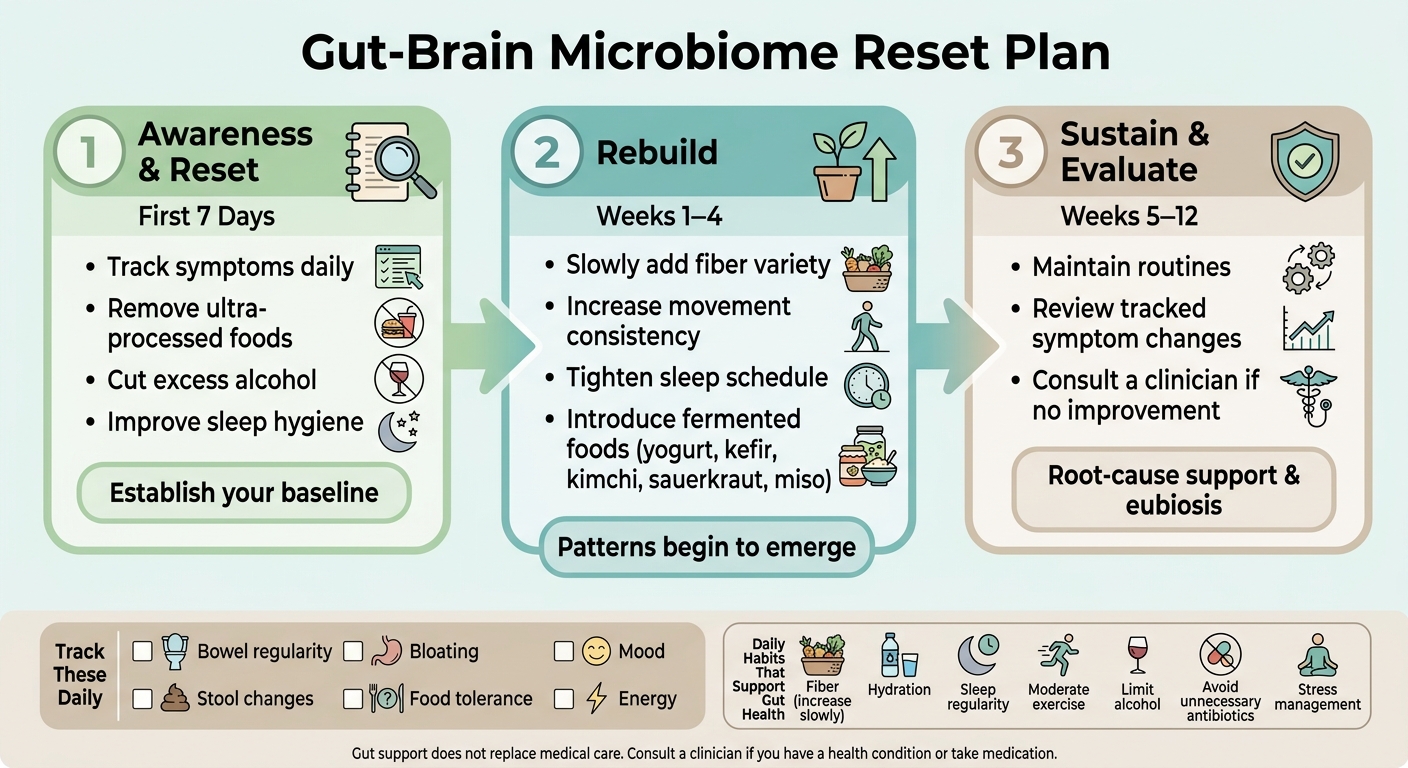
Gut-Brain Reset Plan: 7-Day, 4-Week & 12-Week Framework
Once dysbiosis is identified, the next move is to support recovery in the least disruptive way possible.
How Prebiotics, Probiotics, and Postbiotics Differ
Prebiotics feed helpful microbes, probiotics add live strains, and postbiotics are the compounds microbes leave behind that can affect signaling.
| Intervention | What it is | Potential gut-brain relevance | Key limitation |
|---|---|---|---|
| Prebiotics | Non-digestible fibers, such as GOS and inulin | Feed helpful bacteria and support production of postbiotic metabolites | Works best when helpful bacteria are already present |
| Probiotics | Live microbes, including Human Origin Strains (HOSt™) | May help support stress and mood resilience | Some strains pass through and may not stay long-term |
| Postbiotics | Non-living microbial components or metabolites | May help regulate inflammation through immune signaling | Do not restore the gut with live bacteria |
That said, this area is very strain-specific. Some psychobiotics and the microbiota-gut-brain axis research suggests specific strains may help with stress and mood support, while others may do little for those outcomes.
Food Sources That Can Support Microbial Diversity
Food does a lot of the heavy lifting here. Fiber-rich foods like oats, barley, beans, lentils, onions, garlic, and asparagus help feed gut bacteria. Berries, leafy greens, nuts, and seeds add polyphenols and more variety. Fermented foods - yogurt with live cultures, kefir, kimchi, sauerkraut, and miso - can also add helpful microbes directly.
There’s one catch: adding fiber too fast can backfire. Temporary bloating and gas are common, especially if your gut is already touchy. Most people do better with small, steady shifts instead of a full diet makeover overnight.
Baseline Habits That Support a Healthier Microbiome
Before changing much, it helps to get a read on your starting point. Track bowel regularity, stool changes, bloating, food tolerance, mood, and energy for one to two weeks. Also note medications, especially antibiotics, because that context matters.
From there, the basic plan is pretty simple:
- Increase fiber bit by bit
- Stay hydrated
- Aim for regular sleep
- Get moderate movement most days
- Limit excess alcohol
- Avoid antibiotic use when it isn’t needed
- Make room for stress management
None of this is flashy. But these habits often shape the day-to-day gut picture more than people expect.
A 7-Day, 4-Week, and 12-Week Reset Framework
The first 7 days are about awareness and cutting back. Track symptoms and remove obvious triggers like ultra-processed foods, excess alcohol, and poor sleep. This gives you a baseline and helps show what may be driving how you feel.
Weeks 1 through 4 shift toward rebuilding. Add more fiber variety slowly, make movement more consistent, and tighten up sleep regularity. Around this point, patterns often start to stand out as the diet changes begin to add up.
Weeks 5 through 12 focus on staying the course and checking in. Keep the routines in place and look at whether your tracked symptoms have changed. If nothing is moving, that’s still useful information to bring to a clinician.
The next section covers who should talk with a clinician before starting supplements.
Where Rebirth RE-1 Fits in a Reset Protocol
One example of this setup is a formula that combines prebiotics, probiotics, and postbiotics. Rebirth RE-1 is one option in that category. It includes prebiotics (GOS and inulin), Human Origin Strains (HOSt™) probiotics, and a postbiotic component in sachet form as part of a structured reset plan. Each serving provides 500 billion CFU and 4.5 g of prebiotic fiber, and the oral sachets do not need refrigeration [1].
Typical use is one sachet daily. HOSt™ strains are selected to support microbiome balance [1].
| Reset format | Duration | Intended use | Daily format | Decision considerations |
|---|---|---|---|---|
| 7-Day Reset | 7 days | Rapid relief from bloating and fatigue; initial microbiome establishment | 1 sachet daily | Best for immediate symptom relief and early tracking |
| 4-Week Reset | 28 days | Stability, mood support, and protection against daily disruptions | 1 sachet daily | Best for mood, skin, and more lasting energy |
| 12-Week Reset | 90 days | Complete microbiome restoration; addresses root causes of chronic dysbiosis | 1 sachet daily | Best for root-cause support and establishing eubiosis |
As with any supplement, RE-1 is not intended to diagnose, treat, cure, or prevent any disease [1]. How it fits into the gut-brain picture depends on how much microbiome disruption is tied to your stress and resilience profile.
Safety, Clinical Limits, and Key Takeaways
Who Should Talk to a Clinician Before Starting Supplements
Pregnant or breastfeeding people should talk with a clinician before starting any microbiome supplement meant to support the gut-brain axis. The same goes for children: these products should only be used with clinician guidance. And if you have a medical condition or take medication, check with a healthcare professional before starting [1].
When Gut Support Is Not Enough
Safety comes first. Gut support can fit into a broader plan, but it does not replace medical care. The gut plays a role, but emotional resilience still depends on the full stress-response system [1].
Conclusion: The Most Practical Points to Remember
With those limits in mind, the main takeaway is pretty simple. Early-life factors like C-section birth and antibiotic use can disrupt the foundational microbiome, and certain strains may help support stress response and coping. The reset framework above gives you a staged way to track response over time. Gut health is one part of emotional resilience that you can modify, right alongside sleep and movement [1].
FAQs
How do I know if stress is affecting my gut?
Stress can show up in your gut in ways that are hard to ignore: bloating, abdominal discomfort, or shifts in bowel regularity are common ones. That happens because the gut-brain axis goes both ways. When stress sticks around, it can throw off the microbiome, weaken the gut lining, and increase inflammation.
The effects may not stop there. You might also notice mood changes, fatigue, weaker immune function, or trouble sleeping. Those can all point to a gut balance that’s been thrown off. Rebiirth RE-1™ is designed to help restore microbiome balance with a 3-in-1 synbiotic approach.
How long does a gut reset usually take?
A gut reset tends to follow a pretty clear timeline, and the right time frame depends on what you want to fix: 7 days for acute symptoms and early microbiome support, 4 weeks to help stabilize gut flora, and 3 months for deeper, longer-term repair and the restoration of eubiosis.
Some people feel a shift within 24 to 48 hours. That said, lasting gut-brain and resilience benefits usually come from sticking with it over time, not from a day or two of progress.
Should I try food changes before supplements?
You don’t have to pick between food changes and supplements. In many cases, they work best as a team.
A nutrient-dense, fiber-rich diet helps support your gut microbiome day to day. At the same time, targeted supplementation with Rebiirth RE-1 can help restore balance and fill specific microbial gaps. Used together, they can build a stronger base for emotional resilience and gut-brain health.