

Stress can upset your gut in hours, but long-term stress can change it for months.
If I had to sum up the article in one line, it’s this: acute stress tends to cause a short gut shake-up, while chronic stress can reshape the gut’s normal state. A brief stress event may cut microbial diversity within 90 minutes, while long stretches of stress are linked to lower diversity, weaker barrier function, more inflammation, and a much longer recovery window.
Here’s the core takeaway in plain English:
- Acute stress is short-term, often lasting minutes to days
- Chronic stress lasts weeks, months, or years
-
Acute stress can trigger:
- brief digestion changes
- short-lived gut permeability
- a temporary drop in microbial diversity
-
Chronic stress is linked to:
- deeper dysbiosis
- lower levels of bacteria like Faecalibacterium, Bacteroides, Akkermansia, and Ruminococcus
- more low-grade inflammation
- slower gut lining repair
-
Recovery time is the big split
- acute stress: often days to a few weeks
- chronic stress: often months, sometimes 6 to 24 months
What matters most? It’s not only how hard the stress hits. It’s how long your gut stays pushed off course.
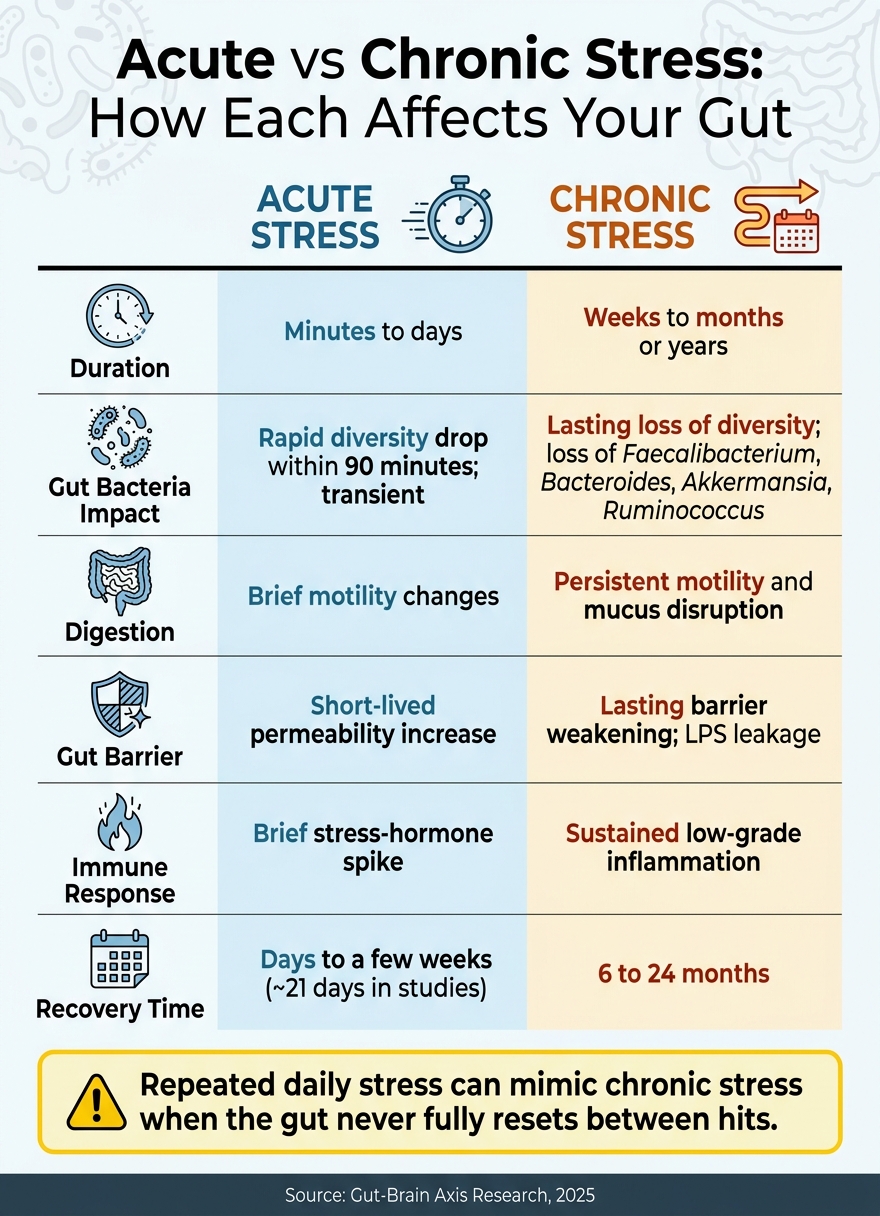
Acute vs Chronic Stress: Gut Effects & Recovery Timeline
Stress Is Damaging Your Gut Health. Here's How to Repair It.
sbb-itb-1bbfe7f
Quick Comparison
| Feature | Acute Stress | Chronic Stress |
|---|---|---|
| Time frame | Minutes to days | Weeks to years |
| Gut bacteria | Fast, short drop in diversity | Lasting loss of diversity and deeper shifts |
| Digestion | Brief motility changes | Ongoing motility and mucus problems |
| Barrier function | Short-lived leakiness | Lasting barrier weakening |
| Immune tone | Short stress response | Persistent low-grade inflammation |
| Recovery | Days to a few weeks | Weeks to months, sometimes longer |
If you’re trying to make sense of stress-related gut symptoms, this article makes one point clear: repeated daily stress can start acting a lot like chronic stress when your gut never gets enough time to reset. Using targeted prebiotics and probiotics can help accelerate this recovery process.
Acute Stress: Short-Term Gut Changes and Recovery
How Short-Term Stress Shifts Gut Bacteria and Digestion
A 2025 study found that just 15 minutes of cold pain stress was enough to reduce jejunal microbial diversity within 90 minutes [1]. That’s a fast shift. It also shows that even a brief stress event can change gut ecology within hours, not days.
These shifts can affect motility and the conditions microbes live in almost right away. The timing lines up with how fast stress signals move through the body. Acute stress can also activate the CRH-CRHR1-mitochondria pathway, impair colonocyte mitochondria, and push the gut toward bacteria that tolerate oxygen instead of bacteria that depend on low-oxygen conditions [3].
Barrier Function, Immune Response, and Recovery Time
When motility and oxygen balance change, the gut lining can become a bit more exposed for a short period. Acute stress can briefly increase intestinal permeability and mast cell activity [1][2].
The good news is that acute stress tends to hit fast, but the microbiome often bounces back after the stressor ends. Recovery usually takes days to a few weeks. In animal models, microbial abundance mostly returned to normal about 21 days after the stressor stopped [4]. Stress-linked damage to intestinal stem cells also seems reversible once the stressor is removed [5]. Higher baseline diversity and better sleep may help recovery move along faster [1].
If this cycle keeps happening, though, the bounce-back period can get slower, and the gut may start moving toward the longer-term changes seen in chronic stress [1][4].
Chronic Stress: Deeper Dysbiosis and Slower Healing
How Long-Term Stress Alters Gut Bacteria and Digestive Function
When stress turns into a daily pattern, the gut microbiome doesn't just take a short hit. It starts to change in a deeper, longer-lasting way.
Instead of a brief drop in diversity, chronic stress shifts which microbes can stick around and which ones fade. This shift moves the gut further away from the signs of a healthy gut microbiome. Reduced epithelial hypoxia creates room for opportunistic facultative anaerobes to grow, while obligate anaerobes decline [6]. High chronic stress is also linked to major losses in five specific genera: Faecalibacterium, Bacteroides, Akkermansia, unclassified Lachnospiraceae, and Ruminococcus [7].
This pattern goes hand in hand with more facultative anaerobes and fewer obligate anaerobes [6]. And that change doesn't stay boxed into the microbiome alone. It can spill over into digestion and immune function, often requiring prebiotics, probiotics, and postbiotics to restore balance.
Why Chronic Stress Increases Immune Reactivity and Slows Recovery
That microbial shift also changes how the gut repairs itself and how the immune system behaves day to day. Chronic stress suppresses intestinal stem cells (ISCs), which renew the gut lining, reducing Lgr5-EGFPhi ISC frequency by about 1.5-fold [5]. With fewer active stem cells in play, the gut lining can't repair itself well, so it becomes more permeable over time.
Once that barrier weakens, lipopolysaccharides (LPS) - fragments from bacterial cell walls - can cross the damaged intestinal lining and trigger persistent low-grade inflammation [5]. Acute stress may spark a short-lived immune response. Chronic stress is different. It creates a background inflammatory state that's hard to shut down.
Chronic stress is also tied to changes in at least 21 differential metabolites in the gut, showing how deeply the metabolic setting has been disturbed [7].
Healing tends to move slowly here. Recovery can take 6 to 24 months as epithelial hypoxia and the stem-cell niche rebuild [5][6]. Next, the side-by-side comparison shows how these chronic changes differ from acute stress.
Acute vs Chronic Stress: Side-by-Side Gut Effects
Here’s the practical difference: acute stress disrupts the gut for a short time, while chronic stress changes the gut’s normal state.
Acute stress tends to trigger fast shifts that can reverse. Chronic stress leads to slower, deeper changes that may take weeks or months to settle down.
The table below shows where those two patterns split most clearly.
Comparison Table: Bacteria, Digestion, Immune Tone, and Recovery
| Feature | Acute Stress | Chronic Stress |
|---|---|---|
| Gut Bacteria | Rapid, transient drop in alpha diversity within 90 minutes [1] | Persistent loss of diversity; expansion of pathogens like Clostridium [8] |
| Digestion | Brief motility changes [1] | Persistent motility and mucus disruption [2] |
| Immune Tone | Brief stress-hormone spike [1] | Sustained inflammatory signaling [2][8] |
| Barrier Function | Short-lived permeability increase [1] | Persistent barrier weakening [2] |
| Recovery Timeline | Days to a week [3] | Weeks to months [4] |
Why Repeated Daily Stress Behaves Like Chronic Stress
You don’t need months of nonstop pressure for the gut to start acting like it’s under chronic stress. Daily stressors can do it too, especially when there isn’t enough time to recover between them.
Each stressful event can push the microbiome a little farther from baseline. One bad day may not do much on its own. But when the next hit comes before the gut has had time to settle, those changes start to pile up.
That’s the key idea: the gut doesn’t fully reset. Over time, repeated daily stress can chip away at resilience in much the same way chronic stress does.
That’s why recovery can’t focus on only one side of the problem. The gut needs help getting microbial balance back, and the stress response system needs room to settle too. Those differences shape what support makes sense next. For instance, prebiotics and probiotics can help restore gut balance after these disruptions.
Recovery Strategies and Key Takeaways
Lifestyle and Nutrition Support for Stress-Related Dysbiosis
When stress keeps coming back, recovery has to do two things at once: help the gut recover and help the body handle stress better. That usually starts with the basics - food, sleep, movement, and stress control.
Diet is the foundation. A plant-forward, high-fiber diet helps feed SCFA-producing bacteria like Faecalibacterium and Bifidobacterium; butyrate helps support the gut lining and lower immune reactivity [2][9]. And this part matters more than most people think. In one study, only 28.57% of people met daily high-fiber intake goals [10]. That's a big gap when the gut is trying to recover, especially if repeated stress means it never fully resets between hits.
Sleep and exercise matter too. Consistent sleep - more than 6 hours per night - and regular physical activity are proven modulators of microbial diversity [10]. For stress control, diaphragmatic breathing, mindfulness, and CBT-based approaches can help lower stress signaling. That may reduce the release of stress hormones that can change bacterial behavior and gut permeability [2][9].
If those steps aren't enough, the next move is to match support to how deep the disruption goes.
Where Rebirth RE-1 Fits in a Microbiome Reset Plan
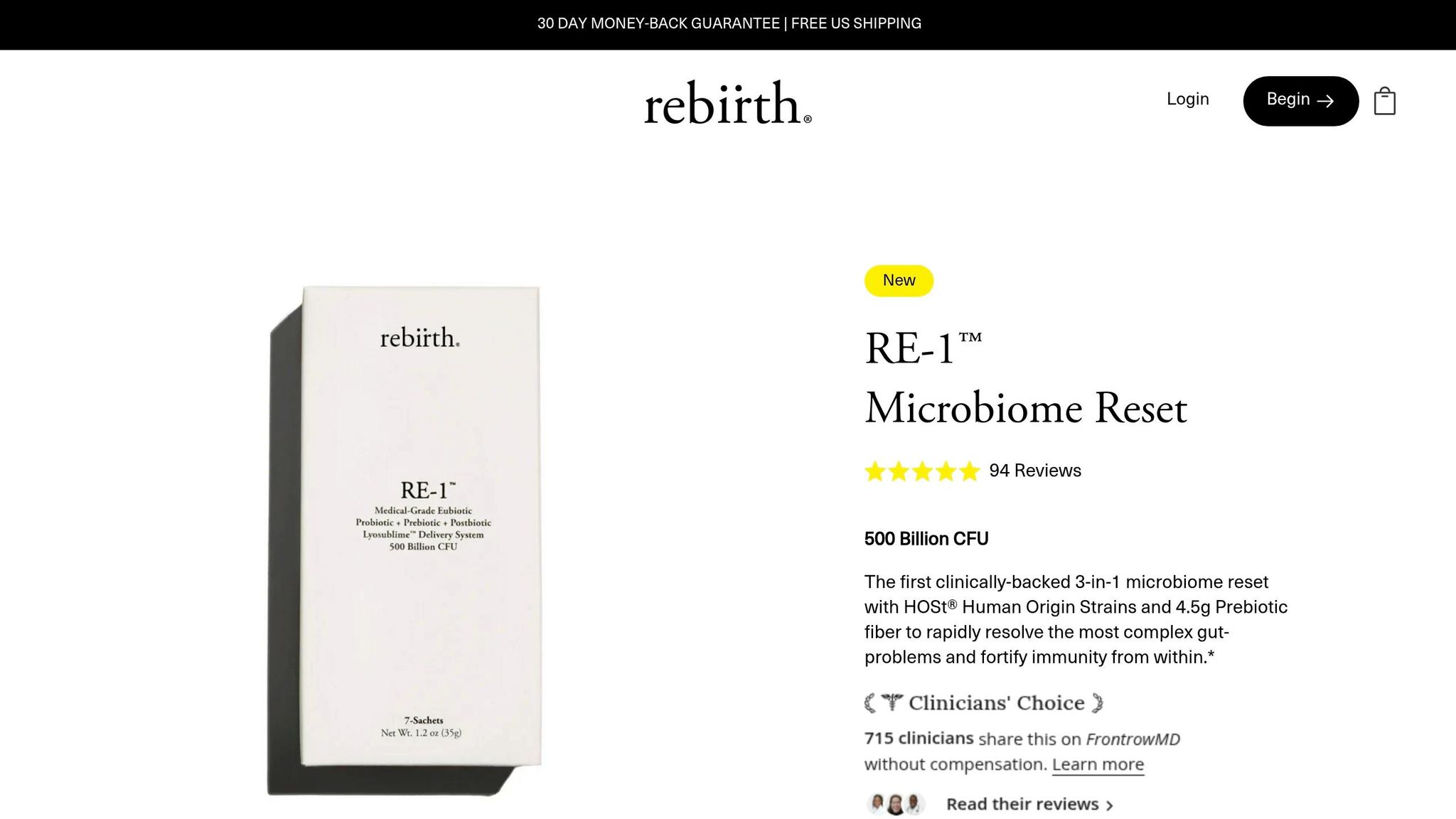
Rebirth RE-1™ is a 3-in-1 eubiotic synbiotic that combines prebiotics (4.5 g fiber), probiotics (500 billion CFU per serving featuring HOSt™ strains), and postbiotics in one daily sachet using Lyosublime™ delivery technology.
The reset length should match the stress pattern:
| Stress Pattern | Gut Impact | RE-1 Format | Price |
|---|---|---|---|
| Acute (single event) | Rapid, transient diversity drop | 7-Day Reset | $79 |
| Repeated daily stress | Compounding bacterial shifts | 4-Week Reset | $279 |
| Chronic (months or longer) | Deep dysbiosis and slower recovery | 12-Week Reset | $749 |
Use the 12-week format for chronic stress, since microbes may bounce back in weeks while SCFA output can take longer to recover [4]. Restoring the bacteria is only one part of the job. Restoring what those bacteria make takes more time.
Key Takeaways: Acute Stress Disrupts, Chronic Stress Reshapes
Acute stress causes fast, often reversible disruption. Chronic stress changes the gut's baseline, shifting bacteria, metabolism, immune tone, and barrier integrity for weeks to months [1][4]. Repeated daily stress can start to look a lot like chronic stress when the gut never gets enough time to reset. That's why recovery plans should match the depth of the disruption, not just the label of "stress."
FAQs
How can I tell if my stress is affecting my gut?
Pay attention to changes in digestion. Stress can affect the gut-brain axis and may lead to dysbiosis, altered motility, or intestinal barrier dysfunction. It can also make you more prone to gastrointestinal problems.
The gut and brain are closely linked, so stress can show up as physical symptoms like pain. If you think your microbiome may be out of balance, Rebiirth RE-1 is designed to help restore balance and support immune health.
Can daily stress act like chronic stress?
Yes. Daily stress, when it keeps showing up day after day, can start to look a lot like chronic stress. The body doesn’t always treat small, repeated stressors as “small.” Instead, they can pile up and create a steady strain over time.
That repeated strain can disrupt the gut-brain axis, contribute to gut dysbiosis, increase intestinal permeability, and weaken immune tone and gut barrier function. Steady microbiome support, such as Rebiirth RE-1, may help bring the gut back into balance and support resilience.
What helps the gut recover after stress?
Gut recovery after stress is about two things: steadying the intestinal barrier and bringing the microbiome back into balance.
Probiotics may help with that first part by increasing barrier-support proteins such as occludin. When those proteins are in better shape, the gut lining may be less prone to cellular damage.
There’s another piece to this too. Supporting mitochondrial respiration and limiting stress-signaling pathways like CRH-CRHR1 may help protect colon cells and improve dysbiosis. In plain terms, stress doesn’t just affect how you feel. It can also throw the gut off course at the cellular level.
Rebiirth RE-1 takes a 3-in-1 eubiotic synbiotic approach by combining prebiotics, probiotics, and postbiotics. The goal is to help restore gut balance and support immune health.