

If you want the short answer: basil is fine for day-to-day gut support, but it is not the top herb for fast symptom help. If your main issue is nausea, ginger has better human research. If it is IBS cramps, peppermint stands out. If it is trapped gas, fennel is often a better match. If your goal is gut flora balance after antibiotics, oregano may fit better.
I’d think about it this way:
- Basil: best for mild gas and routine gut support
- Ginger: best for nausea and slow digestion
- Oregano: best for microbiome-focused use
- Mint: best for IBS cramps and bloating
- Fennel: best for gas and post-meal pressure
A few points matter right away:
- Herbs eaten more than 3 times per week are linked with healthier gut bacteria
- Peppermint oil helped IBS symptoms in 70% of patients in one meta-analysis
- A 6-week herb-blend trial saw 25% higher microbial diversity and 30% lower gut inflammation markers
- Basil has plant compounds like eugenol and limonene, but direct human gut studies are still limited
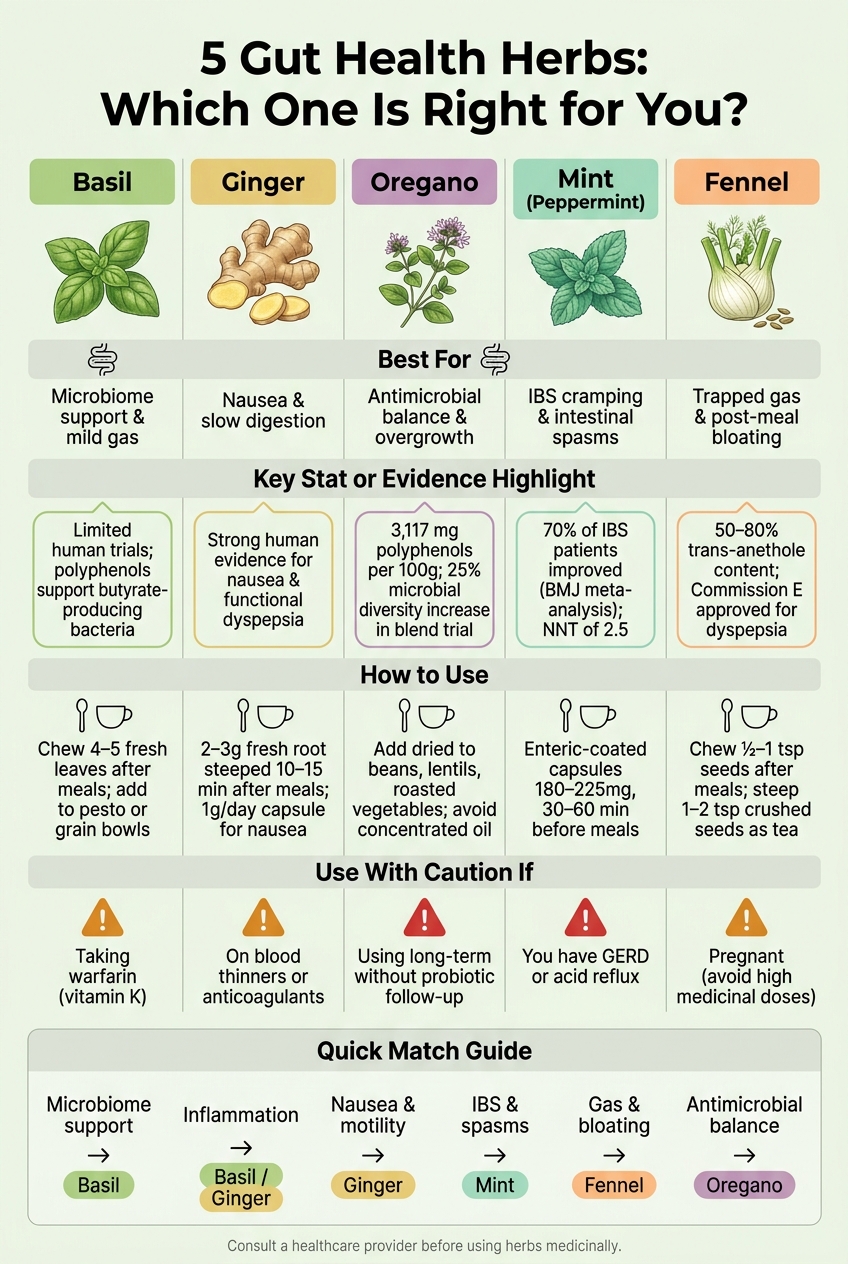
5 Gut Health Herbs Compared: Best Uses, Benefits & Cautions
Herbs & Spices Nutrition Tier List! | Gut Instincts
Quick Comparison
| Herb | Main gut use | What it may help with most | Main caution |
|---|---|---|---|
| Basil | Routine support | Mild gas, daily microbiome support | Keep intake steady if you take warfarin |
| Ginger | Motility support | Nausea, fullness, slow stomach emptying | Check with a clinician if you use blood thinners |
| Oregano | Microbe balance | After antibiotics, overgrowth support | Avoid long use of concentrated oil |
| Mint | Spasm relief | IBS, cramping, bloating | Can make reflux worse |
| Fennel | Gas relief | Trapped gas, lower belly cramping | Avoid high-dose use in pregnancy |
Bottom line: I’d place basil as a good food herb, not a first-choice symptom herb. It fits best when you want steady support, not when you want help fast.
1. Basil
Evidence Strength
Basil has limited gut-health research, and most of it comes from lab and animal work, not human trials [10]. For indigestion and heartburn, its rating leans more on long-standing use than on strong clinical proof [9].
So while basil can make sense as a steady, everyday herb, it’s not the top pick when you want fast digestive relief.
Gut Mechanism
Basil may help support helpful gut bacteria because of its polyphenols [5]. It may also help relax intestinal muscles through compounds like eugenol, linalool, and rosmarinic acid, which can ease mild cramping and gas [10].
Used in small daily amounts as part of herb blends, basil may also help shift the gut microbiome toward more butyrate-producing species [5][8].
Best-Fit Goals
Basil is a better fit for daily microbiome support and mild gas than for fast symptom relief.
Food Uses
A simple use: chew 4–5 fresh leaves after a meal to help with fullness [10]. If your goal is microbiome support, basil works well alongside prebiotic-rich foods like lentils, beans, and whole grains. Think pesto, soups, or grain bowls. That kind of repeat use is usually the whole point [8].
One note matters here: if you take warfarin, keep your basil intake steady because basil contains vitamin K [1].
For stronger symptom-relief evidence, ginger is the next herb to compare.
2. Ginger
Evidence Strength
If basil is more of an everyday herb, ginger is the stronger pick when you want symptom relief. It has better human evidence than basil, especially for nausea and functional dyspepsia [3][12].
Gut Mechanism
Compared with basil, ginger is used more for active digestive support. It helps speed up gastric emptying through serotonin and cholinergic pathways [3][14]. It also blocks inflammatory enzymes like COX and lipoxygenase, which may help calm gut inflammation [14][15]. On top of that, its polyphenols may help support beneficial bacteria while holding back some pathogens [2][5][8][15].
So the main use case is pretty clear: ginger makes more sense when the goal is better digestive movement, not just broad support.
Best-Fit Goals
Ginger is a strong match for nausea, slow digestion, and that heavy feeling after meals, especially with motion sickness and functional dyspepsia [2][3]. It’s also a better fit than peppermint for people with acid reflux, since peppermint can relax the lower esophageal sphincter and make heartburn worse [2][11].
Food Uses
For post-meal fullness or gas, steep 2–3 grams of fresh root in hot water for 10 to 15 minutes and drink it after eating [3][5]. For nausea, 1 gram per day in capsules has clinical support [2][3]. Ginger tends to work better after meals, not before [5][7].
There’s one catch. At medicinal doses, ginger may increase bleeding risk, so people taking anticoagulants should check with a provider [3][7]. Pregnant women should stay under 1 gram per day [7].
If ginger is the better fit for nausea and slow digestion, oregano is stronger when antimicrobial support matters.
3. Oregano
If ginger is the herb people reach for when they want symptom relief, oregano is more about shifting the microbiome.
Evidence Strength
Of the herbs covered here, oregano appears to be the strongest option for directly targeting the gut microbiome. The research on gut health is promising, though much of it has looked at oregano inside herbal blends instead of testing it by itself [8]. Dried oregano also packs a high polyphenol content: 3,117 mg per 100 g [5].
Gut Mechanism
Oregano seems to work mostly through carvacrol and thymol. These compounds may help hold back some harmful bacteria without wiping out the helpful ones [17][5]. Its polyphenols may also support butyrate-producing groups such as Faecalibacterium and members of the Ruminococcaceae family, both linked to support for the gut lining [5][8].
Best-Fit Goals
Oregano makes the most sense for rebuilding microbial diversity, especially after antibiotic use [5][8][16]. One six-week trial of a basil-oregano-thyme blend found that microbial diversity increased by 25% while gut inflammation markers dropped by 30% [16]. That doesn’t prove oregano acted alone, but it does support its place in a microbiome-focused plan.
Food Uses
Stick with oregano as a food herb, not a concentrated oil. The oil can irritate the stomach [8]. A simple way to use it more often is to add dried oregano to:
- beans
- lentil soups
- roasted vegetables
- whole grains
For the best kitchen use, cook with dried oregano first, then add fresh oregano at the end so more of its aroma stays intact [5][8][16].
Next comes mint, which is often picked for a gentler effect on digestion.
sbb-itb-1bbfe7f
4. Mint
If oregano leans more toward changing the microbiome, mint is mostly about symptom relief. And when it comes to IBS, mint has the strongest support in this group, mostly from studies on peppermint oil.
Evidence Strength
A BMJ meta-analysis found that peppermint oil improved IBS symptoms in 70% of patients. Another analysis covering nine RCTs reported a number needed to treat (NNT) of 2.5 [7][11].
Gut Mechanism
Peppermint contains menthol, which helps relax intestinal smooth muscle by blocking calcium channels. In plain English, that can ease spasms, cramping, and gas [3][14]. Some newer research also connects mint with higher levels of butyrate-producing bacteria, which help support the gut lining [8].
Best-Fit Goals
Mint is a strong match for:
- IBS
- Cramping
- Bloating
It’s not a good pick if you deal with reflux or heartburn, since it can make both worse [3][18].
Food Uses
For IBS, enteric-coated peppermint oil capsules in the 180–225 mg range, taken 30–60 minutes before meals, have the best support behind them. For milder digestive upset, steep 2–3 g of dried peppermint leaves in hot water for 10 minutes and sip after meals.
One thing to watch: avoid taking peppermint oil with antacids or PPIs, since they can cause the coating to break down too early [3][11].
If reflux makes peppermint a poor fit, fennel is the next herb to compare.
5. Fennel
Fennel is best for trapped gas and lower abdominal cramping. It’s more targeted than basil or oregano, which tend to fit daily support or microbiome-related goals.
Evidence Strength
Fennel has solid clinical backing for IBS symptoms and bloating, with randomized trials behind it and recognition from German Commission E for dyspepsia [18][19].
Gut Mechanism
Fennel’s main active compound is trans-anethole, which makes up about 50–80% of its volatile oil [19]. This compound acts as an antispasmodic, meaning it helps relax intestinal smooth muscle. Put simply, it can help calm the kind of tight, crampy discomfort that often comes with trapped gas [18][3].
There’s also some early research pointing to gut lining support. Animal studies suggest fennel may lower markers linked to gut inflammation [13][2].
Best-Fit Goals
Fennel is a good fit for bloating, gas, and cramping. It may also work better than peppermint for people with heartburn, since peppermint can make reflux worse [18][2].
Food Uses
You can use fennel in a few simple ways:
- Chew 1/2 to 1 teaspoon of fennel seeds after meals for gas relief [3][7].
- For steady bloating, crush 1–2 teaspoons of seeds (about 2–3 g), steep them covered in boiling water for 10–15 minutes, and drink the tea up to three times per day [3][19].
- Add fennel as a seasoning to gas-forming foods like beans and cruciferous vegetables to help cut down on digestive discomfort before it starts [11].
One safety note: avoid high medicinal doses during pregnancy because fennel has phytoestrogenic activity, though normal food amounts are generally seen as safe [19]. So fennel works best as a symptom-focused herb, not as a daily microbiome staple.
Which Herb Fits Your Gut Goal
Here’s the fastest way to pick the right herb based on what you want help with.
Match the herb to the goal. For microbiome support and mild inflammation, basil is the everyday pick. If you want more direct digestive relief, ginger, peppermint, and fennel are better targeted.
Ginger works best for nausea and slow stomach emptying. If motility is the main issue, ginger is the clearest fit [2][14].
For microbial imbalance, oregano is the stronger choice. Its carvacrol and thymol content make it a more potent antimicrobial herb than basil [11][2].
Peppermint fits best for intestinal spasms and IBS cramping. Menthol helps relax gut smooth muscle [11][14].
Fennel is the better match for trapped gas and post-meal bloating. If bloating comes with painful cramping, peppermint is usually the better option. If it’s mostly gas, fennel makes more sense [11][7].
If you want the shortest answer, use this match-up:
| Gut Goal | Best Herb | Why |
|---|---|---|
| Microbiome support | Basil | Supports beneficial bacteria [4][8] |
| Inflammation | Basil / Ginger | Both help calm inflammation [6][11] |
| Nausea & motility | Ginger | Improves gastric emptying [2][14] |
| Intestinal spasms / IBS | Mint (Peppermint) | Relaxes gut muscle [11][14] |
| Gas & bloating | Fennel | Eases trapped gas [11][7] |
| Antimicrobial balance | Oregano | Helps limit unwanted microbes [11][2] |
Next, the pros and cons section breaks down the trade-offs in plain terms.
Pros and Cons of Each Herb
At this point, it comes down to what you want help with and what you’re willing to work around. Timing plays a big role here. Basil and fennel tend to make more sense before meals, while peppermint and ginger are often a better fit after meals [5][11]. That’s why one herb can work well for one issue and fall short for another.
Peppermint deserves extra care if you deal with acid reflux or GERD. The same relaxing effect that can calm spasms may also relax the lower esophageal sphincter, which can make reflux worse. Enteric-coated peppermint capsules may help because they release the oil farther down the digestive tract instead of in the stomach.
Oregano can be useful for SIBO or parasites, but there’s a catch. Its antimicrobial action is broad, so longer use may also affect helpful bacteria. Short-term use makes more sense here, along with some form of repletion afterward [11][20].
The table below makes those trade-offs easy to scan.
| Herb | Key Pros | Key Cons | Best For | Use With Caution If |
|---|---|---|---|---|
| Basil | Anti-inflammatory; supports routine microbiome maintenance | High heat reduces aromatic oils; do not ingest basil essential oil | Microbiome support; mild gas; acid reflux | Taking warfarin (vitamin K content) |
| Ginger | Speeds gastric emptying; effective for nausea; anti-inflammatory | Can irritate sensitive stomach linings in high doses | Nausea; morning sickness; slow digestion | You have a very sensitive stomach lining |
| Oregano | Antimicrobial; useful for bacterial overgrowth | Broad-spectrum effect may reduce beneficial bacteria with prolonged use | Bacterial overgrowth; acute gut infections | Using long-term without cycling or probiotic follow-up |
| Mint | Strong clinical evidence for IBS; antispasmodic | Can relax the esophageal sphincter and worsen reflux | IBS cramping; intestinal spasms; gas | You have GERD or chronic heartburn |
| Fennel | Antispasmodic; generally well tolerated | Limited human evidence for IBD | Post-meal bloating; flatulence | Taking high-dose extracts for chronic inflammatory conditions without medical advice |
Next, those trade-offs narrow into the best herb for each gut goal.
Conclusion
The comparison is pretty straightforward: each herb serves a different gut goal. Basil works best as steady, day-to-day support, not fast relief. It’s more of an everyday, food-first herb that can help with microbiome health and mild inflammation.
When you want more targeted help, the better fit depends on the symptom:
- Ginger for nausea
- Peppermint for cramping
- Fennel for gas after meals
- Oregano for overgrowth support
If bloating, irregular digestion, or discomfort keeps showing up, it’s smart to get professional guidance and build a structured gut-health plan. Herbs and food are a strong first step, but knowing when to look beyond them matters too.
FAQs
Which herb should I start with?
It depends on your digestive goal. For general gut support, fresh culinary basil is a simple place to start. It’s easy to find, and you can toss it into meals or steep it as a tea for mild bloating or that too-full feeling.
If nausea or cramping is the main issue, ginger and peppermint are often the go-to picks. If you want a more structured plan for microbiome balance, Rebiirth RE-1 may be a fit as well.
Can I combine basil with other gut herbs?
Yes. Basil can work well with other gut-friendly herbs. Research suggests that blends like basil, oregano, and thyme may support gut health better than using just one herb on its own.
Why? These herb pairings may help:
- reduce digestive inflammation
- support microbial diversity
- improve nutrient absorption
For extra microbiome support, Rebiirth RE-1 can pair with herbs by adding prebiotics, probiotics, and postbiotics.
When should I talk to a doctor?
Talk to a healthcare provider before you start herbal supplements, especially if you're pregnant, nursing, taking medication, or living with a chronic condition. Herbs can interact with prescription drugs, including blood thinners, diabetes medications, and blood pressure medicine.
Get urgent medical care for hives, swelling, or trouble breathing. Reach out to a doctor if you have alarm symptoms such as unintentional weight loss, blood in the stool or black stools, a persistent fever, recurrent vomiting, severe abdominal pain, or new digestive issues that start after age 55.