

If you’ve taken antibiotics and now feel off, it may not be “just digestion.” Changes in gut bacteria can affect bowel habits, bloating, sleep, stress, mood, and immune balance. In many people, recovery takes weeks to months, not just a few days.
Here’s the short version:
- Antibiotics can lower gut bacteria diversity
- That shift can affect the gut, brain, and immune system
- Common issues include diarrhea, constipation, bloating, poor sleep, and feeling more on edge
- Recovery often starts with probiotics or synbiotics, fiber, plant foods, fermented foods, sleep, and stress care
- Warning signs like fever, blood in stool, severe pain, or dehydration need medical care
I’d think about recovery in 3 steps:
- Put bacteria back with probiotic or synbiotic support
- Feed them with fiber and prebiotic foods like oats, beans, onions, garlic, and asparagus
- Help your system settle with walking, slow breathing, and 7 to 9 hours of sleep
A simple timeline helps:
| Time frame | Main focus | What I’d watch |
|---|---|---|
| First 7 days | Calm the gut | Diarrhea, bloating, pain, sleep |
| Weeks 2 to 4 | Add more fiber and fermented foods | Food tolerance, bowel regularity |
| Up to 12 weeks | Improve gut-brain recovery | Energy, stress tolerance, sleep |
One fact matters most: if diarrhea lasts more than 2 days, turns watery, or comes with fever, blood, or strong cramping, get checked. Problems like C. difficile can start during antibiotics or even days to weeks later.
So the big idea is simple: after antibiotics, I’d focus on restoring gut health after antibiotics, eating more plant foods, tracking symptoms week to week, and getting medical help if red-flag symptoms show up.
Strengthen Your Gut-Brain Axis for Better Mental Health
sbb-itb-1bbfe7f
What Can Change After Antibiotics: Digestion, Mood, Sleep, and Immunity
Antibiotics can do more than cause short-term stomach issues. When they disrupt gut microbes, the ripple effects can show up in digestion, mood, sleep, and immune balance.
Digestive Changes Caused by Microbial Imbalance
Your gut does more than break down food. It also has its own nerve network, and that system depends in part on a healthy mix of microbes.
When antibiotics lower microbial diversity, you may notice bloating, diarrhea, constipation, or bowel habits that swing back and forth. Lower butyrate levels can weaken the gut barrier, which may make food reactions stand out more. In some cases, dysbiosis can also give opportunistic organisms like Clostridium difficile room to overgrow.
And once gut function shifts, the effects don't always stay in the gut. They often spill into mood and sleep.
Mood, Stress Tolerance, and Sleep After Antibiotics
Gut disruption often affects the brain as well. Inflammation linked to dysbiosis can increase anxiety, lower stress tolerance, and throw off sleep. If the HPA axis stays overactive, the body can remain stuck in a stressed state.
That kind of imbalance can feel like your system is having trouble settling down. You may sleep lightly, wake up worn out, or feel more on edge than usual even when nothing big has changed.
Immune Effects and Why Recovery Takes Time
Gut microbes help regulate immune signaling, so antibiotic use can slow immune recovery. And recovery can take time because the microbiome, gut, immune system, and brain are all tied together. When one part is off, the others often feel it too.
Recovery often takes weeks to months, depending on the antibiotic, how long you took it, whether you've had repeat courses, and factors like diet, age, and stress load.
That is why recovery starts with rebuilding the microbiome, not just easing symptoms.
Recovery Plan: Rebuild the Microbiome Step by Step
Recovery usually goes better when you take it in layers: put microbes back, feed them, then support sleep and stress. Start with microbiome support first. Then add the habits that help your gut settle down and keep moving in the right direction.
Probiotics, Prebiotics, Synbiotics, and Postbiotics: What Each One Does
Probiotics are live microorganisms that help replace helpful gut bacteria. Prebiotics are non-digestible fibers, such as galacto-oligosaccharides (GOS) and inulin, that feed those bacteria so they can grow. Postbiotics are compounds made during fermentation that help support the gut barrier and immune signaling. A synbiotic brings prebiotics and probiotics together, and sometimes postbiotics too, so they can work as a team.
After antibiotics, targeted synbiotic support may help cut antibiotic-associated diarrhea and help rebuild gut diversity [1]. Rebirth RE-1 fits this model as a 3-in-1 synbiotic with prebiotics, probiotics, and postbiotics.
How to Rebuild With Food: Fiber, Plant Variety, and Fermented Foods
Once your gut can handle food again, start rebuilding with fiber and a mix of plant foods. If your stomach still feels irritated right after you finish antibiotics, begin with easy-to-digest whole foods. Then slowly add more plant variety as digestion calms down.
From there, aim for a plant-rich way of eating that adds more fiber from plant foods each day. Prebiotic-rich foods like oats, beans, onions, garlic, and asparagus feed the helpful bacteria that antibiotics can wipe out. Fermented foods like yogurt, kefir, kimchi, and sauerkraut can add natural probiotics alongside your supplement routine. And yes, variety matters. Eating a broader mix of plant foods helps support a more resilient microbiome over time.
Support the Gut-Brain Axis With Stress and Sleep Habits
Food is one piece of the puzzle. Sleep and stress habits matter too. They help restore gut motility, barrier function, and inflammatory balance, which keeps the gut-brain axis moving back toward recovery.
A simple routine can go a long way:
- Do some low-intensity movement each day, like walking, to support digestion.
- Add 5 to 10 minutes of slow breathing or relaxation exercises.
- Keep a steady sleep and wake schedule.
- Aim for 7 to 9 hours of sleep each night to support recovery.
How to Follow a Structured Reset in Daily Life
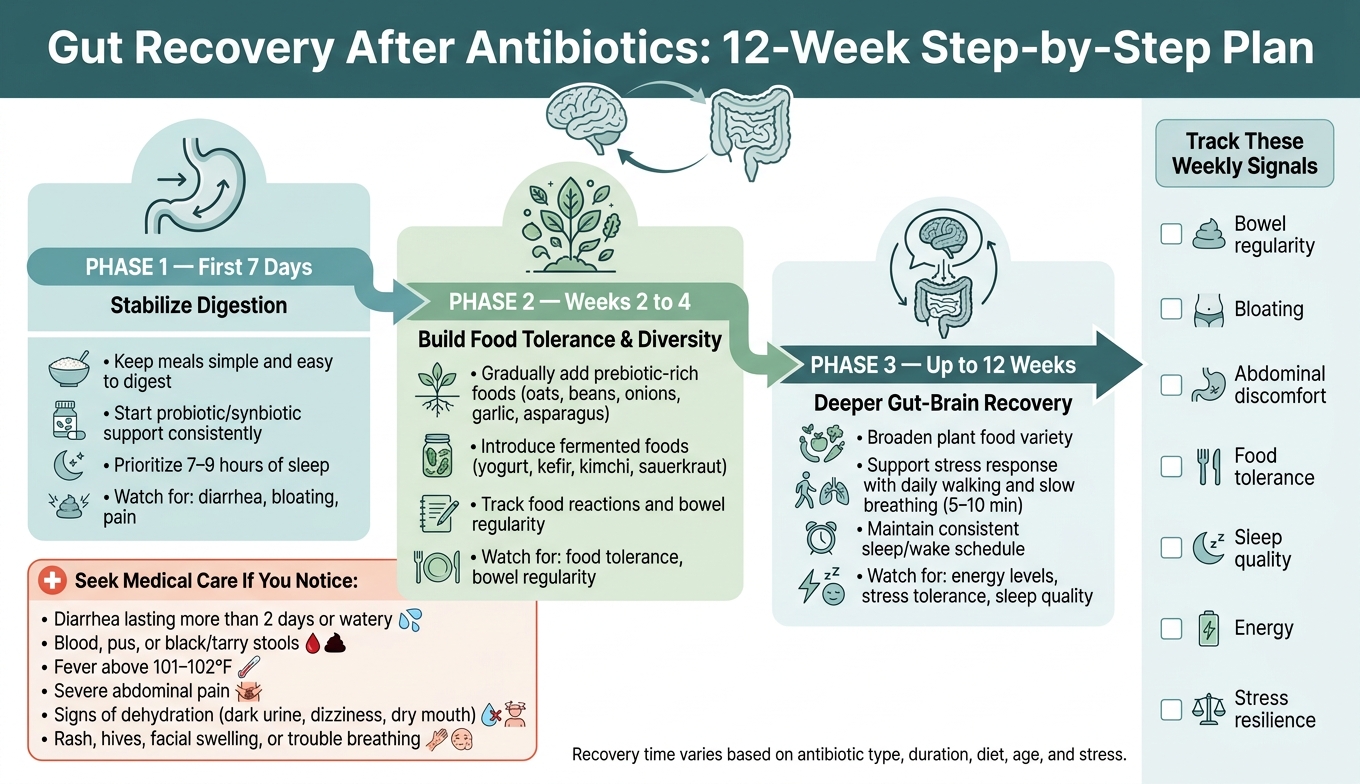
Gut Recovery After Antibiotics: 12-Week Timeline
Recovery works best when it’s simple and easy to repeat. What matters most is staying consistent for several weeks, not trying to nail every step on day one.
Once you’ve started supporting the gut with food, probiotics, and better sleep, this timeline helps you put those steps into a clear order.
A Simple Timeline: First 7 Days, 4 Weeks, and 12 Weeks
The point isn’t to pile everything on at once. Start with the basics, then build from there.
| Phase | Primary Goal | What to Focus On | Optional Reset Format |
|---|---|---|---|
| First 7 Days | Stabilize digestion | Keep meals simple, use your microbiome support consistently, prioritize sleep | 7-day |
| First 4 Weeks | Increase food tolerance and microbial diversity | Gradually add prebiotic-rich and fermented foods, track food reactions | 4-week |
| 12 Weeks | Deeper gut-brain recovery | Support stress-response balance with adaptogens with consistent habits, broaden plant variety | 12-week |
In the first 7 days, focus on calming digestion down. Keep meals simple. Stay consistent. This is not the time to overhaul your whole life in one shot.
During weeks 2 through 4, start bringing in more prebiotic-rich and fermented foods as tolerance improves. The aim here is to build food tolerance and support more microbial diversity.
By 12 weeks, you’re working toward steadier digestion, better stress tolerance, and more stable sleep. Rebirth RE-1 offers a structured reset format that lines up with each of these phases if you want a set framework to follow.
As you move through each phase, track a few weekly markers so you can spot changes early and adjust if needed.
What to Track During Recovery
Track weekly trends, not day-to-day noise.
Look at a small group of signals: bowel regularity, bloating, abdominal discomfort, food tolerance, sleep quality, energy, and stress resilience. You don’t need a fancy app. A quick weekly note in your phone is enough.
Each week, ask yourself: "Am I improving week to week?"
When to Get Medical Advice
Most post-antibiotic changes settle down with time. But some symptoms need quick medical attention. Self-guided recovery after antibiotics only makes sense when symptoms are mild and clearly getting better. If warning signs show up, don’t wait it out in the name of microbiome recovery.
Symptoms That Need Prompt Medical Attention
Diarrhea after antibiotics is common, and a lot of cases are mild. Still, you should get care sooner if symptoms are severe, keep going, or start getting worse.
Contact a healthcare provider promptly if you have any of the following:
- Diarrhea that lasts more than 2 days or becomes frequent and watery
- Blood, pus, or black/tarry stools
- Fever above 101–102°F, especially with diarrhea
- Severe abdominal pain or cramping that doesn’t let up
- Signs of dehydration: dark urine, dizziness, dry mouth, or very little urination
- Rash, hives, facial swelling, or trouble breathing - these may point to an allergic reaction and need urgent care
These symptoms can mean the issue is more than short-term dysbiosis. C. difficile can begin during treatment or show up days to weeks after the antibiotic ends.[2][3][4] If new digestive symptoms start after your prescription is over, tell your doctor about your recent antibiotic use.
Questions to Raise With Your Clinician
If your symptoms don’t match the usual post-antibiotic recovery pattern, a clinician can help sort out what’s going on. Ask plainly whether your symptoms look like antibiotic-associated diarrhea, C. difficile, a medication side effect, or another gut disorder.
It also helps to ask whether stool testing makes sense, whether your antibiotic may have increased the chance of gut disruption, and whether there are any foods or supplements you should avoid based on your current symptoms. If you’ve had GI problems more than once, ask whether antibiotics may have brought an underlying issue to the surface, such as IBS or inflammatory bowel disease.
If symptoms fall outside normal recovery, stop self-managing and get checked out.
Conclusion: Restore the Gut-Brain Axis With a Layered Recovery Approach
Antibiotics can throw off gut microbes and ripple into digestion, mood, sleep, and immune function. Put all of this together, and the steps in this guide can help support the gut-brain axis after antibiotics.
The gut-brain axis is complex, so recovery usually goes better as a steady, layered process. Not a one-and-done fix.
That’s why the plan above tends to work best as a routine you stick with over time. The idea is simple: combine probiotics and prebiotics, fiber-rich foods, postbiotic support, and steady sleep and stress habits so each piece does its job.
If you want a set daily routine, Rebirth RE-1 lines up with this layered approach. Rebirth RE-1 is a clinically backed 3-in-1 synbiotic with prebiotics, probiotics, and postbiotics, offered in 7-day, 4-week, and 12-week reset formats.
Track your progress, stay consistent, and give your gut-brain axis time to reset.
FAQs
How long does gut recovery usually take after antibiotics?
Gut recovery after antibiotics takes time, and it doesn’t look the same for everyone. Some people start to feel better within the first week. But getting the microbiome back to where it was before treatment often takes much longer.
Research suggests that some helpful bacteria may need months to return. In some cases, they can take up to two years to reach pre-treatment levels. Using a synbiotic like Rebiirth RE-1 on a steady basis can help support that rebalancing process over time.
When should I worry about diarrhea after antibiotics?
Antibiotics can cause diarrhea because they disrupt your gut microbiome. Mild stomach and bowel changes are common while taking them. But if your symptoms are severe, last, or get worse, talk to a healthcare professional.
Antibiotics can also increase the risk of infections and longer-term gut problems. Because of that, support during recovery may help. A synbiotic such as Rebiirth RE-1 may help restore your gut’s natural balance.
What foods help rebuild the gut-brain axis fastest?
Focus on whole, unprocessed foods that help feed gut bacteria. Put prebiotic foods at the top of the list, like garlic, onions, asparagus, bananas, beans, and lentils. Add fermented foods too, such as yogurt, kimchi, and sauerkraut.
It also helps to eat high-fiber foods like whole grains and legumes, along with foods that can help calm inflammation, including berries and leafy greens.
If you want more direct gut support, Rebiirth RE-1 combines probiotics, prebiotics, and postbiotics.