

Your cortisol pattern depends a lot on when you get light, sleep, and eat. This article’s main point is simple: when your body clock shifts, your cortisol rhythm can shift with it, and your gut microbes may drift too.
Here’s the short version:
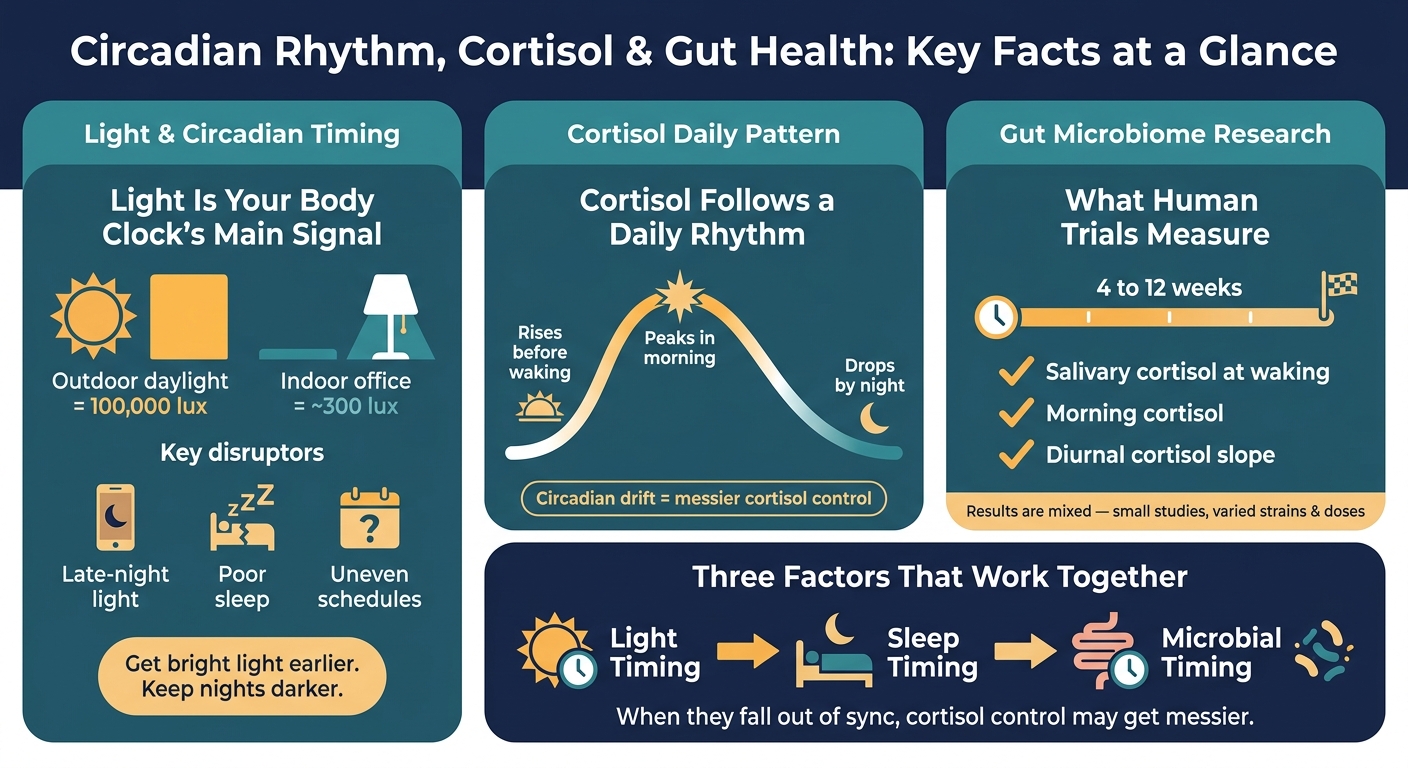
- Cortisol follows a daily pattern in healthy adults: it starts rising before you wake up, peaks in the morning, and drops by night.
- Light is the main time cue. Outdoor daylight can reach 100,000 lux, while many indoor offices sit near 300 lux.
- Late-night light, poor sleep, and uneven schedules can push your body clock later and throw off cortisol timing.
- Gut microbes also run on daily rhythms, and those rhythms appear linked to stress signaling.
- Human microbiome trials often last 4 to 12 weeks and usually track salivary cortisol, morning cortisol, and the daily cortisol slope.
- Results are mixed. Small studies, different strains, different doses, and different testing methods make firm answers hard.
If I boil it down even more, it’s this: light timing, sleep timing, and microbial timing seem to work together. When they fall out of sync, cortisol control may get messier.
A few takeaways stand out:
- Get bright light earlier in the day
- Keep nights darker
- Stick to a more regular sleep schedule
- Read probiotic and synbiotic claims with care, because product-specific cortisol effects still need direct human proof
This article reviews that link in plain English, without overclaiming what the human research can prove right now.
Circadian Rhythm, Cortisol & Gut Health: Key Facts at a Glance
The Problem Is Not Cortisol. It’s Being Out of Rhythm.
sbb-itb-1bbfe7f
How the Circadian Clock, Gut Microbiome, and HPA Axis Interact
Daily light cues are only part of the story. The SCN also helps time hormone activity across the brain-gut stress axis. It connects light exposure, sleep timing, and HPA-axis output, which shapes the day-to-day pattern of cortisol release.
Circadian signaling also affects serotonin pathways, which helps keep stress timing more stable [1]. At the same time, microbial rhythms and metabolites feed back into this same clock-stress system. In plain terms, the body clock and the gut are in constant conversation.
Those clock signals also help set the conditions for microbial metabolites that can change cortisol release. When that timing drifts, the normal cortisol rhythm becomes easier to throw off.
What Human Studies Show About Sleep Disruption, Shift Work, and Urban Living
Light Timing, Sleep Regulation, and Circadian Drift
In everyday life, the biggest things that throw off circadian timing are light at the wrong time, too little sleep, and uneven schedules. Light is the body’s main time cue, so when light exposure is off, sleep timing and cortisol timing can shift too.
Many urban indoor spaces have the same problem: they’re too dim during the day to give the body a strong daytime signal, and too bright at night when the body should be winding down. That mix can delay sleep and weaken the normal daily rhythm of cortisol [1].
Over time, this kind of circadian drift can also disrupt the gut microbiome’s daily rhythm, which pulls the gut-clock system even more out of sync. In human studies, this drift shows up most clearly as sleep loss, shift work, and later cortisol release. Those patterns set up the sleep and cortisol changes discussed next.
Clinical Research on Microbiome Support for Stress and Cortisol Regulation
What Probiotic, Prebiotic, and Synbiotic Trials Have Measured
Once researchers show that circadian disruption can change cortisol patterns, the next step is pretty clear: test whether microbiome support can help shift those patterns back.
Most intervention trials last 4 to 12 weeks. Across those studies, researchers tend to track a similar set of outcomes: salivary cortisol at waking, morning cortisol, and the diurnal cortisol slope, along with standardized stress questionnaires.
That said, comparing trial results isn't simple. Studies often use different strains, doses, participant groups, and outcome measures. On top of that, many trials are small, which adds uncertainty and makes it harder to apply the findings to a broader group of people. That's why study design matters just as much as the intervention being tested.
Overall, the evidence looks promising, but it isn't definitive yet.
Where Rebirth RE-1 Fits in the Research Conversation
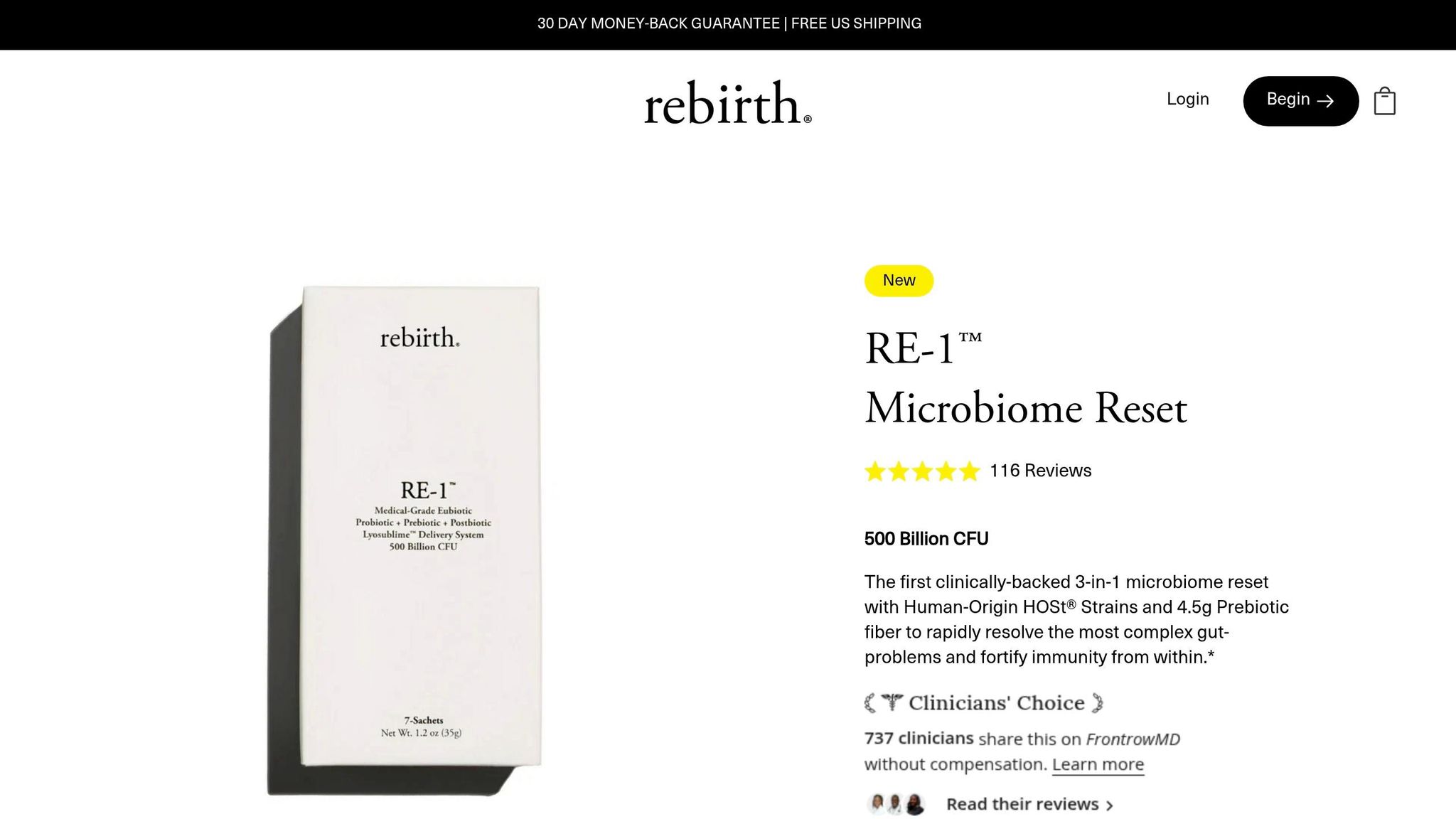
Against that backdrop, Rebiirth RE-1 sits within the same trial-length window used in much of this research. It's a 3-in-1 synbiotic that combines prebiotics, probiotics, and postbiotics, and it's offered in 4-week and 12-week protocols that line up with the timelines most often used in human stress-and-cortisol studies. The formula includes Human Origin Strains (HOSt™) and comes in a sachet format.
Any product-specific effect on cortisol still needs direct clinical evidence. Even so, the formulation lines up with the direction of current microbiome-stress research.
Key Takeaways and Research Gaps
What Current Evidence Supports with Reasonable Confidence
Across the animal and human studies reviewed above, the clearest pattern is that cortisol tracks circadian timing, with light exposure playing a central role [1]. In plain terms, circadian timing seems to shape HPA-axis output and the daily rhythm of cortisol [1]. When light exposure is weak or happens at the wrong time, it can disrupt circadian signaling [1].
That pattern comes through pretty clearly. But the human evidence is still uneven.
What Still Needs Better Human Research
Human studies are hard to line up side by side because they differ in who took part, how timing was set up, and how cortisol was measured [1]. That makes apples-to-apples comparison tough. Researchers still need standardized protocols and analysis methods to pin down the best timing, duration, and target groups [1].
For now, the human literature is too inconsistent to support firm conclusions.
FAQs
Can circadian disruption raise cortisol even if I sleep enough?
Yes. Circadian disruption can push cortisol up even when you get enough sleep. That’s because your body clock doesn’t just shape when you feel sleepy or alert. It also helps control gut microbiome rhythms and stress signaling.
When circadian rhythms get out of sync - because of irregular schedules, late-night eating, or shift work - the gut barrier and microbiome rhythms can get thrown off too. And when that happens, the HPA axis may become overactive, which can lead to higher cortisol levels, including at night.
How quickly can light and meal timing affect my cortisol rhythm?
Research suggests meal timing can affect your circadian rhythm within a week. If you shift your main meal later in the day, it may throw off the rhythm of your salivary microbiota and increase pro-inflammatory bacteria.
That’s why consistent meal timing matters. Early time-restricted feeding may help keep your internal clocks in sync. At the same time, microbiome shifts that last usually take longer and depend on sticking with the routine over time.
Rebiirth RE-1™ may help support that process, with clinical data showing symptom relief in as little as seven days.
Can gut-friendly supplements actually reset cortisol timing?
Yes. Gut-friendly supplements may help support cortisol timing by addressing gut microbiome imbalances that can throw off the body’s stress response. When dysbiosis affects the HPA axis, cortisol can stay high at night and get in the way of sleep.
Targeted synbiotics like Rebiirth RE-1 are designed to help restore microbial balance, support stress-response pathways, and bring gut rhythms more in line with the body’s circadian cycle.