

Your gut can shift mood, stress, sleep, and focus by changing serotonin, GABA, and dopamine signals.
Here’s the short version: gut microbes, immune signals, and the vagus nerve work together. When the gut stays in balance, this system helps support normal neurotransmitter activity. When dysbiosis and inflammation show up, tryptophan gets pushed away from serotonin, GABA-related calming signals can weaken, and dopamine pathways tied to reward and motivation can drop.
A few key facts stand out:
- The enteric nervous system has about 100 million neurons
- About 95% of peripheral tryptophan metabolism goes through the kynurenine pathway
- Lactobacillus and Bifidobacterium can help produce GABA in the gut
- SCFAs from fiber fermentation help support the gut barrier, immune tone, and brain signaling
- Cytokines such as TNF-α, IFN-γ, IL-6, and IL-1β can shift serotonin, GABA, and dopamine activity
- The vagus nerve acts like a direct message line from the gut to the brain
In plain English: if gut inflammation goes up, brain signaling can change too. That helps explain links between gut trouble and low mood, anxiety, poor sleep, stress sensitivity, and low motivation.
Here’s the big picture at a glance:
| Neurotransmitter | Main gut link | Main immune effect | Common result when disrupted |
|---|---|---|---|
| Serotonin | Tryptophan supply, gut cells | IDO activation shifts tryptophan to kynurenine | Mood and sleep changes, GI issues |
| GABA | Microbial production in the gut | Lower receptor sensitivity during inflammation | More stress, anxiety, and sleep trouble |
| Dopamine | Tyrosine and microbial precursors | Lower BH4, more inflammatory pressure | Less motivation, reward, and focus |
I’d sum it up like this: the gut-immune-brain axis changes brain chemistry through metabolites, cytokines, barrier health, and nerve signaling. And that’s why microbiome support tools like prebiotics, probiotics, postbiotics, and synbiotics are often discussed in relation to neurotransmitter balance.
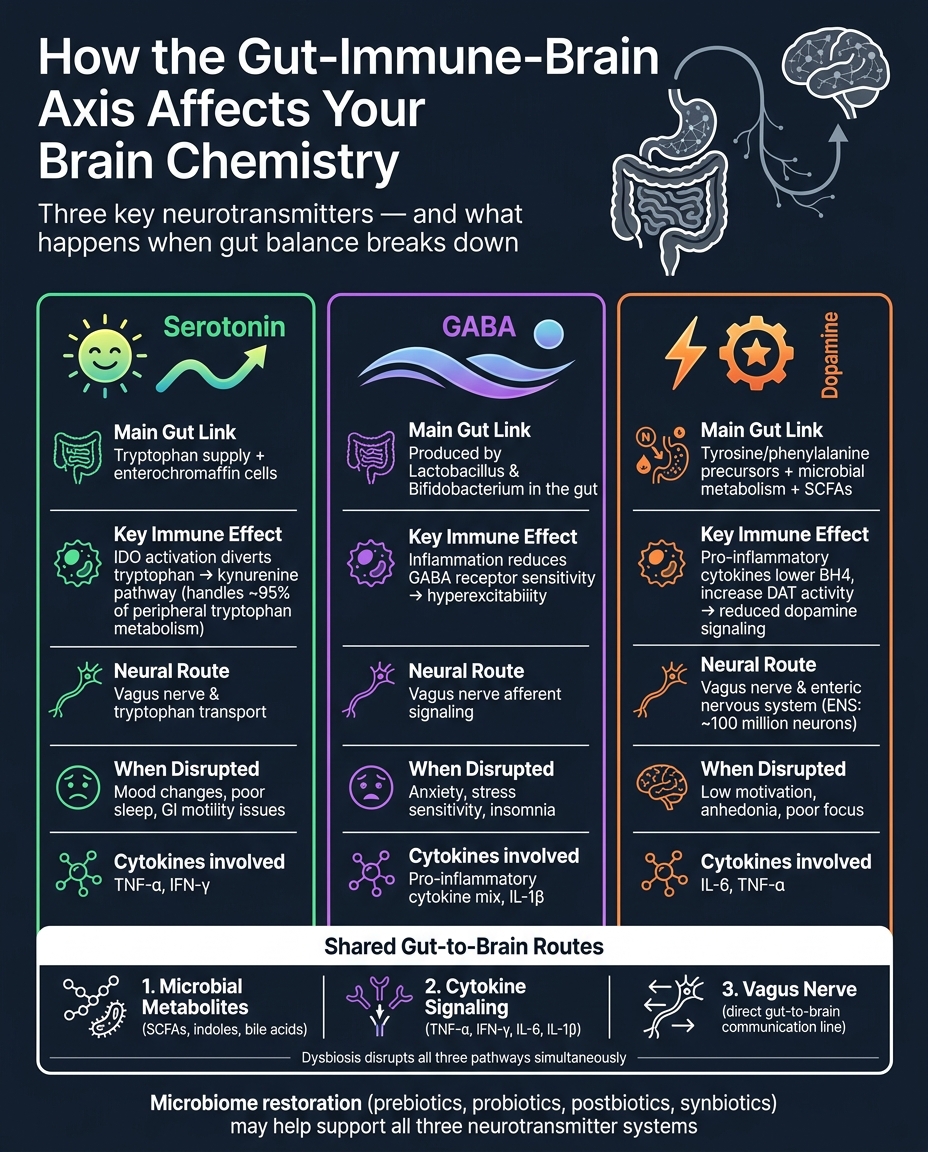
Gut-Immune-Brain Axis: How Serotonin, GABA & Dopamine Are Affected
The Gut-Brain Axis: How Your Microbiome Controls Your Mood | Prof. Felice Jacka | ZOE Podcast

sbb-itb-1bbfe7f
How Gut Microbes and Their Metabolites Affect Neurotransmitter Activity
Gut microbes shape neurotransmitter activity in a few direct ways. They can change how many raw materials the body has to work with, make neuroactive compounds in the gut, and send signals through the gut lining and vagus nerve. Those routes affect serotonin, GABA, and dopamine in plain, physical ways.
Tryptophan and the Kynurenine Shift
When inflammation shows up, the body starts sending more tryptophan down the kynurenine pathway instead of using it for serotonin-related routes. This matters because the kynurenine pathway handles about 95% of peripheral tryptophan metabolism, and too much activity in that pathway is a hallmark of inflammation-linked depression [1].
Put simply, inflammation changes traffic flow. Instead of supporting serotonin availability, more tryptophan gets pulled into immune-linked metabolism. The result is less serotonin support and more signaling tied to inflammatory processes.
GABA: Microbial Production and Stress Signaling
Lactobacillus and Bifidobacterium species convert glutamate directly into GABA inside the gut. That gut-produced GABA can affect stress signaling through the enteric nervous system (ENS) and the vagus nerve.
When dysbiosis cuts down these bacterial groups, levels of gut-derived GABA can fall. And when that happens, stress signaling may become more intense [3]. GABA isn't the end of the story, either. Microbial signals also reach catecholamine pathways and other metabolites that help shape brain activity.
Dopamine: Tyrosine Precursors and Catecholamine Signaling
Dopamine synthesis depends on tyrosine and phenylalanine, and microbial metabolism can affect both. Some gut bacteria can turn tyrosine into dopamine precursors or influence enzymes involved in catecholamine production.
If those microbial populations get disrupted, precursor supply can drop. That may change dopamine signaling in systems linked to stress response and reward processing. In other words, the gut can influence the brain's chemistry before dopamine is even made.
SCFAs and Other Neuroactive Metabolites
Short-chain fatty acids, or SCFAs, are made when gut bacteria ferment dietary fiber. These compounds help support barrier integrity, regulate immune tone, and influence neural signaling directly.
Gut microbes also convert primary bile acids into secondary bile acids such as deoxycholic acid, which interact with TGR5 receptors and trigger the release of neuroactive peptides like GLP-1 [1]. On top of that, tryptophan-derived indoles help maintain the mucosal barrier, while microbial-derived glutamate supports barrier integrity and also affects neural signaling [1].
Taken together, these metabolite shifts change the gut's chemical environment first. From there, they set up the cytokine and vagus-nerve effects that come next.
Cytokines, Vagus Nerve Signaling, and Neuroinflammation
When gut metabolites set off immune activity, that signal doesn’t stay in the gut. Cytokines and vagal signaling help carry it into the brain, where it can shift neurotransmitter activity.
Cytokines That Alter Serotonin, GABA, and Dopamine Activity
Gut inflammation releases cytokines - immune messenger proteins - that can change how neurotransmitters are made, released, and received.
| Cytokine | Mechanism | Behavioral Consequence |
|---|---|---|
| TNF-α / IFN-γ | Activates IDO; diverts tryptophan to kynurenine | Reduced serotonin; depression and anxiety |
| IL-6 / TNF-α | Reduces BH4; increases DAT activity | Reduced dopamine; anhedonia |
| IL-1β | Activates vagal afferents; triggers microglial activation | Altered stress response; neuroinflammation |
| Pro-inflammatory mix | Reduces GABA receptor sensitivity | Hyperexcitability; insomnia |
This isn’t just a chemistry shift on paper. If tryptophan gets pulled away from serotonin production and into the kynurenine pathway, serotonin output can drop. If BH4 falls and DAT activity goes up, dopamine signaling can weaken too. That helps explain why inflammation is often tied to low mood, anxiety, poor stress tolerance, and sleep problems.
The same immune signals also move through vagal pathways, sending updates from the gut to the brain.
The Vagus Nerve as a Gut-to-Brain Communication Channel
Gut metabolites stimulate enteroendocrine cells, which then release CCK and GLP-1. Those signals activate vagal afferents and relay information to the NTS, where dopamine signaling shifts in reward circuits and inflammatory tone changes [1]. That process also includes butyrate’s effect on hypothalamic activity and stress regulation [2].
You can think of the vagus nerve like a live wire between the gut and the brain. When the gut keeps sending stress or inflammation signals, the brain keeps getting the message.
If that signaling continues, the brain’s immune cells can start to shift into an inflammatory state.
How Dysbiosis Drives Barrier Dysfunction and Microglial Activation
When gut dysbiosis occurs, the intestinal barrier gets weaker and permeability goes up. That makes it easier for inflammatory signals to spread beyond the gut.
Once those signals reach the brain, microglia can move from a resting surveillance state into an activated, pro-inflammatory mode. In that state, they disrupt synaptic pruning and weaken GABA and dopamine signaling. Butyrate helps maintain blood-brain barrier integrity, regulate microglial maturation, and may blunt microglial activation [2].
Serotonin, GABA, and Dopamine in the Gut-Immune-Brain Axis: A Connected View
Immune signals and vagal signals don’t act in separate lanes. They meet at three major neurotransmitter systems: serotonin, GABA, and dopamine. That means gut, immune, and brain activity often shift at the same time.
Serotonin's Role in Mood, Motility, and Immune Cross-Talk
Serotonin connects gut motility, mood, and sleep. In the gut, enterochromaffin cells make serotonin to help regulate motility. Put simply, gut serotonin helps keep things moving, while brain serotonin helps support mood and sleep.
There’s a catch, though. Cytokine-driven IDO activation can reduce serotonin support by diverting tryptophan. So even when the raw material is there, inflammation can reroute it.
GABA and dopamine show a similar pattern. Microbial inputs, immune pressure, and neural signaling can all change how these systems behave.
GABA and Dopamine in Stress, Reward, and Autonomic Balance
GABA is the brain’s main inhibitory neurotransmitter. It helps support stress tolerance and sleep. Gut microbes such as Lactobacillus and Bifidobacterium are linked to GABA pathways. When inflammation lowers GABA receptor sensitivity, that calming inhibitory signaling gets weaker.
Dopamine plays a big role in motivation, focus, reward, and movement. SCFAs, especially butyrate, affect serotonin, GABA, and dopamine signaling [2]. LPS-driven inflammation can also dull dopamine signaling through vagal and HPA-axis pathways, which can affect reward and motivation.
Comparison Table: Where Serotonin, GABA, and Dopamine Overlap and Differ
| Neurotransmitter | Main Gut Regulators | Key Immune Influences | Main Neural Route | Common Functional Effects |
|---|---|---|---|---|
| Serotonin | Enterochromaffin cells, tryptophan availability | Cytokines trigger the kynurenine shift via IDO | Vagus nerve & tryptophan transport | Mood, GI motility, sleep, satiety |
| GABA | Lactobacillus, Bifidobacterium | Inflammation reduces receptor sensitivity | Vagus nerve afferent signaling | Stress reduction, inhibitory tone, anxiety control |
| Dopamine | SCFAs, microbial precursors, gut inflammation | Pro-inflammatory cytokines, LPS-driven neuroinflammation | Vagus nerve & enteric nervous system | Reward, motivation, focus, movement |
These shared routes help explain why microbiome restoration, such as using synbiotics vs probiotics, can affect all three neurotransmitter systems at once. That shared sensitivity also helps explain why synbiotic support can matter across the full gut-immune-brain axis.
Microbiome Restoration and Where Synbiotics Fit In
How Synbiotics and Postbiotics May Support Neurotransmitter Balance
These pathways don't operate in isolation. They affect each other, so when the microbiome starts to recover, it can help support several signaling routes at the same time.
Microbiome restoration changes the gut-level inputs that shape neurotransmitter signaling. Prebiotics feed helpful microbes. Probiotics add live strains. Postbiotics supply bioactive byproducts. And synbiotics bring prebiotics and probiotics together in one approach.
Here’s how that can play out:
- Prebiotics support SCFA production
- Probiotics may support GABA, serotonin, and dopamine production
- Postbiotics such as butyrate support barrier integrity and neuroimmune signaling [2]
Taken together, these inputs may help build a gut setting where neurotransmitter signaling remains more steady.
Rebirth RE-1 as a Microbiome Restoration Example
One example of this approach is Rebiirth RE-1™, which combines prebiotics, probiotics, and postbiotics in one daily format.
Rebiirth RE-1™ is a 3-in-1 synbiotic that delivers 500 billion CFU per serving along with 4.5 g of prebiotic fiber to support microbial growth and SCFA generation. Its HOSt™ (Human Origin Strains) are chosen for compatibility with the human GI tract, which may help support colonization. The Lyosublime™ delivery system is made to help protect live cultures from stomach acid and deliver them to the lower GI tract.
Its reset options are grouped by duration and support goal:
| Reset | Duration | Primary Focus |
|---|---|---|
| 7-Day Reset | 1 week | Early microbiome support and SCFA production |
| 4-Week Reset | 4 weeks | Gut-barrier and immune support |
| 12-Week Reset | 12 weeks | Longer-term microbiome stability and neurotransmitter support |
Conclusion: Key Pathways to Remember
The gut-immune-brain axis works through several linked channels: microbial metabolites, immune signaling, barrier integrity, and vagal communication. When signs of dysbiosis show up, it can throw off all of these pathways at once.
Microbiome restoration strategies, including synbiotics when they fit the situation, may help rebuild the gut conditions that support healthier signaling across this axis. The aim is steady support for the gut signals that shape neurotransmitter activity.
FAQs
How does gut inflammation affect serotonin?
Gut inflammation can throw serotonin production off course. Here’s why: tryptophan, the amino acid your body uses to make serotonin, can get pulled away into the kynurenine pathway instead.
When immune activity turns on enzymes like IDO and TDO, less tryptophan is left for serotonin production. That matters because serotonin plays a big part in mood, sleep, and overall mental state.
This shift may do two things at once:
- Lower serotonin levels
- Produce neurotoxic metabolites that may affect mood in a harmful way
Rebiirth RE-1 helps support microbial balance and a healthier gut environment tied to neurotransmitter synthesis.
What role does the vagus nerve play?
The vagus nerve is the main two-way link between the gut and the brain. It picks up chemical signals - like neurotransmitters, bacterial byproducts, and short-chain fatty acids - and sends nerve messages to brain regions tied to emotion and stress.
It also affects the HPA axis, which helps keep stress hormones in check. But when inflammation sticks around or dysbiosis throws the gut off balance, that link can get disrupted. And when that happens, gut-brain signaling may weaken, which can affect mood stability.
Can synbiotics support mood and stress?
Yes. Synbiotics may help with mood and stress by supporting a balanced gut microbiome. That matters because the gut plays a part in how the body handles neurotransmitters like serotonin, GABA, and dopamine.
They may also help strengthen the gut barrier and reduce inflammatory markers. Over time, that can support emotional resilience and a steadier response to stress.