

My main takeaway: feed your gut microbes without pushing past what you can tolerate. Start with one small serving of a tolerated plant food, such as cooked oats, and track symptoms before adding more. Fiber helps microbes make short-chain fatty acids that support the gut lining - but a change in gut bacteria does not prove inflammation has improved.
A 10-week trial of 36 healthy adults linked a fermented-food diet with more microbial diversity and lower inflammatory markers. That does not make fermented foods an IBD treatment.
Here’s what I’d keep in mind:
- Food patterns come first. Aim for varied plant foods, enough protein, and unsaturated fats; adjust portions and textures during flares.
- Fiber needs differ. With strictures or active IBD, get clinical guidance before increasing it.
- Supplements are optional. Prebiotics, probiotics, and postbiotics serve different roles. Product claims - including those for Rebirth RE-1 - are not proof of IBD remission.
- Symptoms are only part of the picture. <u>Keep prescribed treatment and monitoring in place.</u> Seek care for weight loss, dehydration, or persistent diarrhea, and urgent evaluation for severe pain or possible blockage.
I’d focus on steady, tolerated meals - not a promised microbiome “reset.”
Diet Interventions for IBD: The Anti-inflammatory Diet and Gut Microbiome
sbb-itb-1bbfe7f
How Food Affects Gut Bacteria and Immunity
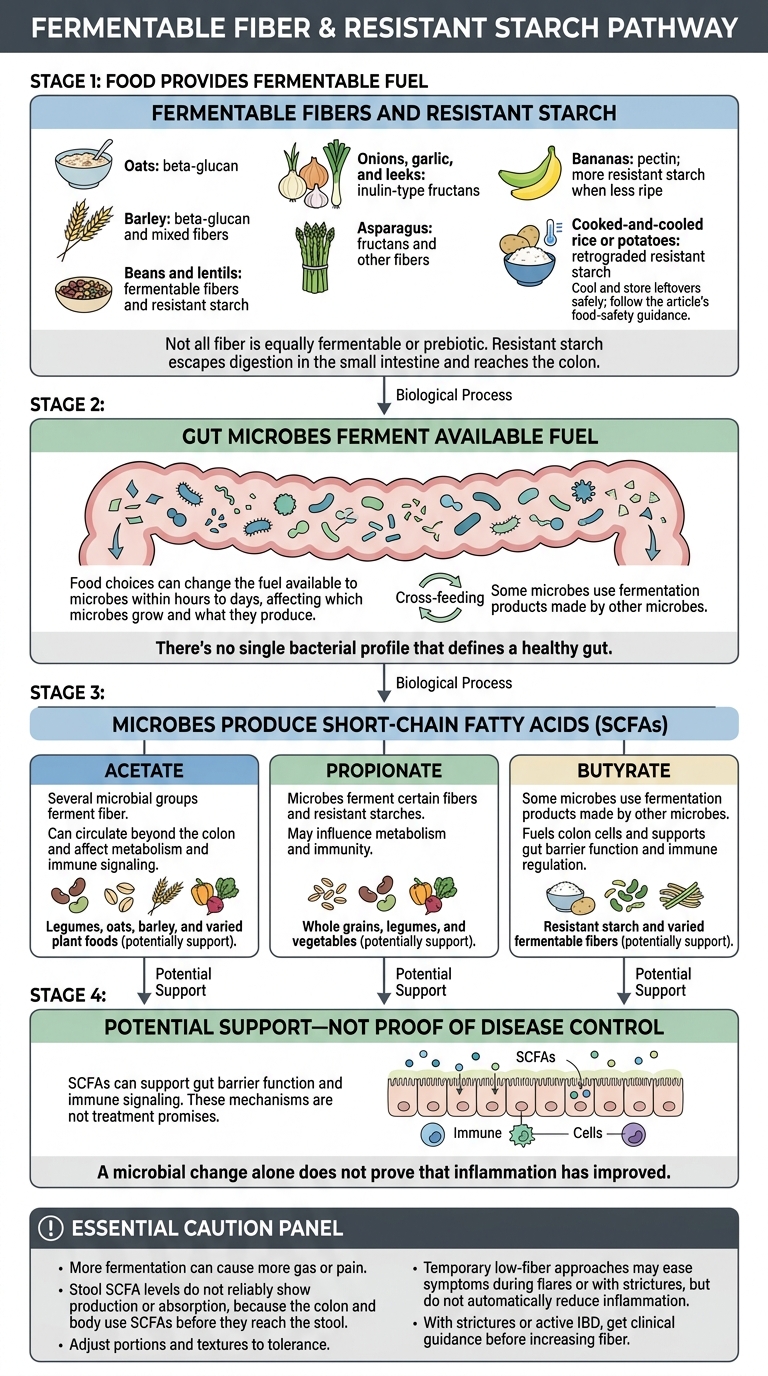
How Dietary Fiber Supports the Gut Microbiome
The goal is to support inflammation control without making IBD symptoms worse. The gut microbiome includes the microbes in the digestive tract and the compounds they make. Dysbiosis describes a change in that community or its activity that is linked to disease.
There’s no single bacterial profile that defines a healthy gut. Rather than chasing an ideal species list, focus on microbial function, symptoms, and clinical markers. Food choices can influence fermentation, gut barrier support, and immune signaling - but that doesn’t guarantee better disease control.
Food can change the fuel available to microbes within hours to days, affecting which microbes grow and what they produce. A microbial change alone does not prove that inflammation has improved.[12][15] These effects also vary across eating patterns, particularly as fiber intake and food processing change.
How Eating Patterns Compare
Eating patterns differ in how much fermentable fuel they provide and how well they fit your symptom tolerance. Fat quality matters, too: unsaturated fats from olive oil, nuts, seeds, and fish differ from saturated and highly processed fats.
| Eating pattern | Microbial effects | Possible outcomes and evidence limits | Suitability |
|---|---|---|---|
| Mediterranean-style | Vegetables, fruits, legumes, whole grains, nuts, seeds, and olive oil provide fibers and plant compounds that support fermentation and SCFA production. | Linked with favorable cardiometabolic and inflammatory outcomes, though microbial responses vary. | Adjust portions and textures to tolerance.[11][14] |
| IBD Anti-Inflammatory Diet (IBD-AID) | Focuses on certain carbohydrates, tolerated fibers, and fermented foods while reducing some processed foods to influence microbial activity. | Clinical evidence is limited. It does not replace medication or individualized IBD care. | Work with a gastroenterologist or registered dietitian, especially during active disease, weight loss, or nutrient deficiencies. |
| Temporary low-fiber approach | Reduces rough textures and insoluble fiber, sometimes limiting the fuel available to microbes. | May ease symptoms during flares or with strictures, but does not automatically reduce inflammation. | Tailor short-term use to your needs. Reintroduce fiber gradually as symptoms and stricture-related guidance allow.[10][14] |
| Western-style | Often provides less fermentable fiber and more refined carbohydrates, ultra-processed foods, added sugars, and saturated or highly processed fats. | Observational studies link it with poorer metabolic and inflammatory profiles; the overall diet matters. | Rely less on this pattern without banning all convenience foods. |
Specific fibers and starches usually have stronger microbial effects than broad food labels.
Prebiotic Fiber and Resistant Starch
Fiber resists digestion in the small intestine, but not all fiber is equally fermentable or prebiotic. A prebiotic is a substance selectively used by the body’s microorganisms in a way that provides a health benefit.
Resistant starch escapes digestion in the small intestine and reaches the colon. As bananas ripen, their resistant starch tends to decrease. Cooking and then cooling starchy foods can increase their resistant starch.
| Food | Main fiber or starch | Microbial role | Tolerance and preparation |
|---|---|---|---|
| Oats | Beta-glucan | Supports fermentation and SCFA production | Cook well and increase portions gradually. |
| Barley | Beta-glucan and mixed fibers | Provides fuel for fermentation | Choose soft, well-cooked preparations. |
| Beans and lentils | Fermentable fibers and resistant starch | Supports SCFA-producing microbes | Start with small portions, rinse canned beans, and cook thoroughly. |
| Onions, garlic, and leeks | Inulin-type fructans | Feeds specific microbes | May cause gas or pain in people sensitive to fructans. |
| Asparagus | Fructans and other fibers | Supports fermentation | Cook until tender and start with modest portions. |
| Bananas | Pectin; more resistant starch when less ripe | Provides fermentable carbohydrate | Riper fruit may be easier to tolerate. |
| Cooked-and-cooled rice or potatoes | Retrograded resistant starch | Provides fuel for fermentation in the colon | Follow the cooling and storage guidance below. |
Cool and store leftovers safely. Refrigerate them within 2 hours, or within 1 hour when temperatures exceed 90°F. Keep the refrigerator at 40°F or below, eat leftovers within 3–4 days, and reheat to 165°F.[6][8][9][13][16] Discard food left out too long; reheating cannot reliably make it safe.
These foods feed microbes that produce short-chain fatty acids and prebiotics that help manage inflammation.
How Short-Chain Fatty Acids Support the Gut
SCFAs help explain how some eating patterns support the gut barrier and immune balance.
| SCFA | How microbes produce it | Intestinal and immune roles | Foods that may support production |
|---|---|---|---|
| Acetate | Several microbial groups ferment fiber. | Can circulate beyond the colon and affect metabolism and immune signaling. | Legumes, oats, barley, and varied plant foods |
| Propionate | Microbes ferment certain fibers and resistant starches. | May influence metabolism and immunity. | Whole grains, legumes, and vegetables |
| Butyrate | Some microbes use fermentation products made by other microbes. | Fuels colon cells and supports gut barrier function and immune regulation. | Resistant starch and varied fermentable fibers |
These mechanisms are not treatment promises.[15] More fermentation can cause more gas or pain. Stool SCFA levels also do not reliably show production or absorption, because the colon and body use SCFAs before they reach the stool.
Build an Anti-Inflammatory Eating Pattern
Plan Meals With a Flexible Plate
Put those microbiome effects into practice with meals you can tolerate. Aim for steady fiber intake to support SCFA production without worsening IBD symptoms. Build a flexible plate: half tolerated produce, one-quarter protein, and one-quarter starch. Add olive oil, avocado, or another unsaturated fat. Adjust portions to your appetite and symptoms. If you're eating less or losing weight, prioritize calories and protein.[19][7]
Build familiar meals: oatmeal with berries and peanut butter; salmon with rice and cooked vegetables; or lentil soup with whole-grain toast when tolerated.
When appetite is low, try smaller, more frequent meals. Oil or smooth nut butter can add calories without much extra food volume, if tolerated.[7] Let symptoms guide meal size and texture.
Adjust Foods for IBD Flares and Remission
Change texture and portions before cutting out whole food groups. The Crohn’s & Colitis Foundation recommends adding food choices back as recovery allows. A short-term reduction in fiber may help during flares when clinically appropriate, but it shouldn't become a permanent restriction.[2][20]
| Category | During a flare | During remission |
|---|---|---|
| Build more often | Soft cooked vegetables, peeled or canned fruit, tolerated oatmeal or rice, tender proteins, and olive or canola oil | More types of plant foods, whole grains, legumes, nuts, seeds, and adequate protein |
| Introduce cautiously | Raw produce, skins, bran, whole nuts, seeds, and legumes; adjust texture and portion with clinical guidance | Previously restricted foods, added gradually rather than all at once |
| Limit based on tolerance | Foods that reliably worsen pain or diarrhea, including greasy foods, caffeine, or carbonated drinks | Personal symptom triggers; reduce excess saturated fat and highly processed foods without sacrificing adequate intake |
Strictures or obstruction risk call for individualized guidance before you increase fiber or change food textures. If bloating persists, a dietitian-guided low-FODMAP trial followed by structured reintroduction may help. This approach targets symptoms, not inflammation, and isn't meant for long-term management.[17][18]
Add Variety Slowly and Track Tolerance
Once you've set your meal pattern, test foods one at a time. Start with ¼ to ½ cup of cooked carrots or oatmeal. In a food diary, note the amount, preparation, and timing, along with pain, bloating, and bowel patterns. These notes can help you spot symptom patterns.[2][7]
Prebiotics, Probiotics, Postbiotics, and Supplements
Start with meal patterns. If food changes alone aren't enough, targeted supplements may offer support - but they should match your symptoms and treatment goals.
What Prebiotics, Probiotics, and Postbiotics Do
Prebiotics, probiotics, and postbiotics help the gut in different ways. Use them alongside food and prescribed care, not in place of either.[1][4][23]
| Category | Sources or ingredients | Role and key distinction |
|---|---|---|
| Prebiotics | Inulin, GOS, and resistant starch from select plant foods | Substrates selectively used by gut microbes that provide a health benefit; tolerance varies |
| Probiotics | Certain live-culture foods and supplements | Live microbes with demonstrated benefits at adequate doses; more CFUs don't automatically mean better results |
| Postbiotics | Defined preparations of inactivated microbes or their components | Must provide a demonstrated health benefit; isolated SCFAs alone don't qualify |
Choose Fermented Foods With Live Cultures
Look for plain yogurt labeled as having live and active cultures, kefir, or refrigerated sauerkraut and kimchi labeled as containing live cultures. Heat treatment after fermentation can eliminate live microbes. Benefits depend on the strain, dose, and product. Fermented foods are not established IBD treatments.[1][25]
If you're sensitive to lactose, yogurt and kefir may be easier to digest than milk, though portion size still matters. Check dairy-free versions for live cultures, too. Kimchi may be spicy, and both kimchi and sauerkraut can be high in sodium.[1][25]
When appropriate, choose refrigerated, commercially prepared products. Follow storage instructions and handle them carefully. Adjust portions to your IBD tolerance. Fermented foods are optional - not a requirement for an anti-inflammatory eating pattern.[1][25]
If food-based options aren't enough, a labeled supplement with clearly defined ingredients may be a next step.
Consider Rebirth RE-1 as an Optional Supplement
If you're considering a branded supplement, Rebirth RE-1 is one option to assess based on its label details and your tolerance.
Rebirth RE-1 is described as a 3-in-1 prebiotic, probiotic, and postbiotic supplement. Verify the current label before use.[22][24] Those claims don't prove microbiome restoration or IBD remission. Published human trials on this specific product would be needed to support those outcomes.
Before use, review strain names, potency, storage requirements, and human trial data with a clinician - especially if you're immunocompromised or managing active IBD.[25][26]
Conclusion: Start Slowly and Monitor Your Health
Use food to support gut microbes, but let your symptoms set the pace. The goal is an eating pattern you can maintain - not a guaranteed microbiome reset.[33]
- Assess: Record your starting symptoms and food intake. Identify your calorie, protein, fluid, and micronutrient needs.
- Add slowly: Make one food change at a time.
- Review: Track symptoms for several days after each change, then reassess your overall progress after 2–4 weeks.[27]
If you have active IBD, strictures, or severe diarrhea, talk with a gastroenterology clinician or registered dietitian before adding more fiber.[27] If symptoms worsen or warning signs appear, stop making diet changes and seek care.
When to Seek Medical Care
Contact a healthcare professional if you have unintended weight loss, suspected anemia, dehydration, persistent diarrhea, lasting fatigue, or possible malnutrition.[29][30][21] Seek urgent evaluation for severe or worsening abdominal pain, repeated vomiting, marked abdominal swelling, or an inability to pass stool or gas.[31][32]
Don't cut out major food groups without replacing the nutrients they provide. Feeling better does not prove that inflammation is under control. Continue prescribed IBD medication and monitoring as directed by your clinician.[21][30]
What Research Can and Cannot Tell Us
Diet studies have produced mixed results. Even when symptoms improve, those findings don't prove that a diet treats IBD or promise the same outcome for everyone. Individual responses vary.[28]
FAQs
How can I tell if diet changes are reducing inflammation?
Track both symptoms and measurable markers of inflammation. Watch for less bloating and gas, more regular bowel movements, better energy, clearer thinking, and better sleep [1].
After adding prebiotic and probiotic foods, you may see lower levels of C-reactive protein (CRP) and the pro-inflammatory cytokines TNF-α and IL-6 [2][3][4]. Fermentation of prebiotics increases short-chain fatty acids, especially butyrate, which reduce inflammatory signaling [2][4].
Can I support gut microbes if I tolerate little fiber?
Yes. Synbiotics combine prebiotics and probiotics and can help feed helpful gut bacteria and support gut balance when fiber intake is low. That said, people respond differently to prebiotics.
Rebiirth RE-1 is a 3-in-1 synbiotic that contains prebiotics, probiotics, and postbiotics. It provides 500 billion CFU per serving, along with a specialized prebiotic blend designed to support the microbiome while taking digestive sensitivity into account.
How do I know whether I need a gut supplement?
Diet changes may not be enough to support your gut microbiome. A gut supplement may help if you have persistent bloating, irregular bowel movements, poor nutrient absorption, low energy, or brain fog - especially after stress or antibiotic use [1]. These symptoms can have other causes, so they don’t necessarily mean you need a supplement.
If prebiotic and probiotic foods help but you’re not getting enough of them, Rebirth RE-1™ provides prebiotics, probiotics, and postbiotics to support short-chain fatty acid (SCFA) production and immune function [3][4][5].