

Gut health may play a role in chronic inflammation - but no supplement is a cure. My starting advice: eat fiber-rich foods as tolerated, support sleep and movement, and keep following prescribed treatment.
The gut-immune axis is a two-way conversation: gut microbes affect immune activity, and inflammation changes the gut. Finding microbial changes alongside disease does not prove they caused it.
Here’s how I approach the main points:
- Understand the loop: Microbial signals, the gut barrier, and immune responses may help inflammation persist.
- Choose support carefully: Prebiotics, probiotics, postbiotics, and synbiotics work differently. Look for human studies on the exact product, dose, and condition - not just a high microorganism count.
- Check product claims: RE-1’s supplied details list 500 billion CFU and 4.5 g of GOS/inulin per serving. Those numbers alone don’t show that it treats chronic inflammation.
- Know when to get help: Persistent symptoms need evaluation. Blood in the stool, unexplained weight loss, or severe abdominal pain call for medical attention.
My bottom line: <u>match your choices to your diagnosis, not a supplement promise</u> - especially if you have an inflammatory disease or a weakened immune system.
The Gut-Immune Brain Axis: Nutritional Approaches to Neuroinflammation
sbb-itb-1bbfe7f
How Microbes and the Gut Barrier Shape Inflammation
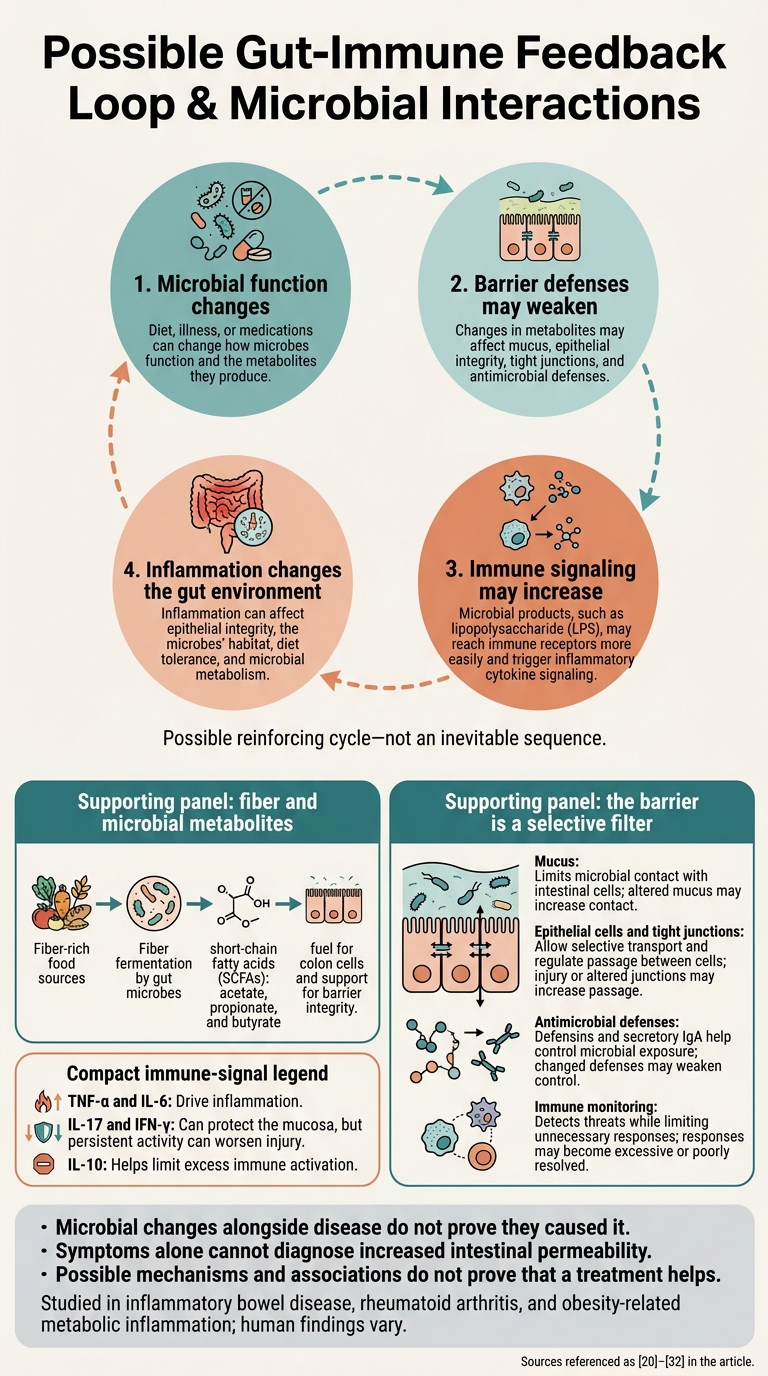
Gut-Immune Axis: How Inflammation Can Become a Loop
Microbial Metabolites and Immune Signals
Changes in microbial metabolites can affect both the gut barrier and immune signaling. When microbes ferment fiber, they produce short-chain fatty acids (SCFAs) - acetate, propionate, and butyrate. These compounds help fuel colon cells and support barrier integrity.[6][9][15]
Different immune signals play different roles. TNF-α and IL-6 drive inflammation. IL-17 and IFN-γ can protect the mucosa, but persistent activity can worsen injury. IL-10 helps limit excess immune activation.[10][15]
The Gut Barrier and Immune Tolerance
The intestinal barrier relies on antimicrobial defenses and local immune monitoring. It acts more like a filter than a sealed wall: its job is to allow selective passage, not complete separation.[11][15]
Symptoms alone cannot diagnose increased intestinal permeability. Persistent bloating, fatigue, or food reactions need medical evaluation.[11][15][16]
| Barrier component | Balanced function | Dysregulated function |
|---|---|---|
| Mucus | Limits microbial contact with intestinal cells | Altered mucus may increase contact |
| Epithelial cells and tight junctions | Allow selective transport and regulate passage between cells | Injury or altered junctions may increase passage |
| Antimicrobial defenses | Defensins and secretory IgA help control microbial exposure | Changed defenses may weaken control |
| Immune monitoring | Detects threats while limiting unnecessary responses | Responses may become excessive or poorly resolved |
How Dysbiosis May Sustain Inflammation
Diet, illness, or medications can change how microbes function. As metabolites change, barrier defenses may weaken. Microbial products, such as lipopolysaccharide, may then reach immune receptors more easily and trigger inflammatory cytokine signaling.[7][8][12][15][16][17][18]
Inflammation can, in turn, affect epithelial integrity, the microbes’ habitat, diet tolerance, and microbial metabolism. That can keep the cycle going.[15][18] The same loop appears in several inflammatory diseases.
Gut Microbiome Links to Inflammatory Diseases
In inflammatory bowel disease, studies report microbial changes alongside impaired barrier function and mucosal immune regulation.[10][17] In rheumatoid arthritis, proposed links include barrier changes and altered immune responses, though human findings vary.[13][14][17] In obesity-related metabolic inflammation, microbial metabolites may influence barrier integrity, metabolism, and immune signaling.[6][9]
A proposed link across these conditions is barrier disruption combined with immune overactivation. These findings describe possible mechanisms and associations; they do not prove that a treatment helps.[7][14][18]
Diet, fiber, and targeted microbiome support may therefore have a supporting role - but they do not replace treatment. The next section explains where prebiotics, probiotics, and postbiotics fit.
Microbiome Support and Daily Habits
Diet and changes in the microbiome can help sustain these immune effects. The next step is choosing support backed by studies in humans.
Prebiotics, Probiotics, Postbiotics, and Synbiotics
These four approaches are different tools - not interchangeable fixes. Each must show a health benefit in humans. Listing an ingredient or promising immune support isn't enough.[19][20][26]
They can affect the gut barrier, cytokines, and microbial balance. The aim is to support metabolites, barrier function, and immune signaling - not treat inflammation as something one product can fix.
| Approach | Definition | Distinct function | Key limitation |
|---|---|---|---|
| Prebiotic | A fiber or compound selectively used by microbes to provide a health benefit | Feeds selected microbes that produce metabolites, such as short-chain fatty acids | Not all fiber qualifies. Benefits depend on the substrate, dose, diet, and microbiome.[20][26] |
| Probiotic | Live microorganisms that provide a health benefit when given in adequate amounts | Adds live strains that interact with resident microbes and host cells | Benefits depend on the strain, dose, product, and condition.[20][24] |
| Postbiotic | A preparation of non-living microbes or their components that provides a health benefit | Adds non-living microbial material that interacts with host pathways | Isolated metabolites, cell-free filtrates, and killed probiotics without a demonstrated benefit don't qualify.[19][26] |
| Synbiotic | A mixture of live microorganisms and selectively used substrates that provides a health benefit | Combines live microbes with substrates used by resident or co-administered microbes | The finished combination must show a health benefit.[22][27] |
Why Strain, Dose, and Health Status Matter
Check the genus, species, strain or preparation, dose, duration, and outcome studied. Labels should list the strain, serving size, storage instructions, and viable counts through expiration. Your diet, medications, starting microbiome, and health status can affect results. More CFU doesn't mean better results.[21][24]
Gas, bloating, cramping, and bowel changes can occur. Serious infections are rare but can happen, especially in people who are immunocompromised or critically ill. These groups, hospitalized patients, and people with serious gastrointestinal disease need professional guidance before starting. Parents should consult a pediatrician before giving supplements to children.[21][23][24][25]
Increase prebiotic or fermentable fiber gradually. Try one change at a time and track symptoms.[21][23][24][25] Supplements work best when daily habits support the same biology.
Daily Habits That Support Gut Health
Fiber-rich meals, fluids, sleep, movement, and stress management help support barrier function and microbial metabolism. Prebiotics and short-chain fatty acids fuel microbial metabolite production, so increase it gradually and drink enough fluids. If you have a prescribed low-fiber diet or a risk of bowel obstruction, follow advice tailored to your needs.
Build meals around oats, beans, vegetables, fruit, nuts, and whole grains. Fermented foods such as yogurt, kefir, sauerkraut, kimchi, or miso can fit if tolerated.[20][26]
Get enough sleep and keep a consistent bedtime. Manage stress to support immune regulation, and choose regular activity that fits your abilities to help manage inflammatory load. Avoid unnecessary restrictive diets, which can limit food variety and fiber intake.[28]
If symptoms persist, stop trying changes on your own and get evaluated.
When to Seek Medical Care
Persistent or recurring gastrointestinal symptoms need a diagnosis, not repeated supplement trials. Seek prompt medical advice for blood in the stool, unexplained weight loss, persistent diarrhea, fever, vomiting that continues, anemia, nighttime symptoms, or a family history of major gastrointestinal disease.
Severe abdominal pain or pain that worsens quickly, marked abdominal swelling, dehydration, fainting, confusion, or an inability to keep fluids down may require urgent care.
Stool microbiome tests rarely identify the cause of chronic inflammation or help select the right supplement.
Rebirth RE-1: Ingredients and Evidence
Rebiirth RE-1 is a sachet-based blend of prebiotics, probiotics, and postbiotics marketed for microbiome support. These are manufacturer claims - not proof that it helps chronic inflammation or autoimmune disease.[29][30]
The 3-Part Formulation
Supplied materials list GOS and inulin, seven live Human Origin Strains (HOSt™), one postbiotic ingredient, and the Lyosublime™ delivery system.[27][29]
An ingredient list isn’t proof of a health benefit. Human origin doesn’t mean the strains will colonize the gut long term. And the delivery system alone doesn’t prove better absorption or immune benefits.[22][30]
Reset Formats, Schedules, and Listed Prices
Current supplied materials list 4.5 g of GOS/inulin per serving.[29][31] Check the label for the dose, strain names, serving schedule, and whether viable counts are guaranteed through expiration. The CFU count states the number of viable microorganisms, not a guaranteed benefit.[30] Verify current directions, prices, and availability before publication.
| Format | Supplied one-time price | Supplied daily schedule | CFU per serving | Fiber per serving |
|---|---|---|---|---|
| 7-Day Format | $79 | 1 sachet daily for 7 days | 500 billion | 4.5 g GOS/inulin |
| 4-Week Format | $279 | 1 sachet daily for 4 weeks | 500 billion | 4.5 g GOS/inulin |
| 12-Week Format | $749 | 1 sachet daily for 12 weeks | 500 billion | 4.5 g GOS/inulin |
Manufacturer-supplied details, not independently verified current listings.[29][31]
What matters is whether human trials have tested this exact formula.
How to Evaluate Clinical Claims
Ask for controlled human trials using the exact RE-1 formula, dose, and schedule. Look for clinically meaningful outcomes - not just changes in stool bacteria.[29][30]
Before use, confirm mixing instructions, storage conditions, allergens, and any timing requirements for meals or medications. People with inflammatory or autoimmune conditions, conditions that weaken the immune system, or serious gastrointestinal conditions should get professional guidance before using this live-microorganism formula. It should not replace prescribed treatment.[24][32]
Conclusion: Key Points for Gut-Immune Health
Chronic inflammation can reflect a loop between microbial signals, gut barrier function, and immune activity. The gut-immune axis works both ways: microbes shape immune signaling, while immune activity changes conditions in the gut. When that balance breaks down, changes in microbial signals and damage to the gut barrier may contribute to chronic inflammation. But gut dysbiosis is only one factor.
Practical steps should fit the person and the diagnosis. Focus on habits you can keep up: eat fiber-rich foods as tolerated, stay active, keep a consistent sleep schedule, avoid unnecessary antibiotics, and follow treatment for diagnosed conditions.
Prebiotics, probiotics, postbiotics, and synbiotics aren’t interchangeable. Assess each product by the exact formula, strains, dose, people studied, and outcomes measured in humans.
The same standard applies to branded microbiome products, including Rebiirth RE-1. Treat it as a microbiome-support product - not a cure for chronic inflammation or a replacement for prescribed treatment. Talk with a clinician about supplements, especially if you have an inflammatory disease or a weakened immune system.
Track your symptoms and changes in daily functioning. Persistent symptoms or alarm signs need medical assessment, including blood in the stool, unexplained weight loss, or severe abdominal pain.
FAQs
How can I tell if my gut contributes to inflammation?
Blood, stool, or urine tests can help assess how your gut contributes to inflammation. Each marker tells a different part of the story: elevated I-FABP indicates damage to intestinal cells, high zonulin suggests increased intestinal permeability (“leaky gut”), and LPS in the bloodstream signals that substances are crossing a weakened gut barrier and triggering inflammation throughout the body.
C-reactive protein (CRP) and fecal calprotectin also help assess inflammation. Monitoring these markers, typically every 4 to 6 weeks, helps track your progress as you restore gut balance.
How soon might gut-health changes help?
You may notice less bloating or more regular bowel movements within days. Immune benefits and major shifts in microbiome balance usually take weeks or months. Gut-healing markers follow different timelines: zonulin may start to normalize in 2–3 weeks, while I-FABP often takes 6–8 weeks.
Consistency matters. A structured plan, such as the Rebiirth RE-1 7-day, 4-week, or 12-week program, can help support these gradual recovery timelines.
How can I assess whether Rebirth RE-1 is right for me?
Start with your gut health goals and what you need right now. Rebirth RE-1 is a 3-in-1 synbiotic designed for intensive microbiome support after antibiotics, during high-stress periods, or for concerns such as dysbiosis and gut barrier permeability [1][2][3].
Your response may depend on your microbiome composition, genetics, and health status. Consider its 7-day, 4-week, or 12-week reset protocols [4][5]. Clinical benefits typically appear after 4 to 8 weeks of consistent daily use [4][3].