

My starting point for IBD hydration: match fluids and salts to what you’re losing - not a fixed daily target. Water may cover mild losses, but persistent diarrhea or high ostomy output can call for sodium replacement. Track urine, stool or ostomy output, and what you drink.
I focus on 3 steps:
- Replace losses: Ask your care team which fluids and electrolytes fit your symptoms.
- Adjust meals: As output improves, add tolerated foods back one at a time, then gradually add fiber to address gut dysbiosis.
- Keep supplements in perspective: Probiotics and prebiotics don’t replace IBD treatment. Rebirth RE-1’s marketing and cited research don’t establish that it helps human IBD; review it with your gastroenterologist.
<u>Don’t wait for a food or fluid plan to work if symptoms are severe.</u> Seek urgent care for little or no urine, severe weakness, or inability to keep fluids down. Fainting or confusion calls for emergency care.
Nutrition for IBD (Crohn's and ulcerative colitis) Featuring Anne-Marie Stelluti | GI Society
sbb-itb-1bbfe7f
Dehydration Risks and Warning Signs
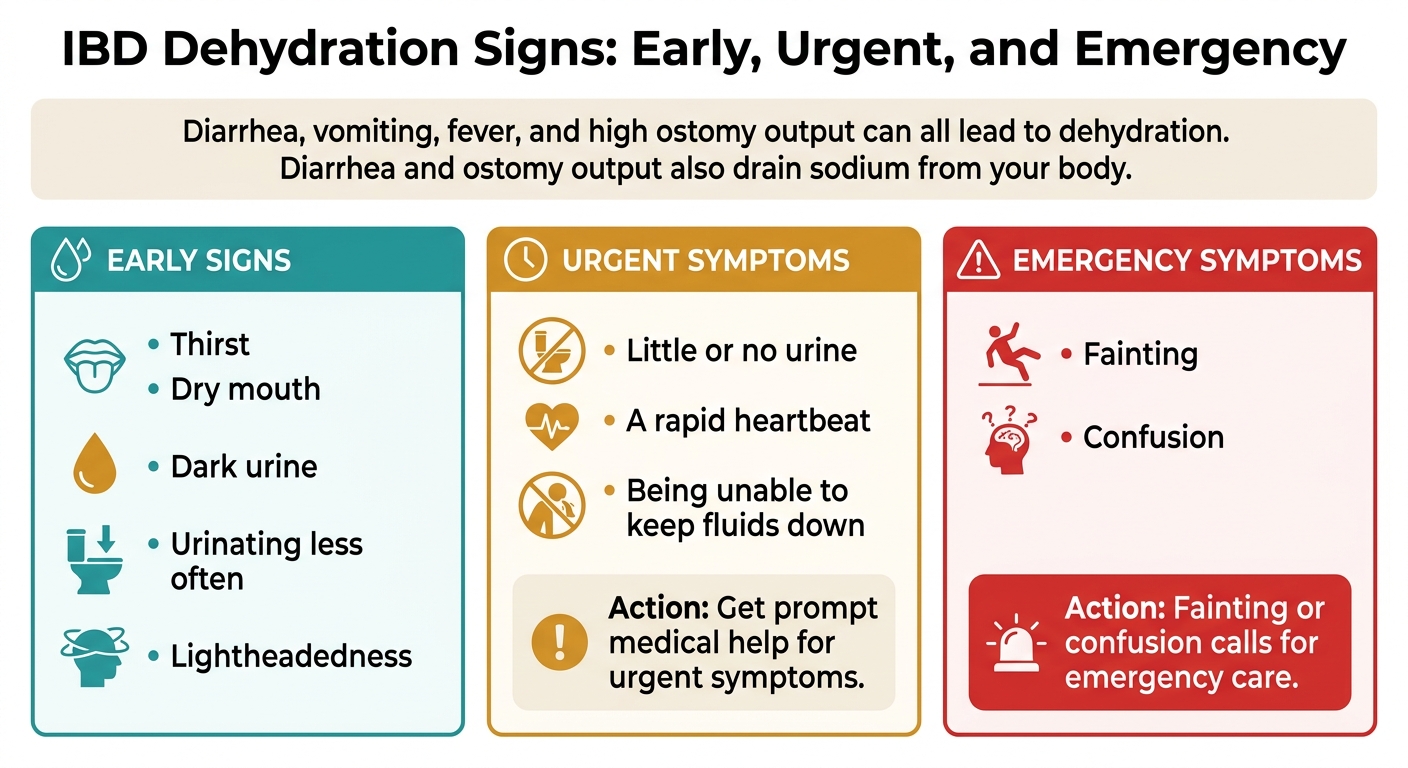
IBD Dehydration Signs: Early, Urgent, and Emergency
IBD can cause you to lose fluids fast. Knowing the early signs of dehydration can help you spot a problem. Diarrhea, vomiting, fever, and high ostomy output can all lead to dehydration. Diarrhea and ostomy output also drain sodium from your body.
- Early signs: Thirst, dry mouth, dark urine, urinating less often, or lightheadedness.
- Urgent symptoms: Fainting, confusion, little or no urine, a rapid heartbeat, or being unable to keep fluids down.
Get prompt medical help for urgent symptoms. Fainting or confusion calls for emergency care.
Fluid loss linked to IBD happens for a few predictable reasons.
Choosing Fluids and Replacing Electrolytes
Water may be enough for mild fluid losses. But diarrhea that continues or high ostomy output usually calls for sodium replacement - and sometimes potassium, too. Choose drinks or foods based on how much fluid and electrolytes you're losing.
Meal Planning for Flares, Recovery, and Remission
Once fluid losses slow, shift from controlling symptoms to gradually adding foods back. Start with simple, well-tolerated, low-residue foods. Then increase fiber as stools firm up.
Adding Foods Back as Symptoms Improve
Add one food at a time in small portions, including sources of fiber, while stool output, thirst, and bloating remain stable.[1] Add more foods only when diarrhea or ostomy output is improving - not while fluid losses are still high.
Track stool frequency and consistency, thirst, and bloating to help decide what to add next.
Microbiome Support During Recovery
Once fluid losses are controlled, microbiome support may play a small role in recovery. It doesn’t replace hydration or IBD treatment. Its role stays limited as diarrhea eases and foods are added back.
Prebiotics, Probiotics, and Postbiotics and the Evidence for IBD
Rebirth RE-1 is marketed as a 3-in-1 synbiotic containing seven live bacterial strains, GOS/inulin fiber, and a postbiotic component. These features - and research cited by the manufacturer, including a small observational study that reported symptom changes - don’t establish a benefit for human IBD.
GOS and inulin may cause gas, bloating, or changes in stool. Review any supplement with your gastroenterologist before use. Clinician review is also needed for children, during pregnancy or lactation, and for people with complex medical histories.[1]
Conclusion: Track Fluid Losses and Personalize Your Plan
Keep a daily hydration log. Track stool output, urine frequency and color, fluids consumed, foods tolerated, and ostomy volume, if relevant. Use these notes to adjust fluids, salts, and meals based on your current losses. Tell your IBD care team about worsening output, changes in urination, or new symptoms.
If warning signs worsen, act immediately. Seek urgent medical care now for fainting, confusion, severe weakness, inability to keep fluids down, or little or no urination.
FAQs
How do I estimate my daily fluid and salt needs?
Fluid and salt needs vary with IBD. Drink water regularly throughout the day, especially when increasing fiber intake or supporting gut health [1].
During high-intensity exercise or heat stress, aim for 14–27 fluid ounces (400–800 milliliters) per hour of a solution containing 4–8% carbohydrates and sodium to help maintain the gut barrier [2]. Work with your healthcare provider to adjust these targets based on your clinical needs and symptoms [3][4].
Which foods help replace sodium and potassium during a flare?
The provided search results do not identify foods that replace sodium and potassium during an IBD flare. They cover dietary changes for SIBO and microbiome support through prebiotics, probiotics, and postbiotics, but don’t list foods for replenishing electrolytes during IBD flares [1][2][3].
Could prebiotics worsen my diarrhea during recovery?
Prebiotics feed helpful gut bacteria and support gut recovery. But when you first add them to your diet, they may cause bloating, gas, or changes in bowel habits [1][2]. Your response may differ from someone else’s because each person’s gut microbiome is different [2].
To limit discomfort, start with small amounts and increase your intake gradually. Drinking enough water and taking prebiotics with meals may also help your gut adjust [1][3].