

If you want help with gut symptoms, the strain name matters more than the species name. From the studies covered here, one named 8-strain formula showed short-term changes in stool habits and self-reported drops in bloating, gas, and abdominal pain after 7 days in 35 adults. But the main caution is simple: this was single-arm and nonrandomized, so the results are early and not enough to apply to all probiotics.
Here’s the short version:
- I found that symptom results are strain-specific
- A strain that helps stool frequency may not help bloating or pain
- The clearest symptom data here comes from one 35-person study
- That study reported easier evacuation, plus less bloating, gas, and abdominal pain
- The same study also tracked microbiome markers, such as species recovery, serotonin production, and metabolite growth
- Because there was no placebo group, I’d read these findings with care
- For buying decisions, I’d check:
- the full strain name
- the CFU dose
- the study length
- whether the study measured the exact symptom you care about
Bottom line: I would expect modest symptom relief at most, not a fix for long-term gut problems. This article is best read as a strain-by-strain review of what was tested, what changed, and what still has limits.
| What to look at | What the article says |
|---|---|
| Stool habits | One multi-strain product was linked to short-term improvement |
| Pain, bloating, gas | Self-reported improvement in the same 7-day study |
| Microbiome effects | Marker changes were tracked, but symptom change does not prove restoration |
| Evidence strength | Early data, small sample, no placebo control |
| Best way to judge a product | Match the named strain to the human study |
That’s the core takeaway before getting into the study details.
Probiotics Improve Diarrhea, Constipation, Bloating & Pain (New Research)
sbb-itb-1bbfe7f
Human Study Findings on Stool Frequency and Bowel Habits
Stool-frequency results are strain-specific. In plain English, the species name by itself doesn't tell you how a product will perform, making it essential to find your ideal probiotic strain based on specific goals. The clearest signal in this section comes from a short-term multi-strain study.
Short-Term Bowel-Habit Changes in a Multi-Strain Study
In a nonrandomized, single-arm study of 35 adults ages 25 to 65, a 500 billion CFU, 8-strain RE-1™ formula was associated with easier evacuation after 7 days, along with less bloating, gas, and abdominal pain [1]. That gives this section its clearest bowel-habit finding.
The same strain-by-strain pattern also matters for pain and bloating. But those outcomes need their own study-level review instead of being lumped together.
Why These Results Should Not Be Generalized
These findings need to be read in context: strain, dose, and duration all matter. The bowel-habit changes reported here were short-term and tied to one specific formula, so they shouldn't be applied to probiotics as a whole.
That sets up the next issue: whether pain and bloating follow the same pattern.
Human Study Findings on Abdominal Pain, Bloating, and IBS Symptom Scores
Pain and bloating sit near the top of the list for people with IBS. That's the day-to-day stuff people feel. The tricky part is that probiotic results are mixed.
The best way to read this research is at the strain level. Two products can sound similar on the label and still act very differently in a study. Results can shift based on the exact microbe, the dose, and how the trial was run.
Strains With Pain and Bloating Data
In the same 35-adult, 7-day RE-1™ study, participants reported improvement in bloating, gas, and abdominal pain, but the lack of a placebo control limits interpretation [1]. Put simply, people said they felt better, but without a placebo group, it's hard to know how much of that change came from the product itself.
That symptom signal does not yet prove restoring the gut microbiome.
Why Results Differ Across Trials
IBS trials differ in a few basic ways, and those differences can change the outcome. That's why function matters more than species name [2].
| Factor | Why It Matters |
|---|---|
| Strain identity | Different strains can have different genetic makeups and functional effects |
| Dose | Potency can influence whether a benefit shows up in human trials |
| Delivery system | Formulation can affect how microbes reach the gut |
| Study duration | Short-term symptom relief and longer-term restoration are not the same goal |
| Study design | Single-arm studies can't separate reported improvement from placebo effects |
The next section looks at whether human trials show similar shifts in microbiota and functional markers.
Microbiome Balance: What Human Trials Actually Show
Beyond symptom relief, human trials also look at whether a strain changes how the microbiome works.
In this setting, microbiome balance means measurable shifts in taxa, metabolites, and gut-barrier markers, not just diversity scores. Symptom relief doesn't always depend on a big change in overall diversity. In some cases, functional markers such as serotonin production and beneficial metabolites in the gut can shift even when broad diversity measures stay fairly stable [1]. And strains within the same species can act differently because their gene content and gut activity can differ. That's the lens used in strain-specific human data, including RE-1.
Strain-Level Changes in Microbiota and Functional Markers
These changes may line up with symptom improvement, which is why strain-level specificity matters more than broad diversity claims alone [1].
Where Rebirth RE-1 Fits in an Evidence-Based Discussion
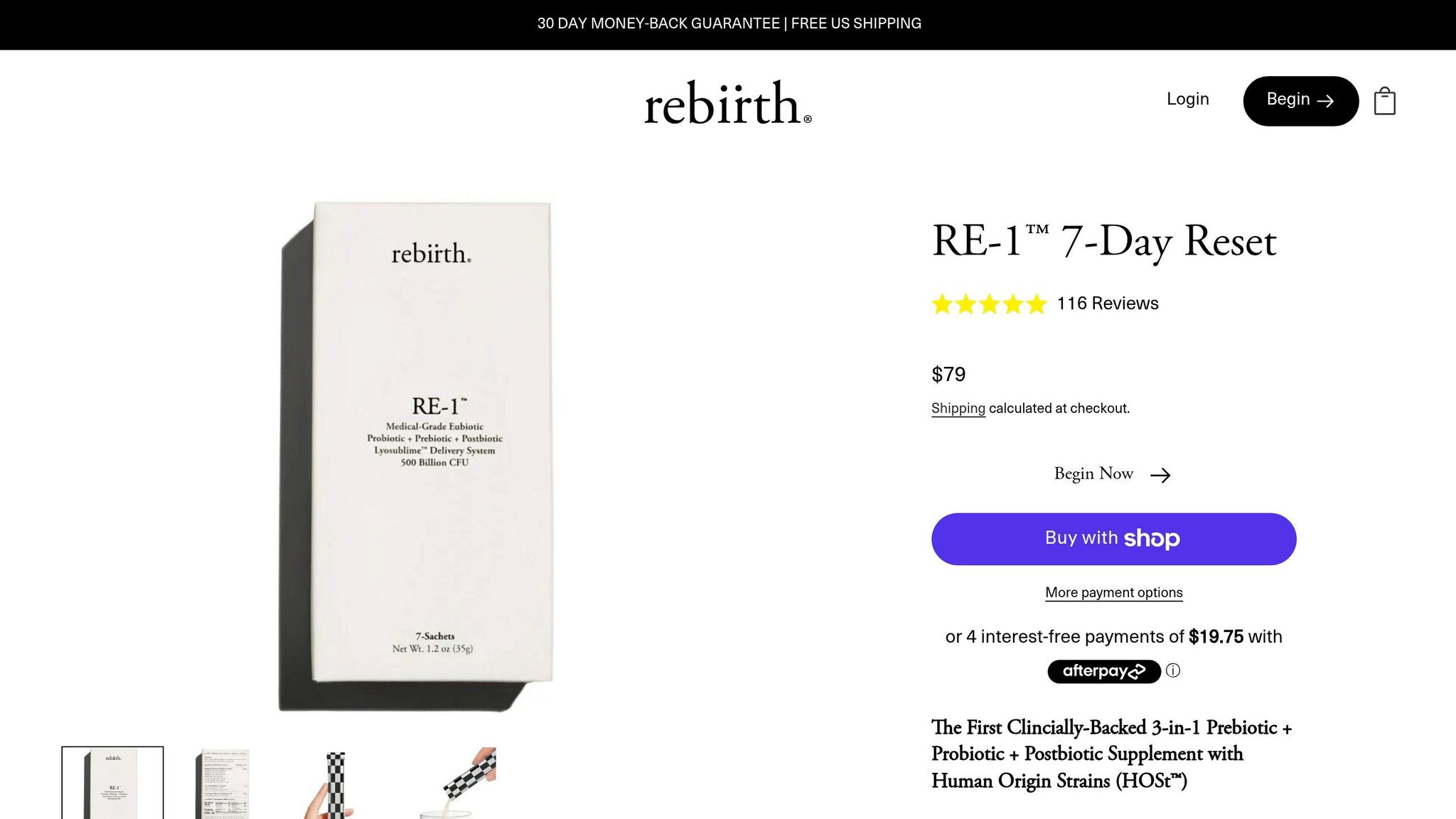
Rebirth RE-1™ is a sachet-based synbiotic with 8 Human Origin Strains.
The available RE-1™ study data comes from a single-arm study of 35 adults ages 25 to 65. Researchers tracked recovery of less common species, serotonin production, and metabolite growth [1].
| Study Component | Details |
|---|---|
| Study Population | 35 adults, ages 25–65 (single-arm, non-randomized) [1] |
| Microbiome Markers Measured | Recovery of less common species, serotonin production, metabolite growth [1] |
Because the study was single-arm, the findings should be treated as early data.
Conclusion: Why Strain-Level Evidence Should Guide Gut Symptom Decisions
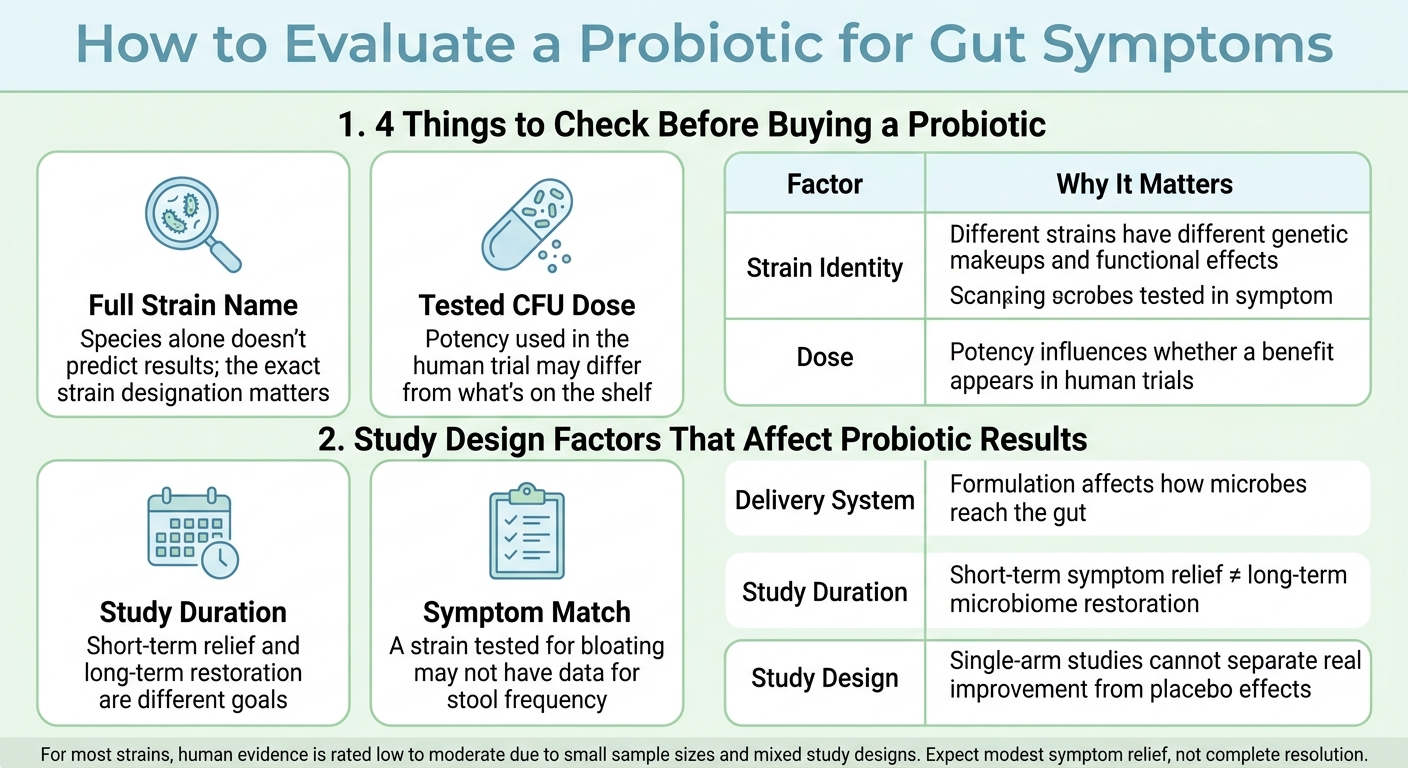
How to Evaluate a Probiotic for Gut Symptoms: Key Factors at a Glance
When you look at stool frequency, pain, bloating, and microbiome markers, the same theme keeps showing up: the result depends on the exact strain. Human trials point to one simple takeaway: digestive effects are strain-specific, not something you can assume across an entire species.
If you're sizing up a probiotic for a gut symptom, it helps to check four things:
- the full strain designation on the label
- the tested CFU dose
- the study duration used in the trial
- whether the symptom you care about matches what the research measured
That last point matters a lot. A strain may help with one outcome and do little for another, so it's smart to keep expectations in check.
For many strains, the human evidence is rated low to moderate because studies often have small sample sizes, mixed designs, and differences in baseline microbiota [3]. So the more sensible goal is modest symptom relief, not complete resolution of long-term gut issues.
Rebirth RE-1™ fits into this discussion as a named, multi-strain synbiotic with early human data on microbiome markers and symptom outcomes [1]. If you're comparing products, look for the full strain designation and clear strain identity on the label.
FAQs
Why do strain names matter more than species names?
Strain names matter because two strains from the same species can act in different ways in the body. That can show up in things like stool frequency, abdominal pain, bloating, and the balance of the gut barrier or microbiome.
The evidence is strain-specific. So if you want to check whether a product matches what studies tested, you need the full name: genus, species, and strain number. A vague label like “Lactobacillus blend” doesn't tell you enough to judge the dose or what it may do.
How much can I trust a 7-day single-arm study?
Only somewhat.
A 7-day single-arm study is a weak form of evidence because it does not include a randomized control group. That means you can’t rule out placebo effects, regression to the mean, or normal day-to-day symptom changes.
In the cited 7-day RE-1 study, 35 adults reported self-perceived outcomes, including 94% less bloating or abdominal pain. So the results are suggestive, not definitive.
Can a probiotic help bloating but not stool frequency?
Yes. A probiotic may help bloating without changing how often you have a bowel movement.
That’s because different strains can affect different parts of digestion. Some may help with gas production, abdominal pain, or gut sensitivity without doing much for stool frequency.
Some synbiotic formulas, such as Rebiirth RE-1, are made to support both motility and bloating. Others may mainly ease discomfort.