

My takeaway: diet can support depression care, but it isn’t a cure. Start with simple additions - beans, oats, vegetables, and enough protein - and increase fiber slowly.
I’ll explain five ways food and gut microbes may connect with mood:
- Inflammation: Immune signals can affect brain function.
- Neurotransmitter signaling: Microbes may indirectly influence chemicals involved in mood.
- Gut-barrier integrity: The intestinal lining helps control which microbial products reach immune tissue.
- Stress hormones: Stress and gut activity can affect each other.
- Microbial metabolites: Compounds made by microbes can influence gut, immune, and brain signals.
The research needs a careful read. A 12-week trial of 67 adults found greater depression symptom improvement with dietary support than with social support, but it did not show that gut microbes caused the change.[6][7] I’ll also explain why synbiotics, including Rebirth RE-1, need trials of the finished product - not just claims about ingredients.
<u>Food changes belong alongside care, not in place of it.</u> Keep psychotherapy, prescribed medication, and clinical follow-up part of your plan.
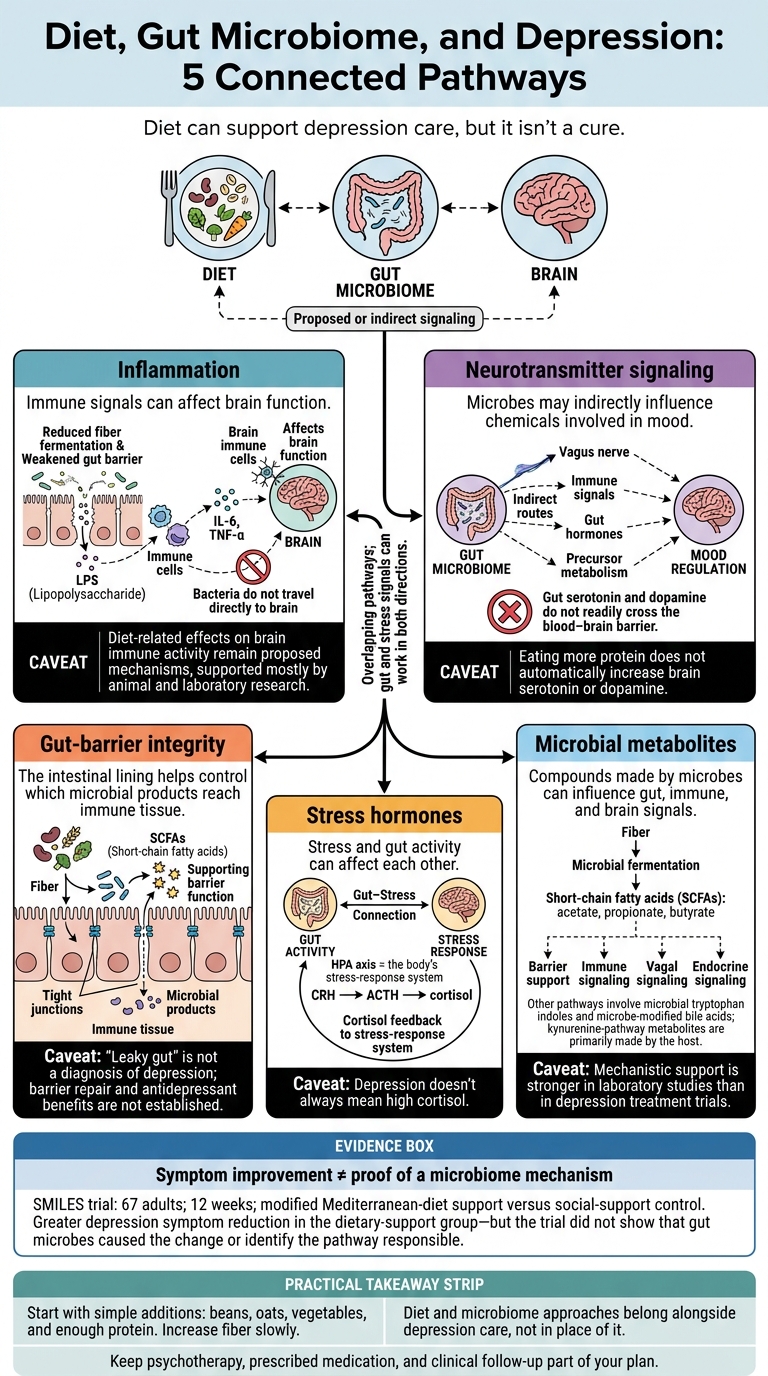
Diet, Gut Microbiome, and Depression: 5 Connected Pathways
The Role of the Gut Microbiome and Diet in Depression | Gut-Brain Axis| - Prof Michael Berk
sbb-itb-1bbfe7f
What Diet and Microbiome Studies Can Tell Us
A change in symptoms and a change in the microbiome are separate questions. Different study designs test different parts of the five-pathway model: inflammation, neurotransmitters, the gut barrier, stress, and metabolites.
| Evidence type | What it can show | Limits |
|---|---|---|
| Randomized human trial | Effects of a defined dietary change on depressive symptoms, inflammation, microbial profile, or metabolites compared with a control | Diet changes many factors at once |
| Observational human study | Associations among habitual diet, microbial features, and depression | Cannot establish cause or direction |
| Animal or lab study | Possible mechanisms involving inflammation, stress, the gut barrier, and metabolites | Findings do not establish antidepressant effects in humans |
The SMILES trial shows what this evidence looks like in practice.
The SMILES trial assigned 67 adults with moderate-to-severe depression to 12 weeks of modified Mediterranean-diet support or a social-support control, with greater symptom reduction in the dietary-support group.[6][7] The result supports dietary treatment research, but it does not show that microbiome changes caused the symptom drop or identify the pathway responsible. Researchers are also investigating the role of prebiotics and probiotics in these pathways.
Dietary patterns offer ways to test these pathways - not simply compare competing diets. Mediterranean-style eating emphasizes vegetables, legumes, whole grains, nuts, fish, and olive oil. Varied-fiber patterns focus on different plant sources that feed microbes.
Fermented-food patterns add foods such as live-culture yogurt, kefir, or kimchi, though microbial content varies by product and processing. Low-fiber, highly processed diets supply fewer fermentable plant ingredients and serve as comparison patterns. Each pattern may affect several pathways at once.
Results also depend on participants’ starting diets, medications, health conditions, and microbiomes, as well as study length and how closely participants follow the diet.
Adding beans and oats may be a substantial change for someone who eats little fiber, but a smaller change for someone already eating them daily.
Stronger trials track depression scores, stool microbes, metabolites, and inflammatory markers before and after the intervention - not just microbial labels.
The first mechanism to examine is neuroinflammation and the gut-brain axis, where diet can shift immune signals that reach the brain.
1. Inflammation and Brain Immune Signals
A low-fiber diet can reduce short-chain fatty acid production. If the intestinal barrier weakens, lipopolysaccharide (LPS) may enter the bloodstream and trigger immune signals.[12][14]
LPS can stimulate cytokines such as interleukin-6 (IL-6) and tumor necrosis factor-alpha (TNF-α). These signals can activate microglia, the brain’s immune cells, and affect sleep, energy, and motivation. Some human studies link depression to higher inflammatory markers. But the idea that diet changes microglial activity remains a proposed mechanism, backed mostly by animal and laboratory research.[9][11][14]
Inflammation can also redirect tryptophan away from serotonin production and toward the kynurenine pathway, through the enzyme indoleamine 2,3-dioxygenase. Two products of this pathway - kynurenic acid and quinolinic acid - affect nerve-cell signaling differently. Human findings vary, and they do not show that changing food intake corrects this pathway or treats depression.[11][15]
Different eating patterns may influence these processes in different ways:
| Dietary pattern | Possible microbial effects | Inflammatory signals |
|---|---|---|
| Mediterranean-style | Fiber and plant compounds may support short-chain fatty acid production. | Lower CRP and some cytokines in selected trials.[8][4] |
| High-fiber, minimally processed | More microbial fermentation; responses vary by starting microbiome.[4][10] | Microbial metabolites may support immune regulation. |
| Low-fiber, highly processed | Less material for fiber-fermenting microbes to use. | Associated with higher inflammatory burden in some populations.[9][11] |
These associations do not prove causation. Dietary changes can support health, but they do not replace mental health care. Inflammatory markers and microbiome profiles cannot diagnose depression or reliably predict how an individual will respond. They can also reflect infection, obesity, chronic illness, or stress.[5][9][11] Inflammatory signaling also affects neurotransmitter pathways - the next mechanism.
2. Gut Microbes and Neurotransmitter Signaling
Gut neurotransmitters do not simply travel to the brain. Most serotonin is made in the gut, where it helps control intestinal movement. Serotonin and dopamine outside the brain do not readily cross the blood–brain barrier. And GABA made by microbes is not the same as GABA in the brain.
Instead, microbes may influence brain signaling through the vagus nerve, immune signals, gut hormones, and the metabolism of neurotransmitter precursors. Inflammation and neurotransmitter signaling often overlap: immune and vagal routes can carry both kinds of signals. The key here is indirect signaling - not direct delivery of gut neurotransmitters to the brain.
Protein provides tryptophan, a serotonin precursor, and tyrosine, a dopamine precursor. Microbes can also convert tryptophan into indoles, which signal to intestinal and immune cells. These competing uses can affect how much tryptophan remains available. But eating more protein does not automatically increase brain serotonin or dopamine. Some bacteria also produce GABA, though evidence that this changes GABA levels in the human brain remains limited.
Diet affects these pathways mainly through the overall eating pattern, rather than a single nutrient.
| Food pattern | Potential microbial effects | Signaling pathways | Evidence |
|---|---|---|---|
| Adequate protein and varied plants | Provides amino acids, fermentable fiber, and plant compounds. | Precursor availability, tryptophan metabolism, and immune and vagal signals. | Plausible mechanisms, but direct human evidence is limited. |
| Top 10 prebiotic-rich foods | Fermentable ingredients feed selected microbes. | Microbial metabolites, gut hormones, and indirect nerve signals. | Human symptom evidence remains incomplete. |
| Restrictive diets without replacements | May reduce protein, fiber variety, or micronutrients. | Precursor supply and microbial metabolites. | Limited evidence, with other factors making results hard to interpret. |
Changes in stool microbes or blood metabolites do not prove that brain neurotransmitters have changed. Controlled trials have not shown a clear depression benefit from prebiotics.[16] Focus on adequate protein and a variety of plants rather than “serotonin-boosting” foods.
These signaling routes also depend on gut-barrier integrity - the next mechanism.
3. The Gut Barrier and Immune Signals
The intestinal barrier lets nutrients through while blocking many microbes and toxins. Mucus, intestinal cells, tight junctions, and immune defenses control what passes through. “Leaky gut” is not a diagnosis of depression. Permeability tests and biomarkers vary, and links with depression do not prove cause and effect.[21][22] When the barrier weakens, immune activity and the stress response may change.
Stress may affect mucus production, tight junctions, and the mix of gut microbes. Low production of short-chain fatty acids (SCFAs) may also weaken mucus and tight junctions. A damaged barrier allows more microbial products to reach immune tissue, increasing gut immune signaling.[19][24]
Food patterns may support or strain the barrier in different ways.
| Food pattern | Proposed barrier effects | Research limits |
|---|---|---|
| Varied plant foods: beans, lentils, oats, whole grains, vegetables, fruit, nuts, and seeds | Provide fermentable fiber and resistant starch that support SCFA production and barrier function. | Effects depend on fiber type, existing gut microbes, and tolerance; benefits for depression are not established. |
| Fermented foods: live-culture yogurt, kefir, kimchi, sauerkraut, and miso | Do not reliably produce consistent barrier repair.[20] | Cultures and processing vary. |
| Low-fiber or highly processed patterns | Provide less fuel for SCFA-producing microbes, which may weaken barrier support. | Stress, medications, sleep, and overall diet complicate these links. |
Evidence check
- Clinical interventions: Human trials are small and short-term. They do not prove barrier repair or antidepressant effects.[22][23]
- Observational associations: Depression is linked with altered permeability markers, but findings are inconsistent. Other factors may help explain these links.[21][22]
- Preclinical mechanisms: Cell and animal studies support roles for butyrate, tight junctions, and microbial immune signaling. They do not prove the same effects occur in people.[24]
For dietary changes, focus on fiber quality and dose. Add fiber gradually: introduce one higher-fiber food at a time, increasing fiber by about 2–3 grams every few days as tolerated, with fluids.[18] Sudden increases can cause gas, bloating, or bowel changes. These symptoms do not prove barrier damage.[17][18] Persistent pain or bowel symptoms need medical review; diet supports care but does not replace it.
Barrier stress also feeds into the stress-hormone system, which comes next.
4. The HPA Axis, Stress, and Cortisol
Alongside the gut barrier and immune pathways, stress hormones offer a fourth link between diet and depression. The HPA axis is the body’s stress-response system. During stress, corticotropin-releasing hormone (CRH) triggers the release of adrenocorticotropic hormone (ACTH), which stimulates cortisol release. Cortisol helps make energy available, then signals the system to shut the response down.
The gut and stress affect each other. Stress can change digestion and gut microbes, while microbial and immune signals can influence stress circuits. This interaction is a core component of the microbiota-gut-brain axis. But depression doesn’t always mean high cortisol. Some people have altered cortisol levels or daily rhythms; others don’t.[25]
Eating patterns may help steady this stress loop - or put more strain on it.
| Pattern | Fuel status | Possible gut–stress effects | Research limits |
|---|---|---|---|
| Regular meals | Can supply energy, protein, fiber, and micronutrients | Steady intake may support energy and fiber use while reducing stress from under-eating | Meal timing is hard to separate from sleep, stress, and overall diet quality |
| Mediterranean-style eating | Centers on vegetables, fruit, legumes, whole grains, nuts, olive oil, and fish | Fiber and plant variety may support microbial metabolites and immune signaling | Does not establish that this pattern normalizes cortisol or has antidepressant effects |
| Severe restriction or skipped meals | May leave energy, protein, or micronutrient needs unmet | Under-fueling can affect fatigue, sleep, and stress; microbial inputs may change, too | The effects of inadequate nutrition cannot automatically be traced to microbes |
Address under-eating first. Aim for regular meals with protein, fiber-rich carbohydrates, produce, and unsaturated fats.
Talk with a clinician about major food restriction, rapid weight changes, or depressive symptoms that persist. A single cortisol test cannot diagnose HPA-axis dysfunction. Timing, sleep, illness, and medications can all affect the results.[25][26][27]
These stress effects also interact with microbial metabolites and neurotransmitters, which shape the next pathway.
5. Microbial Metabolites and Brain Signals
The final pathway brings diet, gut microbes, and brain signaling together through microbial metabolites.
Gut microbes ferment fiber into short-chain fatty acids (SCFAs), mainly acetate, propionate, and butyrate. These compounds can shape immune signaling through FFAR2 and FFAR3 receptors. Butyrate also supports tight junctions - the seals between intestinal cells - and may reduce the leakage of microbes into circulation.[13][28][32]
SCFA signals may affect microglia and blood–brain barrier function through immune, vagal, and endocrine routes. Butyrate also inhibits histone deacetylases (HDACs), which may link it to inflammation and neuronal plasticity. These mechanisms have stronger support in laboratory studies than in depression treatment trials.[28][29][32]
SCFAs are the best-studied microbial signals, but they aren't the only ones. Dietary protein supplies tryptophan, which can enter pathways that produce microbial indoles or kynurenine-pathway metabolites, mostly made by the host. Inflammation can increase conversion through the kynurenine pathway. Its products, including kynurenic acid and quinolinic acid, affect neurotransmission in different ways.
Microbes also convert primary bile acids into secondary bile acids, which signal through receptors such as FXR and TGR5. These pathways overlap, but more tryptophan isn't a shortcut to higher brain serotonin.[28][31][33]
| Food pattern | Key food sources | Potential metabolite effects | Research limits |
|---|---|---|---|
| Fiber-rich plant foods | Beans, vegetables, fruit, and whole grains supply resistant starches, soluble fibers, and polyphenols | May support SCFA production, microbial diversity, and breakdown products of plant compounds | Responses depend on food type, processing, and the person's microbiome |
| Low-fiber intake | Few fiber-rich plant foods; little fuel for SCFA-producing microbes | May reduce SCFA production | Other dietary and health differences complicate comparisons |
These metabolites link food patterns to several signaling routes:
| Metabolite or group | Main source | Gut role | Possible brain signaling routes |
|---|---|---|---|
| Acetate | Microbial fiber fermentation | Energy supply and receptor signaling | Immune, metabolic, vagal, and neuroendocrine pathways |
| Propionate | Microbial fermentation | Epithelial, metabolic, and immune signaling | Inflammatory and endocrine pathways; effects depend on dose, microbes, and disease context |
| Butyrate | Fermentation of resistant starch and other fibers | Major fuel for colon cells; supports barrier integrity and immune regulation | Microglial, blood–brain barrier, neuronal plasticity, and HDAC-related effects |
| Microbial tryptophan indoles | Bacterial conversion of tryptophan | Aryl hydrocarbon receptor signaling and mucosal immune regulation | Immune–brain signaling and neuroinflammation |
| Bile-acid derivatives | Microbe-modified bile acids | Digestion and intestinal receptor signaling | FXR, TGR5, and immune pathways; effects vary by compound, concentration, and disease context |
| Kynurenine-pathway metabolites | Primarily host tryptophan metabolism, influenced by inflammation and microbial signals | Links immune activity with tryptophan metabolism | Kynurenic acid and quinolinic acid affect neurotransmission and neuroinflammatory processes |
SCFA output depends on microbiome composition, microbial cross-feeding, transit time, pH, medications, and host physiology. Stool SCFA levels reflect both absorption and use, so they don't directly measure production. No single metabolite result is a universal health marker.[29][30]
These metabolite pathways help explain why researchers are studying synbiotics for mental health next.
Synbiotics: Rebirth RE-1 as an Example
Synbiotics put that logic into practice by combining fiber, live strains, and postbiotic components in one product. According to the manufacturer, Rebirth RE-1 is a 3-in-1 synbiotic blend of prebiotics, probiotics, and postbiotics, with 4.5 g of prebiotic fiber per serving. It’s marketed for gut and immune support - not as a proven treatment for depression.[34][35]
Its fermentable fibers, live strains, and postbiotic components could affect metabolites, gut barrier function, and immune signaling. Those effects may connect with inflammation, neurotransmitter signaling, and stress responses. But a possible mechanism doesn’t prove a health benefit.[35][36] What matters isn’t just what’s in the blend. It’s whether the finished product changes symptoms in people.
A high CFU count doesn’t prove clinical benefit. Colony-forming units measure viable organisms at a stated testing or shelf-life point. They don’t tell you whether those organisms persist in the gut or relieve symptoms.[34][36]
Claims about treating depression need randomized, placebo-controlled trials of the finished formula.[39][40]
Don’t replace prescribed medication or psychotherapy with a synbiotic. Use caution during pregnancy, if you have a weakened immune system, or if medication interactions are a concern.[37][38][39]
Conclusion: Connected Pathways, Not a Dietary Cure
The five pathways work as one connected network, not five separate fixes. Diet can affect metabolites, gut barrier integrity, inflammation, neurotransmitter signaling, and stress responses - and those interactions can work in both directions. But this does not prove that changing gut bacteria treats depression.[12][13] The goal is support, not a cure.
Aim for varied meals that meet your nutritional needs rather than focusing on one food, supplement, or microbiome target. Fiber-rich, minimally processed meals may support several pathways at once. Include vegetables, fruits, beans, lentils, whole grains, nuts, seeds, enough protein, and unsaturated fats. Add fiber gradually, one food at a time, and drink enough fluids unless your clinician advises otherwise. Choose foods that suit your digestion and preferences.[12][41][43]
Diet and microbiome approaches belong alongside depression care, not in place of it. Psychotherapy, medication when appropriate, and professional follow-up remain central. Worsening symptoms or trouble functioning call for prompt clinical support - not more diet changes.[1][44]
If symptoms worsen, seek immediate help. In the United States, call or text 988 for suicidal thoughts or emotional distress.[42] For a life-threatening emergency, call 911 or go to the nearest emergency department.[1]
FAQs
How soon might diet changes affect my mood?
Gut bacteria and the metabolites they produce can start changing within days [1]. Improvements in mood, stress resilience, and gut-brain markers usually take 4 to 8 weeks of consistent dietary changes or support from interventions such as synbiotics [2]. Progress tends to be gradual because the gut-brain connection relies on complex feedback loops [3].
Rebiirth RE-1 is a 3-in-1 eubiotic synbiotic designed to support a microbiome reset over 4 to 12 weeks [3].
How can I eat well when depression limits my energy?
Start small: snack on prebiotic-rich foods like bananas or oats, and add probiotic-rich yogurt or kefir to meals. Aim for consistency, not a complete lifestyle overhaul.
You might also consider Rebiirth RE-1, which combines prebiotics, probiotics, and postbiotics in daily sachets to support microbiome balance. Consult your clinician if dietary limitations persist or you notice a major change in your ability to function.
How can I track whether dietary changes help?
Instead of relying on self-testing kits, keep a detailed, consistent log of your mood, sleep quality, digestive symptoms, and medication changes [1]. Share it with your clinician to help assess whether dietary changes are supporting your mental health care [1].
Talk with your provider about digestive issues that persist, such as discomfort or changes in bowel movements, so they can be addressed in your treatment plan [1].