

Gut inflammation may play a role in depression, but it isn’t a proven cause or a stand-alone treatment target. My practical takeaway: track your mood, sleep, digestive symptoms, and medication changes, then discuss patterns with your clinician.
In this guide, I explain five linked pathways:
- Microbial compounds: Substances made by gut microbes may change immune activity.
- Cytokines and microglia: Immune signals may affect how the brain’s immune cells respond.
- The stress-response system: Stress hormones and inflammation can influence each other.
- Gut and brain barriers: Changes in these separate barriers may alter immune signaling.
- Tryptophan metabolism: Inflammation may change how the body uses a building block of serotonin.
A review of 82 studies found higher average blood levels of some inflammatory markers in people with depression - but those results cannot diagnose depression or prove that the gut caused it.[8]
I’ll also explain what this research means for food, sleep, activity, testing, and products such as Rebirth RE-1. <u>The key distinction:</u> a possible mechanism is not proof that a supplement treats depression. These habits can support care, not replace psychotherapy or prescribed medication.
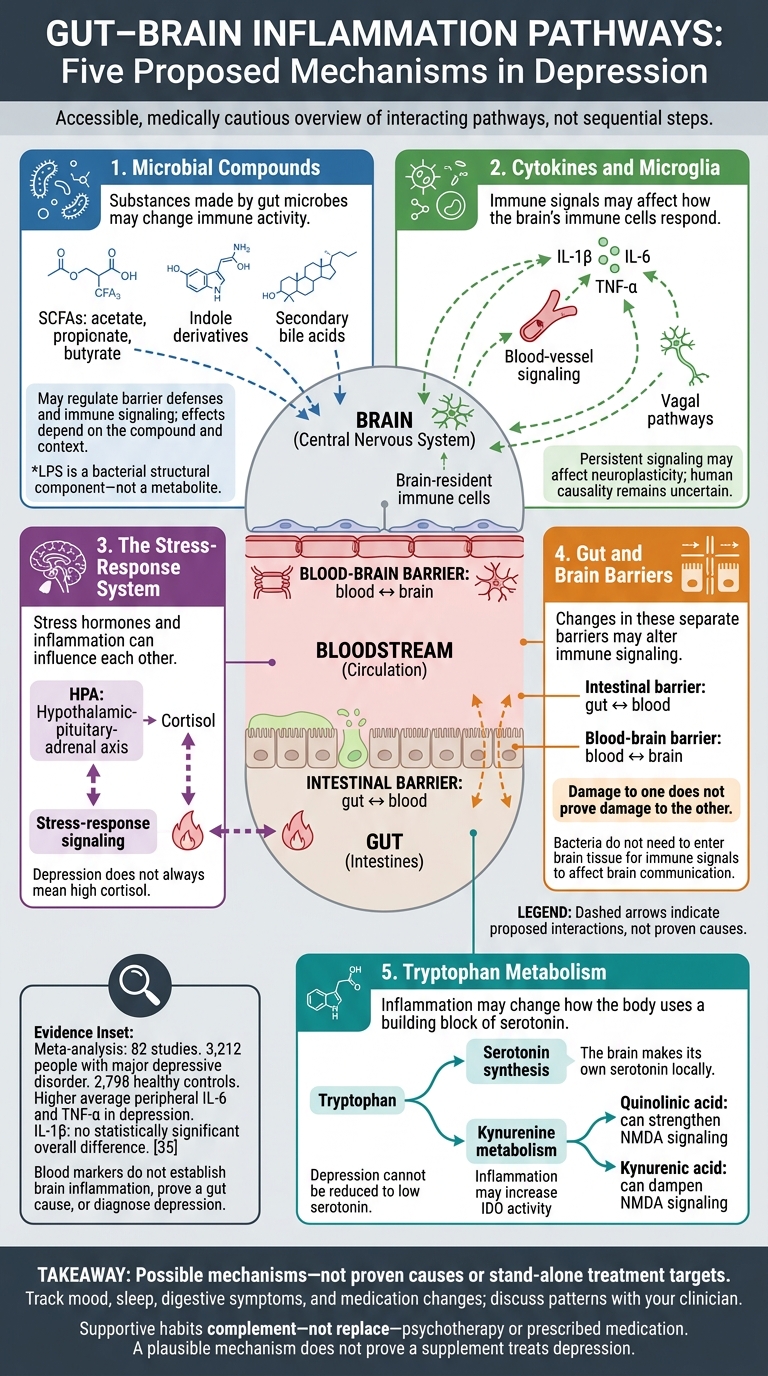
Gut-Brain Axis in Depression: 5 Linked Pathways
Gut-Brain Axis Pathways In Depression Explained (Makris et al., 2020)
sbb-itb-1bbfe7f
1. Microbial Metabolites and Inflammation
Microbial metabolites are compounds that gut microbes produce or modify. Their effects depend on the molecule, dose, and tissue exposed. Short-chain fatty acids (SCFAs), indoles, and bile-acid derivatives can affect the gut’s defenses and immune activity through several routes.
| Metabolite group | Main source | Proposed inflammatory effect | How it signals | Evidence strength |
|---|---|---|---|---|
| SCFAs: acetate, propionate, butyrate | Bacterial fermentation of dietary fiber | May support the intestinal barrier and regulate immune activity; effects vary by molecule and dose | Local epithelial and immune signaling, circulation, and vagal/endocrine pathways | Moderate mechanistic evidence; human depression findings are observational and mixed |
| Indole derivatives | Bacterial breakdown of dietary tryptophan | Some activate the aryl hydrocarbon receptor (AhR), helping regulate barrier defenses and mucosal immunity | Intestinal immune and epithelial signaling, circulation, and possible neural or endocrine routes | Early human evidence; stronger lab and animal support |
| Secondary bile acids | Microbial transformation of primary bile acids | May alter immune and metabolic signaling through receptors including FXR and TGR5 | Intestinal receptors, gut-liver circulation, and systemic immune pathways | Emerging and context-dependent evidence; depression-specific clinical evidence remains limited |
These compounds can either dampen or amplify inflammation at the gut barrier.
Butyrate fuels colon cells and may support tight junctions, which control what passes between intestinal cells. SCFAs also act on receptors and enzymes that help shape gene activity and inflammation. These actions could limit excessive inflammatory signaling. But acetate and propionate don’t necessarily have the same effects as butyrate.
LPS is not a metabolite. It’s a structural component of gram-negative bacteria. When the gut barrier becomes more permeable, LPS can trigger inflammatory immune responses.
Some human studies report lower SCFA levels in the blood or stool of people with depression, but results vary. Diet, medications, body weight, illness severity, and sampling methods can all affect the findings. Blood or stool levels also don’t prove that these compounds reach the brain.
Diet can change metabolite production, but it’s only one part of the depression picture. Add fermentable fiber from beans, oats, fruits, vegetables, and whole grains, increasing slowly as tolerated. Prebiotics and fiber support an earlier step in this pathway; it does not directly treat depression or guarantee a particular metabolite level. There’s no validated “optimal” SCFA or indole cutoff for diagnosing depression or guiding treatment. Persistent metabolic shifts can also amplify cytokine signaling and contribute to brain immune activation - the next pathway.
2. Cytokines, Microglia, and Brain Inflammation
When gut inflammation increases, cytokines can carry the signal beyond the intestine.
Cytokines are immune messengers. IL-1β starts inflammation, IL-6 broadens the response, and TNF-α helps sustain it. Short-term signaling protects the body. The problem is when that signaling persists.
Intestinal inflammation can release cytokines into the bloodstream. The brain can respond through blood-vessel cells, nearby immune cells, and vagal afferents - nerve pathways that carry signals to the brainstem.
| Pathway stage | What may happen | Possible relevance to depression | Evidence limits |
|---|---|---|---|
| Peripheral cytokine release | Intestinal immune cells release IL-1β, IL-6, and TNF-α. | Links gut immune activity with inflammation elsewhere in the body. | Infection, obesity, sleep, and medications also affect levels. |
| Brain signaling | Blood-vessel cells and vagal pathways relay immune signals to the brainstem. | May influence circuits involved in stress and mood. | Human studies rarely trace a specific gut signal through this entire route. |
| Microglial response | Microglia, the brain’s resident immune cells, may become more reactive and release more inflammatory messengers. | Could affect synaptic maintenance and support for neurons. | Detailed evidence of cause and effect comes largely from animal studies. |
| Possible neural effects | Sustained signaling may affect neuroplasticity, neurotransmission, and the growth of new neurons in the hippocampus. | Could contribute to changes in reward, motivation, cognition, and emotional regulation. | These effects do not explain every case of depression. |
Persistent inflammatory signaling may disrupt neuroplasticity and brain inflammation, the brain’s ability to change, in the hippocampus and prefrontal cortex. Whether this is a cause-and-effect relationship in humans remains uncertain.[6][7]
A meta-analysis of 82 studies included 3,212 people with major depressive disorder and 2,798 healthy controls. On average, people with depression had higher peripheral IL-6 and TNF-α levels, but IL-1β showed no statistically significant overall difference.[8] Results vary across human studies, and cytokines in the blood do not establish inflammation in the brain. No individual cytokine level can confirm or rule out depression or anxiety.[8][9]
Persistent low mood or loss of interest calls for a clinical assessment - not cytokine self-testing. Discuss gastrointestinal (GI) symptoms, sleep, and inflammatory conditions with your clinician. Cytokine signaling also interacts with the HPA stress-response system - the next pathway.
3. The HPA Axis, Stress, and Gut Inflammation
The hypothalamic-pituitary-adrenal (HPA) axis manages the stress response through cortisol, a hormone that helps release energy and limit inflammation.[11][13] Stress and inflammation can feed into each other, extending the cytokine signaling described in the previous section. When stress stays high, this system can change conditions in the gut.
Chronic stress can change gut movement, mucus, and immune activity. It may also weaken the intestinal barrier, letting bacterial components trigger inflammation and strengthen immune signaling between the gut and brain. Findings in humans are less direct because diet, medications, sleep, and illness can cloud the results.[10][14][15]
The relationship works both ways: inflammation can activate the HPA axis. In some people with depression, cortisol signaling becomes less effective. Inflammation can then persist even when cortisol levels are normal or high.[13][16] This inflammatory stress can also weaken the gut and brain barriers.
Depression does not always mean high cortisol. Some people have elevated levels; others have normal levels or blunted daily rhythms. Poor sleep, stress, and inflammation can further disrupt cortisol’s daily pattern and mood regulation.[13][17] These stress-related changes can also affect how well the barriers hold.
Keep a consistent sleep schedule, and discuss persistent insomnia or major changes in daily functioning with a clinician. Cognitive behavioral therapy, mindfulness, and structured relaxation can help with stress management alongside depression care. A single cortisol result cannot measure overall HPA-axis function, and neither cortisol nor microbiome testing should be used on its own to diagnose depression.[12][13] The next pathway looks at how the gut and blood-brain barriers may become more permeable.
4. Gut and Blood-Brain Barrier Changes
Cytokines and stress can weaken the gut and blood-brain barriers, creating another path for inflammation to affect communication between the gut and brain. But these barriers are separate systems. Damage to one does not prove damage to the other.[18][19][21]
| Location | Normal function | Inflammatory stressor | Possible consequence | Evidence limits |
|---|---|---|---|---|
| Intestinal barrier | Controls passage from gut to blood | Infection, inflammation, alcohol, microbial products, and stress | Greater exposure to microbial products and immune activation | Findings in depression are inconsistent; commercial tests cannot establish depression-related barrier dysfunction.[20][23][24][25] |
| Blood-brain barrier (BBB) | Controls exchange between blood and brain | Circulating cytokines, infection, stress, and metabolic inflammation | Changes in immune-to-brain signaling and microglial activity | Evidence is mostly experimental or observational; BBB changes are not a confirmed cause of depression.[18][21][22] |
One proposed link is LPS, a component of bacteria’s outer membrane. If LPS reaches the bloodstream, it can activate immune pathways. In experiments, cytokines such as IL-6 and TNF-α can change the proteins that form tight junctions in the BBB. Bacteria do not need to enter brain tissue for gut-related immune signals to affect brain communication.[18][21][26]
These signals may also affect microglia, the brain’s resident immune cells. Persistent signaling may change how microglia support synapses and plasticity - the brain’s ability to change - with effects on mood, cognition, reward, and stress response. Yet microglia also help with repair. Activation alone does not prove harmful inflammation or explain a person’s depression.[19][22]
Some commercial zonulin assays detect proteins other than true zonulin, and their results correlate poorly with functional tests of intestinal permeability.[23][24][25] Before testing, ask whether the result would change your care. Barrier biology is a way to study these processes, not a tool for self-diagnosis.
Barrier changes may also shift how the body processes tryptophan, connecting this pathway to serotonin disruption.
5. Inflammation, Tryptophan, and Serotonin
Gut inflammation can affect the gut-brain axis by changing barrier function and diverting tryptophan, a building block of serotonin, away from serotonin production. Cytokines - including interferon-γ, tumor necrosis factor-α, and interleukin-6 - can increase the activity of indoleamine 2,3-dioxygenase (IDO) and, in some tissues, tryptophan 2,3-dioxygenase (TDO). These enzymes turn tryptophan into kynurenine. This happens in some cases of depression, but not all.[30][31][33]
Kynurenine can enter the brain, where it becomes compounds with opposing effects. Quinolinic acid can strengthen NMDA signaling, while kynurenic acid can dampen it. This pathway isn't always harmful, and its effects go beyond serotonin to include oxidative stress and glutamate signaling.[36][37][39] These shifts may affect mood, stress tolerance, and mental clarity.
| Pathway | Main source | Inflammatory link | Evidence limits |
|---|---|---|---|
| Serotonin synthesis | Gut enterochromaffin cells and brain cells | Inflammation can change precursor availability and signaling. | Most serotonin is made outside the brain; the brain makes its own serotonin locally.[32] |
| Kynurenine metabolism | Liver, immune cells, gut tissues, and brain | Cytokine-driven IDO activity directs tryptophan toward kynurenine. | Blood measurements vary, and findings in depression are inconsistent.[28][34] |
| Microbial indole production | Gut microbes breaking down tryptophan | Some indoles regulate immunity and barrier function. | Benefits for treating depression remain unproven.[27][29][35] |
Gut microbes also use dietary tryptophan, leaving less available to the body. What these microbes produce depends on diet, how fast food moves through the intestines, inflammation, and the surrounding microbial community. Some indoles act through the aryl hydrocarbon receptor (AhR), which helps regulate immunity. More indoles aren't automatically better - the effects depend on the compound.[29][37][38]
Depression cannot be reduced to low serotonin. Tryptophan competes with other large neutral amino acids to enter the brain. Serotonin function also depends on enzymes, receptors, sleep, stress, and inflammation. Blood tryptophan or kynurenine tests alone cannot diagnose a serotonin deficiency or explain someone's depression.[28][34]
To support tryptophan metabolism, focus on enough protein and a variety of fiber-rich foods, as tolerated - not supplements meant to boost serotonin. Ask your clinician or pharmacist before combining tryptophan or 5-HTP with antidepressants; some combinations can push serotonin levels too high. These steps should complement depression care, not replace it.
The next section puts these mechanisms into practice with ways to support the gut microbiome.
What the Research Means for Microbiome Support
These mechanisms help explain how daily habits, inflammation, and treatment support connect - not how to find a single cure. The five pathways affect one another through feedback loops, while sleep, diet, and activity can also change the gut. Researchers have not identified a single “depression microbiome” or one pathway to fix.[48][49] Support should center on steady habits and standard depression care, rather than one biomarker.
Daily Habits and Depression Care
Add fiber gradually, keep consistent sleep and wake times, and make physical activity part of your routine. Even a 30-minute walk can improve mood.[46][47] These habits may support healthier inflammatory responses, but they don't guarantee changes in specific bacteria, cytokines, or cortisol patterns. Breathing exercises, social connection, and counseling can help with stress. If digestive disease or food restrictions make dietary changes difficult, seek advice tailored to your needs.
If symptoms persist or worsen, get assessed and continue prescribed treatment unless your clinician changes it. Commercial microbiome reports cannot diagnose depression or guide treatment.[42][44] Before paying for a test, ask whether it has been clinically validated for its stated purpose - and whether its results would change recognized care.
In the United States, call or text 988 for suicidal thoughts or emotional distress. Support is free, confidential, and available 24/7.[47] Call 911 for a life-threatening emergency.[40][41][45]
Read product claims within this context: descriptions of ingredients and formats are not proof that a product treats depression.
Rebirth RE-1: Ingredients and Evidence Limits
The manufacturer describes Rebirth RE-1 as a 3-in-1 synbiotic combining prebiotics, probiotics, and synbiotics (including postbiotics). It lists Human Origin Strains (HOSt™), 4.5 grams of prebiotic fiber, 500 billion CFU per serving, and a Lyosublime™ delivery system. Its 7-day, 4-week, and 12-week formats describe product programs, not outcomes.
| Category | Supported description | Unsupported claim |
|---|---|---|
| Established depression care | Psychotherapy, medication, or both are recognized depression treatments.[40][43] | Microbiome support can replace treatment. |
| Proposed mechanisms | The five pathways may interact through feedback loops. | One pathway is the proven cause of an individual’s depression. |
| Research biomarkers | Microbiome profiles, inflammatory markers, cortisol patterns, barrier measurements, and tryptophan metabolites are under study.[49] | These form a validated routine diagnostic panel for depression. |
| Manufacturer product claims | Rebirth RE-1’s stated ingredients, serving amounts, delivery system, and program formats | Proven depression benefits, barrier repair, or normalized inflammation |
General microbiome research and a high CFU count do not establish this product’s effectiveness. Review its ingredients, allergens, directions, and storage requirements, and seek medical advice for concerning reactions. Take particular care if you are immunocompromised, have a serious illness, are pregnant, or take medications that require monitoring. Use only as directed and discuss suitability with a clinician.
Conclusion: What the 5 Pathways Tell Us
The five pathways don't work in isolation. They form a network: microbial changes can influence inflammation, inflammation can affect the brain, and stress can feed the cycle back into the gut.[19]
These effects may matter more for people dealing with gastrointestinal, metabolic, or inflammatory conditions, or chronic stress. They may help explain why symptoms occur together, but they don't point to a single cause.[50][51] A plausible mechanism isn't proof of causation. It also doesn't show that any microbiome product treats depression. That's why the timing of symptoms matters more than any single marker.
At your next appointment, bring a timeline of your mood, sleep, digestive symptoms, and medication changes. This can help your clinician assess what may be contributing to your symptoms. If you have thoughts of self-harm or suicide, seek immediate help through emergency services or the 988 Suicide & Crisis Lifeline in the United States.
FAQs
Can gut inflammation affect my mood without digestive symptoms?
Yes. Gut inflammation can affect your mood even without digestive symptoms [1]. When gut microbes are out of balance, they can trigger the release of inflammatory cytokines and bacterial toxins into the bloodstream. That inflammation can activate immune cells in the brain and disrupt neurotransmitters that help regulate mood, including serotonin, dopamine, and GABA [2][3][4].
A synbiotic like Rebiirth RE-1 may help support a balanced gut microbiome, which may help reduce inflammation and support stress resilience and mood [5].
How can I tell whether stress or gut issues came first?
Stress and gut issues can feed into each other, making it hard to tell which comes first [1][2][3]. Chronic stress activates the HPA axis, releasing cortisol that weakens the gut barrier and changes the microbiome [1][2]. In turn, gut dysbiosis - an imbalance in gut microbes - triggers inflammation throughout the body and reduces the brain’s ability to manage stress [4][3]. It’s a cycle, rather than a clear cause-and-effect sequence [1][4][3].
Which gut symptoms should I discuss with my depression care provider?
Tell your depression care provider about gut symptoms that don’t go away, such as increased gut sensitivity, digestive discomfort, or changes in bowel movements. Mention any lasting digestive distress or symptoms of irritable bowel syndrome.
These symptoms may reflect inflammation linked to depression. Sharing them helps your provider consider how gut health and emotional well-being connect through the gut-brain axis as part of your overall treatment plan.