

Your gut can affect how well you use vitamins and minerals. If your diet is low in fiber, or if stress, poor sleep, and antibiotics throw your gut off, your body may absorb nutrients less well and your immune system may get less support.
Here’s the short version:
-
Gut microbes and nutrients work both ways
- Gut bacteria help make vitamin K and some B vitamins
- What you eat helps decide which microbes grow well
-
Low fiber is a common problem in the U.S.
- Many adults still miss the daily fiber target of 21–38 g
-
When the gut is off balance
- Nutrient absorption may drop
- The gut lining may get weaker
- Immune function may become less steady
-
Food is the first step
- More fiber
- More variety
- More fermented foods
- Less added sugar, excess alcohol, and highly processed foods
-
A simple reset plan works best
- Remove: cut gut stressors
- Rebuild: add fiber and fermented foods
- Maintain: keep up sleep, movement, stress control, and diet variety
-
Prebiotics, probiotics, and postbiotics do different jobs
- Prebiotics feed gut bacteria
- Probiotics add live microbes
- Postbiotics support the gut lining and immune signals
Gut Health Reset: How to Rebuild Your Microbiome Fast!
sbb-itb-1bbfe7f
Quick comparison
| Topic | What it means for you |
|---|---|
| Microbiome | Helps with digestion, gut lining, and immune signaling |
| Micronutrients | Include vitamins and minerals your body needs in small amounts |
| Dysbiosis | An out-of-balance gut that may reduce nutrient handling |
| Fiber-rich eating | Helps gut bacteria, gut lining, and nutrient use |
| Biotics | Tools like prebiotics and probiotics that can support gut balance along with diet |
I see the main takeaway like this: if you want better gut and immune support, start with fiber, food quality, and daily habits. Supplements can help, but they work best when the basics are in place.
Micronutrients, Dysbiosis, and Immune Function
Dysbiosis means the gut microbiome is out of balance. That can look like lower microbial diversity or too many disruptive microbes. When that happens, the gut may not work as well, nutrient absorption can drop, and immune defenses may get less support. Restoring eubiosis - a healthier balance of gut bacteria - helps support gut barrier function and immune health [1].
Key Micronutrients That Support Barrier and Immune Health
The gut microbiome also plays a part in how the body handles certain micronutrients. Healthy gut bacteria normally help produce vitamin K and some B vitamins, so a less diverse microbiome can mean less of these nutrients are made in the gut [1]. On top of that, a stable microbiome supports overall nutrient absorption and gut function [1].
How Dysbiosis Can Worsen Micronutrient Gaps
This relationship tends to feed on itself. A disrupted microbiome can reduce the body's ability to absorb key nutrients. At the same time, a lack of prebiotic fibers makes it harder for helpful bacteria to grow. Over time, that cycle can weaken immune defenses even more [1].
Table: Micronutrients, Microbiome Effects, and Immune Consequences
| Micronutrient or Function | How the Microbiome Affects It | Effect of Low Status |
|---|---|---|
| Vitamin K | Healthy gut bacteria normally help synthesize it; lower diversity can reduce production [1] | Less support for overall gut and immune function |
| Certain B vitamins | Healthy gut bacteria normally help synthesize them; dysbiosis can reduce output [1] | Reduced nutrient availability when the microbiome is disrupted |
| Overall nutrient absorption | Dysbiosis can impair nutrient absorption and overall gut function [1] | Immune defenses may be less well supported |
Diet Patterns That Shape the Microbiome and Nutrient Levels
What you eat each day does more than fill you up. It shapes your microbiome, affects how well you absorb nutrients, and helps determine how much support your immune system gets.
Where Typical U.S. Diets Fall Short
Many U.S. diets come up short on fiber. That matters because low fiber intake can reduce diversity, weaken barrier integrity, and impair nutrient absorption [1].
Foods That Support Both Microbes and Micronutrients
Fiber-rich foods help beneficial bacteria thrive, support eubiosis, and improve micronutrient synergy and absorption [1][2]. When microbial diversity drops, the gut barrier can weaken and immune defenses may become less steady [1].
The overall pattern matters just as much as any single food. A fiber-rich diet gives gut microbes and the immune system more of what they need, and it tends to support the strongest microbiome and immune outcomes [1][2].
Table: Dietary Patterns and Their Effects on Microbiome Diversity and Immune Health
| Dietary Pattern | Microbiome Diversity | Micronutrient Density | Expected Immune Outcome |
|---|---|---|---|
| Low-fiber pattern | Lower - fewer prebiotic fibers to support beneficial bacteria [1] | Lower - may contribute to less efficient nutrient absorption [1] | Weaker gut barrier and reduced immune defenses [1] |
| Typical U.S. diet | Variable - daily disruptions can reduce balance [1] | Variable - may not fully support efficient nutrient absorption [1] | Less stable immune support; greater risk of dysbiosis [1] |
| Fiber-rich pattern | Higher - supports beneficial bacteria and microbiome diversity [1] | Stronger - supports nutrient absorption and micronutrient synthesis [1][2] | Better gut barrier integrity and stronger immune support [1] |
How Prebiotics, Probiotics, and Postbiotics Fit Into a Natural Wellness Plan
When food alone doesn’t do the whole job, prebiotics, probiotics, and postbiotics can add more focused support for nutrient status and immune resilience. Think of them as three tools that work side by side, not three versions of the same thing.
What Each Biotic Does in the Gut
These compounds work in different ways, but they all point toward the same outcome: a healthier gut environment.
Prebiotics are fermentable fibers that feed beneficial bacteria. Probiotics are live microorganisms that help restore a balanced microbiome, also called eubiosis. Postbiotics are the compounds made during microbial activity, and they help support the gut barrier and immune signaling. This synergy is particularly vital for immune function in athletes who face high physical stress.
Put simply:
- Prebiotics feed
- Probiotics replenish
- Postbiotics protect
Each one helps fill a different need in the gut.
How These Compounds May Improve Nutrient Handling
When beneficial bacteria ferment prebiotic fibers, they produce metabolites such as butyrate. That matters because butyrate helps reinforce the gut lining. And when the gut barrier is in better shape, it can do a better job absorbing minerals and supporting vitamin-producing bacteria.
Probiotics help in a different way. They produce organic acids that lower gut pH, which may improve the solubility and uptake of certain minerals. On top of that, lower inflammation can help the body absorb nutrients more effectively.
Table: Prebiotics vs. Probiotics vs. Postbiotics
Here is the simplest way to compare them.
| Category | Primary Mechanism | Effect on Micronutrient Status | Major Immune-Related Actions |
|---|---|---|---|
| Prebiotics | Fermentable substrates (e.g., GOS, inulin) | Feeds bacteria that synthesize B-vitamins and K-vitamins | Promotes growth of protective indigenous flora |
| Probiotics | Live beneficial strains (e.g., Lactobacillus) | Improves absorption by lowering gut pH; competes with pathogens | Supports balanced immune signaling |
| Postbiotics | Microbial metabolites (e.g., butyrate) | Strengthens epithelial barrier for better nutrient uptake | Supports anti-inflammatory signals; reinforces tight junctions |
Taken together, these three can form the base of a simple microbiome reset plan. A 3-in-1 synbiotic such as Rebirth RE-1 combines all three to support microbial balance and barrier integrity.
Microbiome Reset Plans for Gut and Immune Support
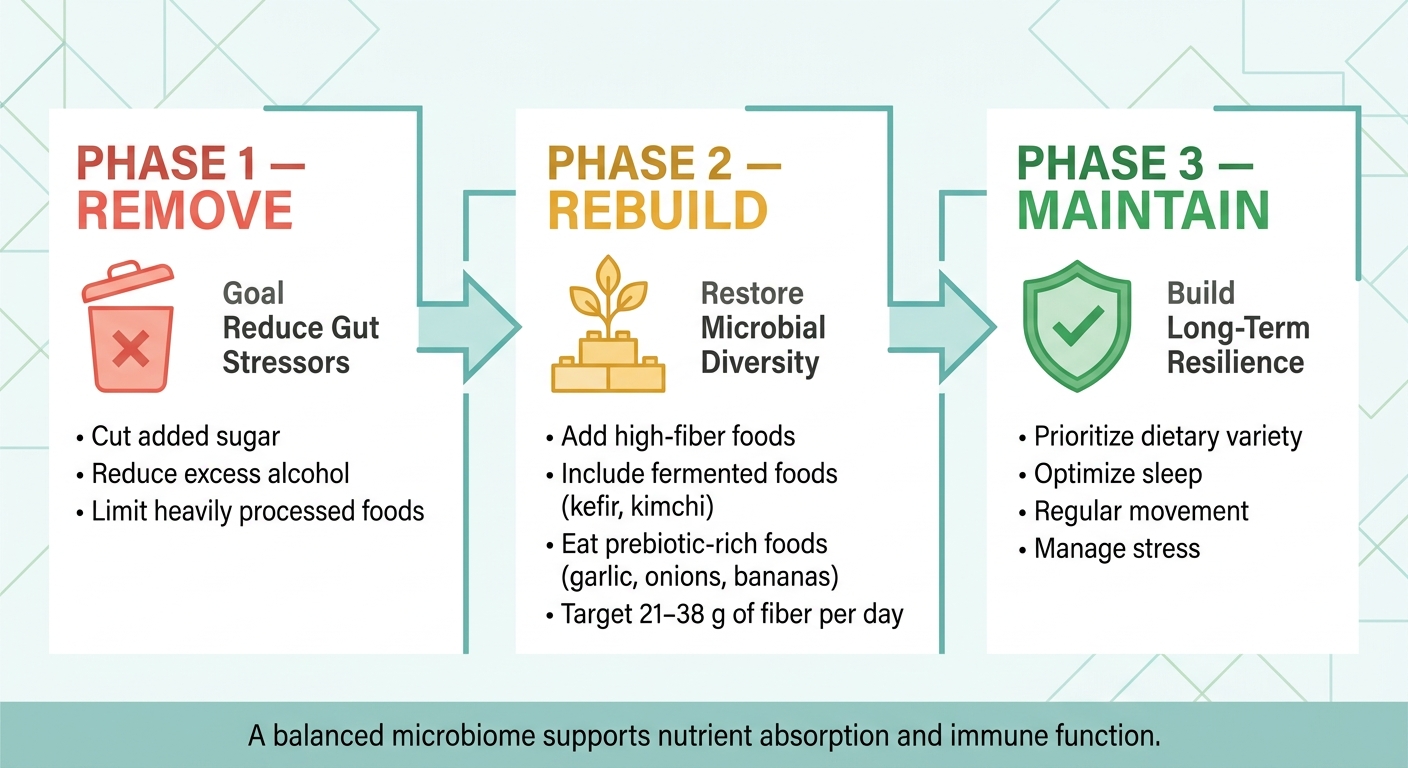
3-Phase Gut Microbiome Reset Plan for Immune & Nutrient Support
A Simple 3-Phase Reset: Remove, Rebuild, Maintain
Once you see how closely the microbiome and micronutrients work together, the next move is pretty simple: follow a reset plan with three steps - remove, rebuild, maintain.
Phase 1 - Remove: Start by cutting back on common gut stressors, especially excess alcohol, added sugar, and heavily processed foods. These can push the gut toward dysbiosis and make nutrient handling harder.
Phase 2 - Rebuild: Add back the foods that help the microbiome recover. That means high-fiber foods, fermented options like kefir and kimchi, and prebiotic-rich foods such as garlic, onions, and bananas. The aim here is to bring back microbial diversity. That takes intention, especially since most U.S. adults still don’t get the recommended 21–38 g of fiber per day [3].
Phase 3 - Maintain: As diversity starts to come back, the job shifts from repair to consistency. Sleep, regular movement, stress control, and a varied diet all help keep the microbiome in better shape over time.
| Phase | Goal | Key Actions |
|---|---|---|
| Remove | Reduce stressors | Cut added sugar, alcohol, and heavily processed foods |
| Rebuild | Restore diversity | Add fiber-rich and fermented foods; target 21–38 g fiber daily |
| Maintain | Long-term resilience | Prioritize dietary diversity, sleep, movement, and stress control |
Where a 3-in-1 Synbiotic Can Support a Reset Plan
Sometimes food changes need extra backup, especially during the rebuild phase.
Rebirth RE-1 is a 3-in-1 synbiotic that comes in a daily sachet. Each serving provides 500 billion CFU and 4.5 g of prebiotic fiber from GOS and inulin to support microbiome balance and immune function. Its Human Origin Strains (HOSt™) are chosen to support gut compatibility [1].
Conclusion: Core Takeaways for Long-Term Resilience
The main goal is to bring the gut back into balance so it can absorb nutrients and support immune function more effectively.
The gut microbiome and micronutrient status are closely linked. When microbial balance breaks down, nutrient absorption can suffer, and immune function can weaken along with it. Dysbiosis is not only a digestion problem. It can also change how the body handles vitamins, minerals, and immune signaling.
Diet quality and fiber variety are the most direct tools here. Prebiotics, probiotics, and postbiotics - from food or from a structured supplement - can help support the process of getting that balance back. Understanding the role of postbiotics and immunity is also key to maintaining this long-term resilience. A phased reset plan gives that work a clear path: remove what disrupts, rebuild what’s missing, and maintain what’s working.
FAQs
How do I know if my gut is out of balance?
Common signs of an imbalanced gut microbiome include bloating, gas, abdominal discomfort, constipation, diarrhea, poor digestion, and repeat immune issues.
If you think dysbiosis may be the problem, Rebiirth RE-1 may help bring things back into balance. It’s a 3-in-1 eubiotic made with Human Origin Strains and built for 7-day, 4-week, or 12-week microbiome reset protocols.
Which foods help the gut absorb vitamins and minerals better?
Focus on foods rich in probiotics and prebiotics. Fermented foods like yogurt, kefir, kimchi, and sauerkraut add helpful bacteria that support nutrient uptake.
Then pair those foods with garlic, onions, bananas, and leafy greens. These feed the bacteria and help them do their job, which can support digestion, gut barrier integrity, and nutrient absorption.
Rebiirth RE-1 combines prebiotics, probiotics, and postbiotics to help restore gut balance and support absorption.
How long does a gut reset usually take?
A gut reset can last anywhere from 7 days to 3 months, depending on what you're trying to fix.
A 7-day reset works as a quick starting point. A 4-week protocol gives you more time to build and keep gut stability. And a 3-month regimen is often used for deeper imbalances and longer-lasting results.
For some people, full microbiome recovery can take up to 3 months of steady use.