

Your gut microbes help teach your immune system when to stay calm and when to fight. When this system works well, your body is less likely to overreact to food, normal gut bacteria, and other harmless triggers.
Here’s the short version:
- Early life matters. Birth method, breastfeeding, and early microbe exposure shape immune training from day one.
- Daily habits keep that training going. Fiber helps gut bacteria make short-chain fatty acids like butyrate, which support regulatory T cells, gut lining strength, and secretory IgA.
- Low fiber, stress, poor sleep, and antibiotics can weaken tolerance. In the U.S., men average about 17 grams of fiber per day and women about 13 grams, below the 25–38 grams often advised.
- Food and lifestyle can help restore balance. A plant-forward eating pattern, fermented foods, movement, sleep, and careful antibiotic use can help rebuild a calmer immune response.
- Microbiome support tools may help after disruption. Prebiotics, probiotics, postbiotics, and synbiotics work on many of the same gut-immune pathways.
If I had to sum it up in one line, it would be this: feed the right microbes, protect your gut barrier, and your immune system is more likely to stay steady.
How Gut Microbes Train Tolerance Across a Lifetime
Infancy and Childhood: The First Immune Lessons
The immune system starts learning from day one, and gut microbes are some of its first teachers.
As microbes move into an infant’s gut after birth, they expose immune cells to harmless antigens. That helps the body learn a basic but HUGE skill: what to leave alone and what to fight. One major result is stronger Treg activity.
Birth method affects which microbes arrive first. Vaginal birth tends to seed the gut with maternal microbes, while cesarean delivery shifts early colonization more toward skin and hospital microbes. A longitudinal study of 1,453 stool samples from 440 children found that vaginal delivery was most strongly linked to Bacteroides enrichment across early infancy.[7]
Breast milk adds another layer of immune training. It contains immune-calming compounds and sugars that feed helpful bacteria. In one cohort, infants with more than 50% Bifidobacterium infantis in early infancy showed better CD4 T-cell responses and stronger vaccine memory.[6] Breastfeeding status has also been identified as the most significant factor associated with microbiome structure in early life.[5]
These early exposures help shape immune patterns that can stick around for years. And the training doesn’t end in childhood. The body keeps getting these microbial reminders every day.
Adulthood: How Gut Microbes Keep Immunity in Check
In adulthood, gut microbes keep the immune system steady through the compounds they make and the way they help protect the gut lining. The immune system trained in infancy still depends on daily input from the microbiome.
Tolerance isn’t a one-time lesson. It has to be maintained across life. The main signals here are short-chain fatty acids (SCFAs): acetate, propionate, and butyrate. Gut bacteria make these when they ferment dietary fiber. SCFAs support regulatory T cells, help B cells that release IL-10, and strengthen tight junctions between intestinal cells. Butyrate stands out because it also supports dendritic cells that steer the immune system toward tolerance instead of inflammation.
Secretory IgA still matters in adulthood as well. It coats commensal microbes in the gut lumen, helping keep them in the mucus layer without setting off inflammation. SCFAs also help tighten the gut barrier and increase mucin expression, which lowers gut permeability. That makes it less likely that microbial fragments will leak into the bloodstream and drive systemic inflammation.
Put together, Treg support, secretory IgA, and barrier integrity act like a daily braking system for immune activity. When fiber intake is high enough and microbial diversity stays strong, those signals keep working. But when diet, stress, sleep, or antibiotics disrupt the microbiome, that restraint starts to slip.
sbb-itb-1bbfe7f
Microbiota-Regulated Immune Pathways in Early Life and Pregnancy
What Disrupts Microbial Training and Weakens Immune Tolerance
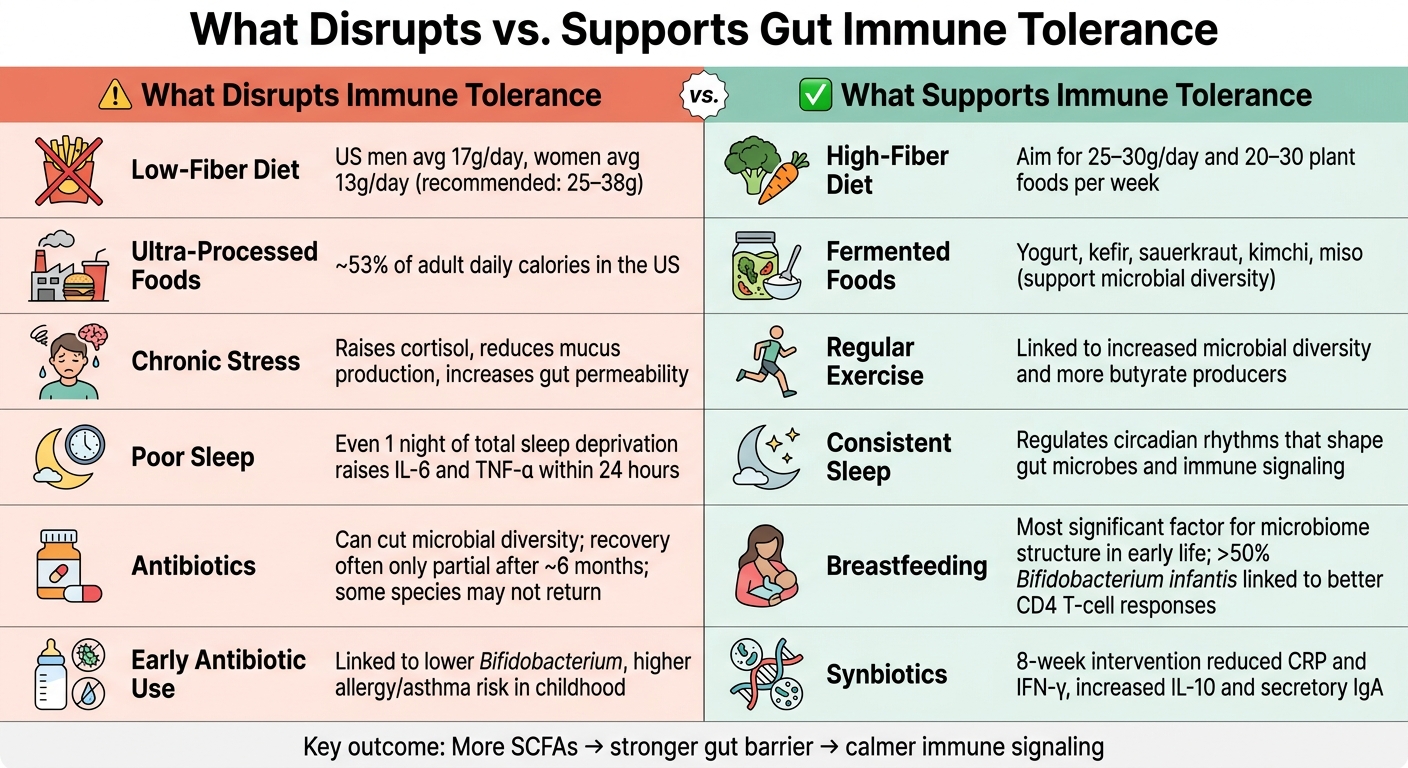
What Disrupts vs. Supports Gut Immune Tolerance
When the microbial signals that help keep the immune system calm get disrupted, inflammation tends to climb. Put simply, the body loses part of its braking system. And once that happens, the immune system is easier to set off. The biggest drivers are low-fiber, highly processed diets, chronic stress and poor sleep, and antibiotics and other microbiome disruptors.
Low-Fiber, Highly Processed Diets and Reduced Microbial Diversity
U.S. adults fall well short on fiber. Men average about 17 grams per day, and women average about 13 grams per day, compared with the recommended 25 grams for women and 30 to 38 grams for men.[17] At the same time, about 53% of adult daily calories in the U.S. come from ultra-processed foods.[10][11] That's a rough mix for the gut microbiome.
Fiber-feeding bacteria need plant fiber to survive and to produce short-chain fatty acids, or SCFAs. When fiber intake stays low, those bacteria shrink in number, and support for the gut barrier drops. Ultra-processed foods can make things worse by driving gut dysbiosis and inflammation. Additives such as emulsifiers, sweeteners, and nanoparticles may affect mucus thickness, intestinal permeability, and tight junction proteins.[12][15][16]
As this pattern builds, species like Faecalibacterium prausnitzii and Akkermansia muciniphila often decline, while opportunistic microbes grow.[13][14] The result is less immune tolerance and more background inflammation.
Diet isn't the whole story, though. Stress and sleep push on many of the same pathways.
Stress, Poor Sleep, and the Gut-Immune Connection
Chronic stress turns on the body's stress-response system and increases cortisol and adrenaline.[8] Those signals can change gut motility, cut back mucus production, and alter blood flow to the gut.[8] Over time, helpful bacteria decline, the gut barrier becomes more permeable, and microbial fragments can reach immune tissue and trigger inflammatory cytokine release.[24][26][28]
Poor sleep adds another hit. Short or irregular sleep can disrupt the microbiome's daily rhythms, lower diversity, and shift cytokines toward a more inflammatory pattern.[22][23][25] Even one night of total sleep deprivation can increase IL-6 and TNF-α within 24 hours.[27]
Medications can push this same pattern further by changing the microbiome more directly.
Antibiotics and Other Common Sources of Microbiome Disruption
Broad-spectrum antibiotics can sharply reduce microbial richness and diversity. Recovery is often only partial over about six months, and some species may not come back at all.[20][21]
This matters even more early in life. Antibiotic use in the first two years is linked to lower levels of Bifidobacterium and Bacteroides, higher levels of opportunistic species like Klebsiella, and higher risks of allergies, asthma, atopic dermatitis, and other immune-related conditions later in childhood.[1][18][19] That early window plays a major role in immune education, so disruptions then can leave long-term gaps.
Antibiotics aren't the only issue. Repeated gastrointestinal infections, frequent use of acid-reducing drugs or NSAIDs, high alcohol intake, and chemical exposures can also weaken microbiome resilience.[8][9] Stack those on top of a low-fiber diet and chronic stress, and microbial diversity can slowly wear down, making it harder for the immune system to stay well-calibrated.
How to Support Immune Tolerance Through Diet, Lifestyle, and Microbiome Restoration
Rebuilding immune tolerance starts with two things: feeding the microbes you want more of and cutting back on the inputs that keep inflammation running hot. When microbial training starts to slip, the next move is to rebuild the signals that help the immune system stay calm.
Food and Lifestyle Habits That Support a Less Reactive Immune Response
A Mediterranean-style eating pattern centers on vegetables, fruits, whole grains, beans, olive oil, and moderate fish. Compared with a typical Western diet, it is linked to greater microbial diversity, higher levels of SCFA-producing bacteria like Faecalibacterium prausnitzii and Eubacterium rectale, and lower circulating inflammatory markers, including CRP, IL-6, and TNF-α.[29][30][32]
Why does that matter? Because the main goals here are pretty simple: more SCFAs, a stronger gut barrier, and calmer immune signaling.
A few habits can help move things in that direction:
- Aim for 25–30 grams of fiber per day and 20–30 plant foods per week.
- Eat fermented foods on a regular basis, such as plain yogurt with live cultures, kefir, sauerkraut, kimchi, and miso.
- Stay active. Regular physical activity is linked to increased microbial diversity, more butyrate producers, and a less permeable gut lining.[35]
- Protect your sleep. Consistent sleep helps regulate the circadian rhythms that shape both gut microbes and immune signaling.[31][33][34]
None of this works overnight. But done day after day, these habits can push the immune system toward a steadier, less reactive state. Microbial training can come back, but it needs repetition.
Prebiotics, Probiotics, Postbiotics, and Synbiotics Explained Simply
Sometimes food and daily habits need backup. That’s where microbiome-focused ingredients come in. They support many of the same gut and immune pathways.
Prebiotics are fermentable fibers, such as inulin and galacto-oligosaccharides (GOS), that feed helpful bacteria, support SCFA production, and promote regulatory immune pathways.[37][43][44]
Probiotics are live microorganisms that, when taken in adequate amounts, can modulate immune signaling and support barrier function, especially in older adults.[38][47]
Postbiotics are microbial compounds, such as butyrate, that can support the gut barrier and immune balance directly, even when no live bacteria are present.[41][42][45]
Synbiotics combine prebiotics and probiotics so the probiotic strains have a better shot at working well in the gut.
This combo isn’t just a nice idea on paper. In healthy adults, an 8-week synbiotic intervention reduced plasma CRP and IFN-γ, increased anti-inflammatory IL-10, and raised stool secretory IgA, a marker of mucosal immune defense.[36][39][40][46] That suggests the combination may do more than a single ingredient on its own.
Where Rebirth RE-1 Fits in a Microbiome Reset Plan
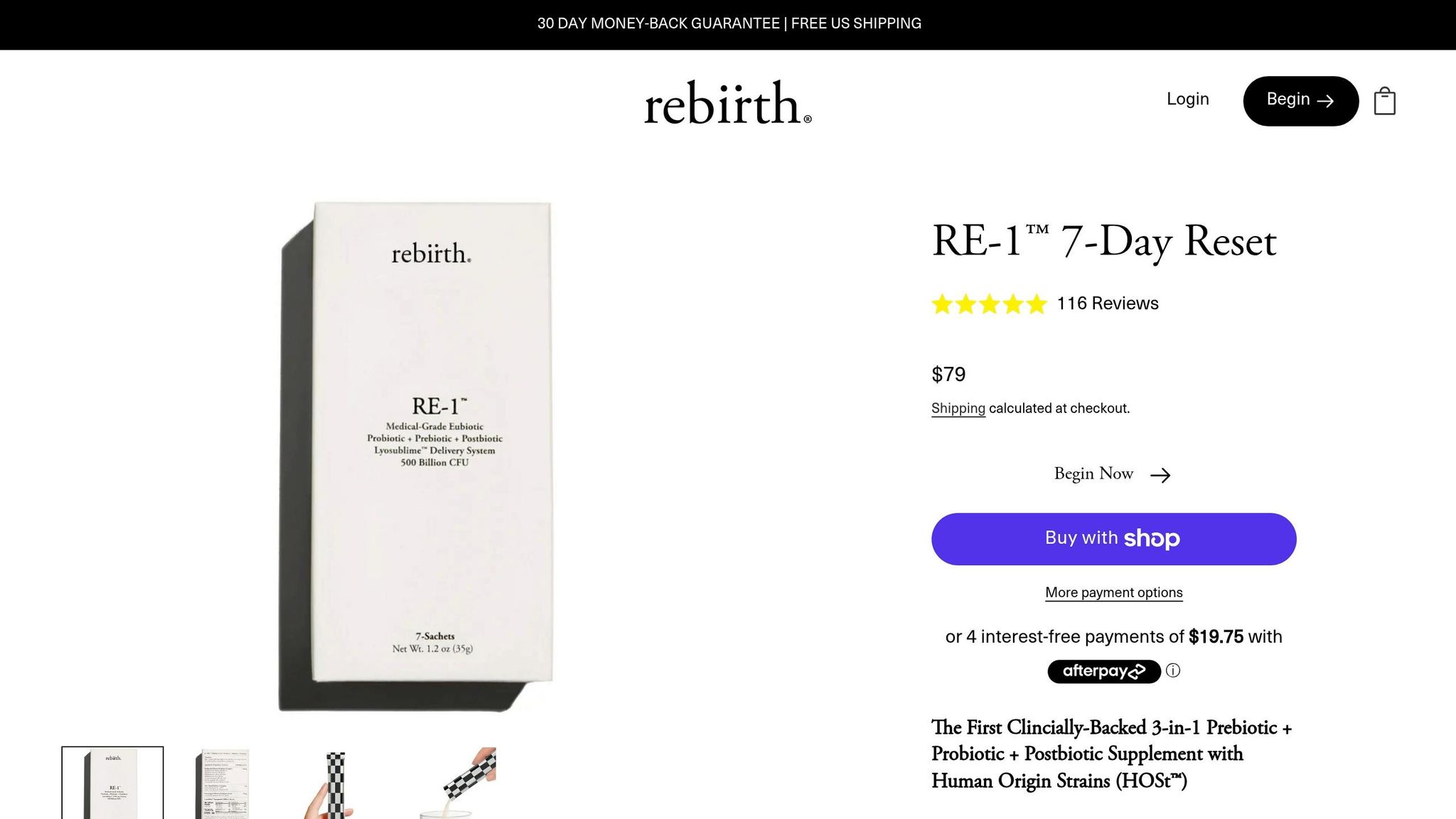
This is where a structured synbiotic can fit into a reset plan.
Rebirth RE-1 is a 3-in-1 synbiotic with prebiotics, probiotics, and postbiotics in sachets. It is designed for either a short reset or longer support plan within a broader gut-health routine, with 7-day, 4-week, and 12-week formats. The probiotic strains are Human Origin Strains (HOSt™), derived from the human microbiome to more closely match the microbes naturally found in the gut.
It works best when paired with fiber-rich food, sleep, movement, and stress control. The aim isn’t to push immunity down. It’s to restore the microbial signals that teach restraint.
Conclusion: Gut Microbes Help Teach the Immune System Restraint
Gut microbes help train immune tolerance by teaching the immune system to stay calm around harmless inputs. Through steady contact with microbes and the metabolites they make - especially short-chain fatty acids and inflammation like butyrate - immune cells are pushed toward regulatory responses instead of overreaction. That lesson starts early and needs support over time.
This training begins in infancy and continues through adulthood.
The pattern in the research is pretty clear: fiber-rich, plant-forward eating supports SCFA production and Treg activity, while low-fiber, highly processed diets, poor sleep, stress, and antibiotics can wear down that balance.[4][3][49][48][2]
If you want to support the microbes that help maintain tolerance, focus on the basics:
- Eat a wider mix of plant foods
- Sleep well
- Move on a regular basis
- Use antibiotics only when they’re needed
And if the microbiome has taken a hit, a structured reset may help. After a major disruption, such as an illness or a needed course of antibiotics, Rebirth RE-1 can fit into a broader microbiome reset plan.
FAQs
How do gut microbes teach immune tolerance?
Gut microbes help train immune tolerance by working with immune cells. In plain English, they help the body learn the difference between harmless substances and harmful pathogens.
They also support regulatory T cells, which release anti-inflammatory signals. On top of that, they produce short-chain fatty acids from prebiotics, which help regulate immune signaling and calm inflammation. Rebiirth RE-1 supports this process with prebiotics, probiotics, and postbiotics.
Can you rebuild immune tolerance after antibiotics?
Yes. Antibiotics can disrupt the gut microbiome. When that happens, immune regulation can weaken, and the intestinal barrier may become less stable. Rebuilding immune tolerance starts with helping the gut get back into balance.
Rebiirth RE-1 combines prebiotics, probiotics, and postbiotics to support that process. It helps restore microbiome diversity, supports the gut lining, and may help calm inflammation. Its Human Origin Strains and delivery system are designed to support beneficial bacteria linked to long-term immune tolerance.
What foods best support a calmer immune system?
Focus on foods with prebiotics and probiotics. Prebiotic foods feed the good bacteria in your gut, which helps them make compounds linked to lower inflammation.
Good prebiotic picks include garlic, onions, oats, barley, legumes, and green bananas. On the probiotic side, go for fermented foods like yogurt with live cultures, kefir, sauerkraut, kimchi, miso, tempeh, and natto.
If you want more targeted support, Rebiirth RE-1 offers a 3-in-1 eubiotic synbiotic designed to help restore microbiome balance.