

Yes - travel can change your gut microbiome in just a few days. From what I see in the article, the main drivers are sleep loss, jet lag, air travel stress, food and water changes, and germ exposure. And while stomach symptoms may ease in 24 to 48 hours, gut recovery can take weeks to 3 months.
Here’s the short version:
- Travel can disrupt gut balance fast
- Jet lag and poor sleep are major triggers
- New food and water can shift gut microbes
- Antibiotics can make gut problems worse
- Some people, like those with IBS, may take longer to recover
- Probiotics and synbiotics may help, but results depend on the exact strain and dose
Put another way: you may feel fine before your gut is back to normal.
What stands out to me most is the gap between symptoms and recovery. A person can stop feeling bloated or sick within a day or two, while the microbiome may still be off for 4 weeks or more. That helps explain why travel stomach issues can seem to come and go.
I’d also keep the risk groups in mind:
- People taking antibiotics: about 25% get antibiotic-associated diarrhea
- People with IBS: stress and gut imbalance can slow the return to baseline
- People born by C-section: may start with lower gut diversity
- People under immune strain: may deal with stronger gut disruption
The article also makes one point clear: not all probiotic products work the same way. Study results are tied to named strains, not to “probiotics” as one big group. So if you’re thinking about travel gut support, the product details matter.
If I had to sum it up in one line, it would be this: travel can upset your gut fast, but the bounce-back can take much longer than most people think.
How Travel Stressors Change Gut Microbes
Travel can throw the gut microbiome off balance through stress, poor sleep, and sudden changes in what your body is exposed to. Research points to three main stressors: air travel, circadian disruption, and food or water changes. And these shifts can happen fast. The catch is that recovery doesn’t look the same for everyone. One of the most common triggers is air travel.
Air Travel and Cabin Conditions
Air travel piles several stressors on top of each other: stress, sleep loss, and circadian disruption. Each one can shift microbial populations in measurable ways [1]. Put them together, and gut stability can drop before a traveler even gets to their destination [1]. That kind of early disruption may play a role in dysbiosis [1].
Time Zone Changes, Sleep Loss, and Gut Jet Lag
Sleep loss and jet lag are some of the clearest microbiome disruptors during travel. They can alter gut-brain-axis signaling and circadian-linked microbial activity [1]. So it’s not just that your sleep schedule feels off. Your gut may be running on the wrong clock too. And timing is only part of the story. What travelers eat and drink can also reshape the gut.
Food, Water, and Pathogen Exposure
Food changes can alter microbial balance fast [1]. Chlorinated water adds another stressor and can contribute to microbial shifts [1]. Travel also increases exposure to enteric pathogens, especially members of the Enterobacteriaceae family [1]. If an infection leads to antibiotic use, that can disrupt the gut even more and increase diarrhea risk [1].
sbb-itb-1bbfe7f
Disruption, Recovery, and Higher-Risk Travelers: What Studies Show
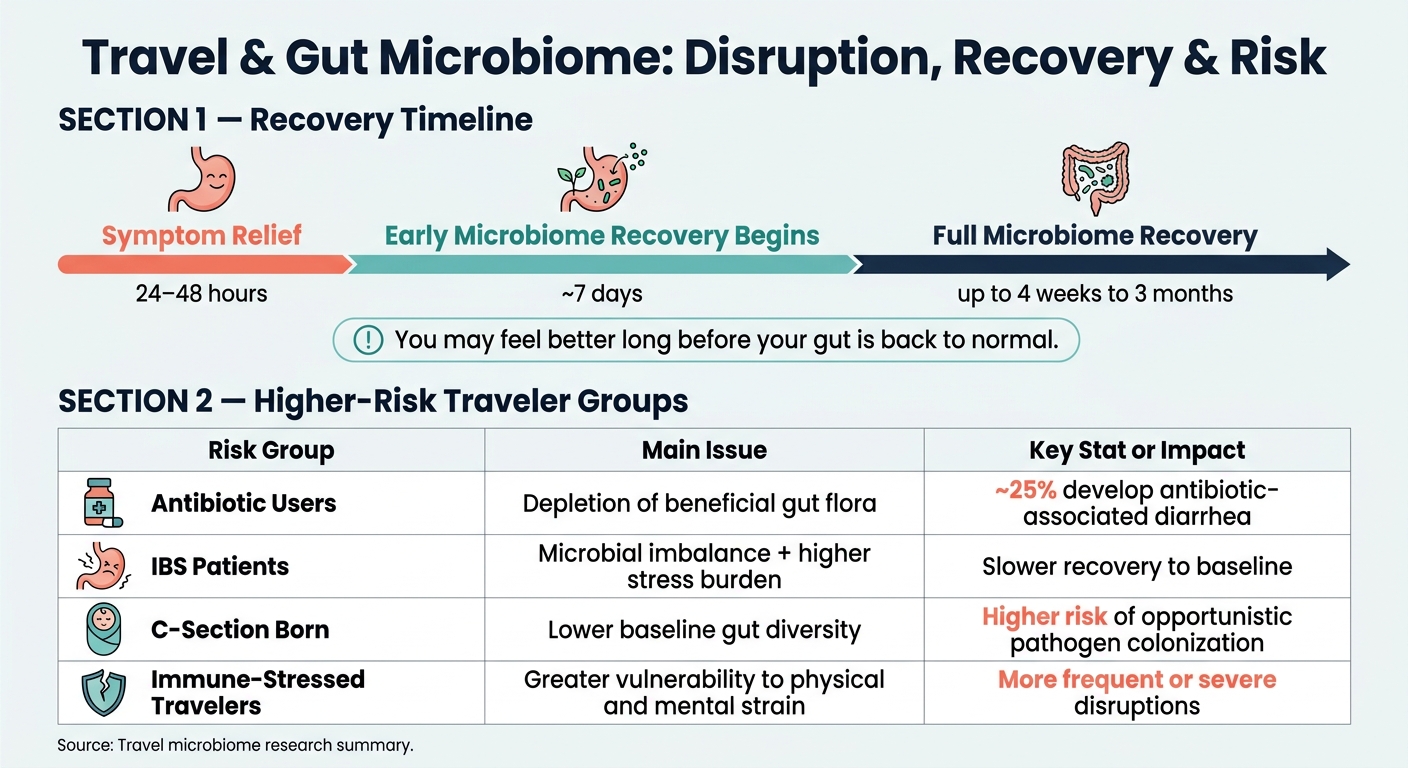
Travel & Gut Microbiome: Risk Groups, Recovery Times & Key Stats
Short-Term Shifts Versus Longer Recovery Windows
After the trigger, the next thing people want to know is simple: how long does recovery take?
The answer depends on what changed during the trip. Some travel-related shifts pass fast. Others can stick around for weeks.
For example, digestive symptoms may improve within 24 to 48 hours, but microbiome recovery can take up to 3 months [1]. In some cases, recovery starts within 7 days, yet the gut may not return to a steady state for about 4 weeks [1].
So while you might feel better pretty fast, your gut can still be working its way back behind the scenes.
Who Faces Higher Risk
Recovery can also take longer in travelers who begin with lower microbial resilience. Put plainly: some people’s guts get knocked off balance more easily, and they take longer to bounce back.
| Risk Group | Main Issue | Travel Impact |
|---|---|---|
| Antibiotic users | Depletion of beneficial flora | About 25% of patients receiving antibiotics develop antibiotic-associated diarrhea [1] |
| IBS patients | Microbial imbalance and higher stress burden [1] | Slower recovery [1] |
| People born via C-section | Less diverse microbiota [1] | Higher opportunistic pathogen colonization [1] |
| Travelers under immune stress | More vulnerable to travel-related physical and mental strain | More frequent or more severe disruptions [1] |
IBS may slow recovery because stress and microbial imbalance often overlap [1]. That overlap can make travel harder on the gut and make the rebound take longer [1].
Microbiome Support During Travel: What the Evidence Shows
What Probiotic and Synbiotic Travel Studies Have Found
Travel can throw your gut off in ways that outlast the trip itself. Since microbiome recovery may take longer than the symptoms you feel day to day, researchers have looked at whether certain probiotic and synbiotic strains can help limit that disruption.
Here’s the key point: the evidence is strain-specific. One probiotic isn’t the same as another, and studies don’t all look at the same outcomes. Some track sleep, others look at immune markers, bloating, or diarrhea.
For example, meta-analysis data on Lactobacillus gasseri found better sleep quality in adults with mild to moderate stress. That matters, but it’s still indirect evidence for travel use. Bacillus coagulans has also shown a positive effect in antibiotic-associated diarrhea, with one analysis reporting a number needed to treat of 10 [1].
That said, the fine print matters a lot. Results depend on the exact strain and the dose used. And when you’re weighing the strength of the evidence, randomized trials and meta-analyses usually carry more weight [1].
Where Rebirth RE-1 Fits in the Discussion
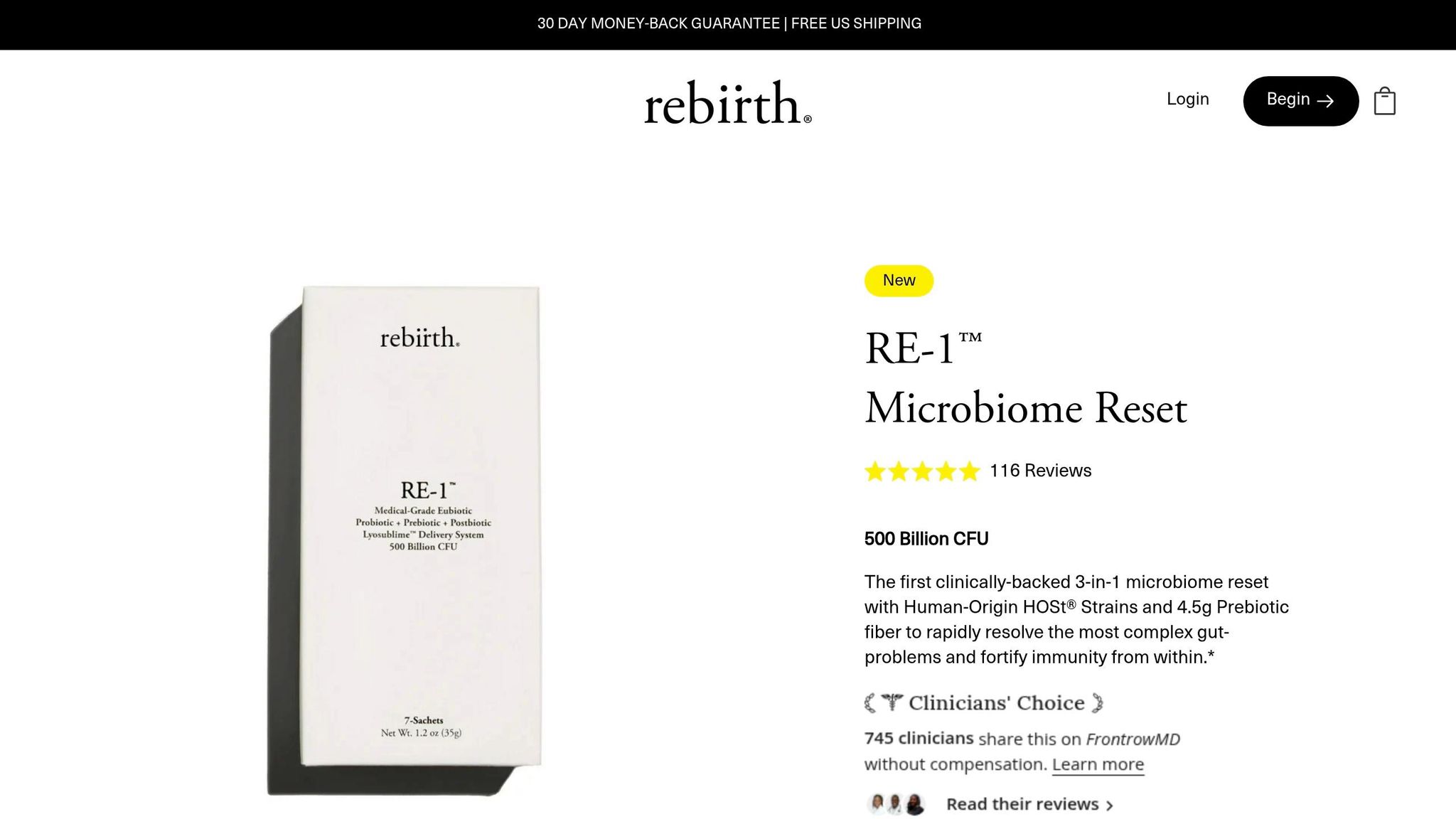
This strain-by-strain picture helps explain why some travel-focused products lean into named strains and easy-to-carry formats. Rebirth RE-1 is a synbiotic made to support gut balance, combining probiotics, prebiotics, and postbiotics in portable sachets [1].
In the context of travel, that mix and format make it relevant to the discussion here. Still, product-specific claims should be judged on their own, separate from the broader travel microbiome evidence summarized in this article.
Conclusion: What Is Known, What Is Uncertain, and Why It Matters
Taken together, the research points in the same direction: travel can disrupt gut microbes through sleep loss, circadian disruption, and shifts in food and water exposure. But recovery doesn’t look the same for everyone.
A big part of that comes down to microbiome resilience - how fast the gut gets back to balance after a disruption. The clearest sign of a higher-risk case is antibiotic use, which is linked to antibiotic-associated diarrhea in about 25% of patients receiving antibiotics [1].
There’s also a plain research problem here. Most studies are short, and they don’t all use the same methods. That makes side-by-side comparison tough. To pin down who returns to baseline and how long that takes, researchers need larger studies with standard methods and longer follow-up.
For travelers with pre-existing dysbiosis or low baseline resilience, even a brief disruption may hit harder. In other words, baseline gut health helps shape both how strongly travel affects the microbiome and how fast recovery happens.
FAQs
Can travel change my gut in just a few days?
Yes. Travel can change your gut microbiome in just a few days. The main drivers are sleep loss and circadian disruption, which can kick in within 24–48 hours. Short-term shifts in diet and meal timing also play a part.
Recovery can begin in about two days once you get back to steady sleep and regular rest. But a fuller return to balance may take longer. The risk tends to be higher when travel brings major sleep disruption or irregular eating schedules. [1][2]
Why can my stomach feel better before my gut fully recovers?
Your stomach can start feeling better pretty fast after travel. Some of the disruption from a trip fades soon, especially once your sleep and daily rhythm get back on track.
After circadian disruption and poor sleep, gut barrier function and inflammatory signaling can begin to calm down in about two days of steady rest.
So yes, bloating or discomfort may ease before the microbiome has fully bounced back. On top of that, eating at regular times again can help digestion work better in the short term, even while deeper microbial and metabolic recovery still takes more time.
Who is most likely to have longer-lasting gut issues after travel?
People most likely to deal with lasting gut problems after travel are those with chronic sleep deprivation or pre-existing imbalances.
For most healthy people, short-term changes from poor sleep, off-schedule meals, and circadian rhythm shifts tend to settle down. The body usually gets back on track.
That changes when sleep issues stick around or eating habits are already off. In that case, the stress of travel can pile on. Microbial diversity may drop, the intestinal barrier can weaken, and dysbiosis can last longer than it otherwise would.