

If stress has only hit your gut for a short time, food is often enough. If bloating, brain fog, irregular bowel movements, or repeat infections keep coming back, adding a synbiotic may make more sense.
Here’s the short version:
- Diet-first works best when stress is mild, digestion is still mostly steady, and symptoms have not lasted long.
- Synbiotic support fits better when stress has gone on for a while, antibiotics are part of the picture, or a low-fiber diet has left your gut off balance.
- Fiber and fermented foods help support gut bacteria, but they may not fully rebuild the gut when the disruption runs deeper.
- A synbiotic combines prebiotics, probiotics, and postbiotics to give your gut more direct support.
- In the article’s cited data, 94% of users reported less bloating and 87% reported fewer allergies and infections after 7 days of RE-1 use.
What this comes down to: I’d think of diet as the daily base, and synbiotic support as the next step when food alone is not enough.
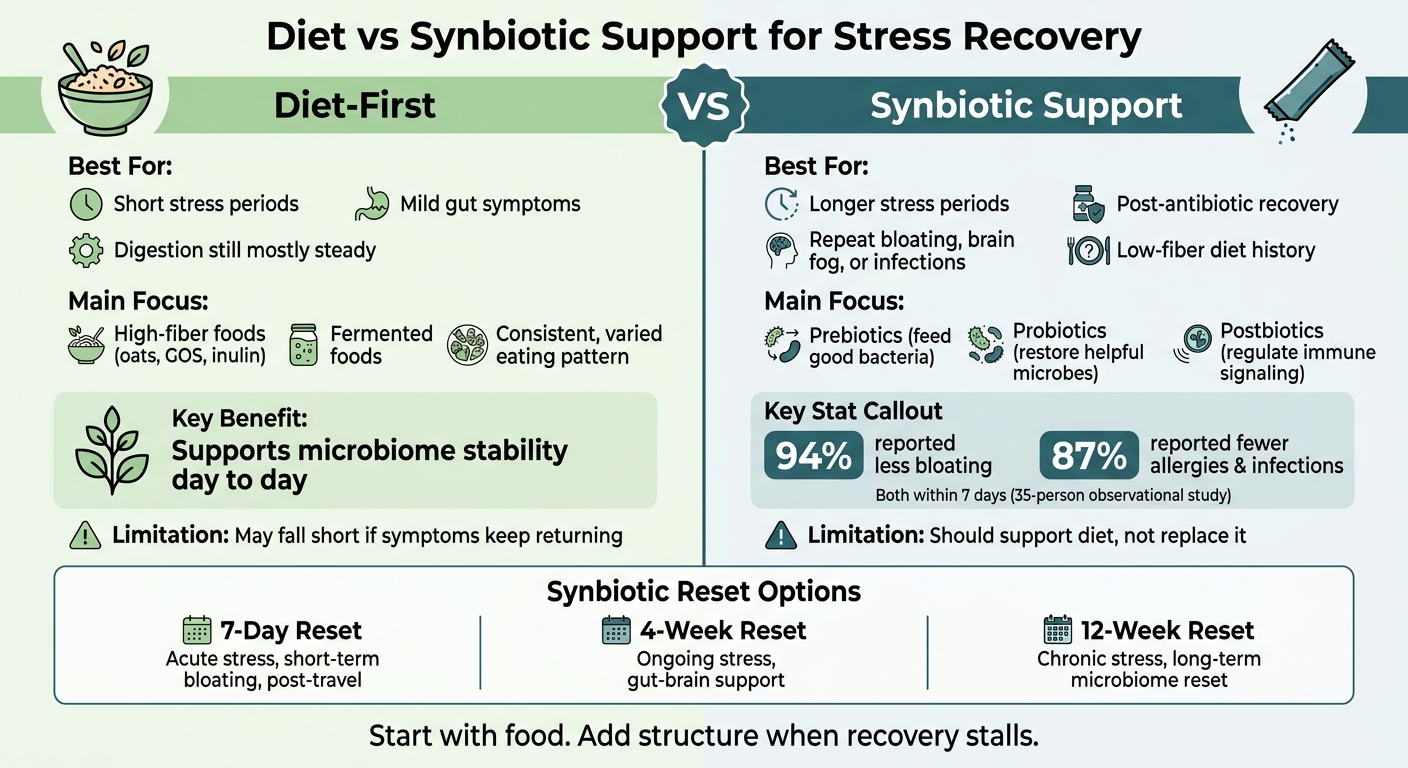
Diet vs Synbiotic Support for Stress Recovery: Which Do You Need?
Stress Less, Live More: The Power of a Healthy Gut Microbiome
Quick Comparison
| Option | Best for | Main focus | Limits |
|---|---|---|---|
| Diet-first | Short stress periods, mild gut symptoms | Fiber, fermented foods, steady eating pattern | May fall short if symptoms keep returning |
| Synbiotic support | Longer stress periods, post-antibiotic support, repeat bloating/brain fog | Adds prebiotics, probiotics, and postbiotics in one plan | Should support diet, not replace it |
If you want the simple answer: start with food, then add more structure if recovery stalls.
How Stress Disrupts the Microbiome
Chronic stress can shift the microbiome and throw off digestion, inflammation, and the gut-brain axis. That’s the point where a food-first plan may need extra help.
The Gut-Brain Axis and Immune Signaling
Stress affects the gut through the gut-brain axis and immune signaling. Over time, chronic stress can disrupt nerve and immune signaling. It can also lower anti-inflammatory cytokines like interleukin-10 (IL-10) and increase pro-inflammatory cytokines.[1]
This doesn’t stay in the gut. It can spill into mood, mental sharpness, and your ability to handle pressure day to day.[1]
Signs That Stress-Related Dysbiosis May Be a Factor
Stress-related dysbiosis often shows up in small, easy-to-miss ways. Common markers include bloating, irregular bowel movements, frequent infections, and brain fog.[1]
A history of antibiotic use, long high-stress stretches, or a heavily processed diet can also hint that the microbiome may need more than diet alone.[1] Those clues can help show when food changes may be enough and when a synbiotic reset makes more sense.
sbb-itb-1bbfe7f
Diet First: When Food Can Support Stress Recovery
What you eat each day can shape how well your gut handles stress. Food affects the gut-brain axis through the microbiome, and that base tends to matter most when stress is still mild and your gut can respond to day-to-day food choices.
High-Fiber Foods and Microbiome Stability
Fiber is the main fuel for helpful gut bacteria. The big idea here isn't chasing trendy superfoods. It's being consistent.
Prebiotic fibers like galactooligosaccharides (GOS) and inulin feed bifidobacteria and help support a healthier inflammatory response. Research shows that GOS "significantly increased the numbers of beneficial bacteria, especially bifidobacteria, at the expense of less beneficial groups." [1]
In plain English, that means fiber-rich plant foods should show up in your meals on a regular basis. A bowl of oats once in a while won't do much on its own. The microbiome reacts to daily input, not random bursts of good behavior.
If that base still isn't enough, it may be time for a more structured form of microbiome support.
Fermented Foods and a Balanced Eating Pattern
Fermented foods can strengthen your eating plan, but they don't replace it. If stress is still manageable and digestion is mostly normal, a varied, high-fiber diet can help keep the microbiome steady.
On the flip side, low-fiber diets with little variety push in the other direction. That's where things can start to feel off. The goal is a microbiome that stays steady under pressure. If symptoms keep hanging around or recovery needs more structure, synbiotic support can offer a more direct reset.
Synbiotic Support: When Diet Alone May Not Be Enough
Diet sets the base. But sometimes the gut takes a harder hit, and food by itself doesn't move the needle enough.
What Synbiotic Support Adds to a Food-First Plan
Prebiotics feed helpful gut bacteria. Probiotics help add helpful microbes back in. Postbiotics help regulate immune signaling. A synbiotic brings all three together in one plan.
That mix tends to matter more when stress has already worn the system down and progress from diet alone starts to stall.
This kind of support often makes the most sense after antibiotics, during long stretches of stress, or when fiber intake stays low. If core strains are missing, even a solid diet may not fully bring things back into balance. That's where a concentrated synbiotic can help. Not as a substitute for good food, but as a more direct reset when food-first changes aren't enough.
How Rebirth RE-1 Fits Short- and Longer-Term Reset Plans
For stress recovery, a synbiotic helps by adding structure, not by taking the place of diet.
Rebirth RE-1 is a clinically backed 3-in-1 synbiotic built around Human Origin Strains (HOSt®), strains designed to match the microbes humans naturally carry. Each sachet delivers 500 billion CFU plus 4.5 g of prebiotic fiber, with a proprietary Lyosublime® delivery system that requires no capsule breakdown and does not require refrigeration. [1]
When stress symptoms stick around, the aim shifts from simply easing digestion to restoring microbial balance. RE-1 includes strains studied for gut-brain support, sleep quality, and stress-related resilience. [1]
RE-1 offers three reset formats based on where you are in recovery:
| Reset Plan | Duration | Primary Focus |
|---|---|---|
| 7-Day Reset | 1 week | Short-term digestive support |
| 4-Week Reset | 4 weeks | Mid-term gut-brain support |
| 12-Week Reset | 12 weeks | Longer-term microbiome reset |
In a 7-day observational study of 35 healthy adults ages 25 to 65, 94% of participants reported less bloating, and 87% noticed fewer allergies and infections within the first week of use. [1]
Across all three plans, the use is simple: take one sachet with water each morning on an empty stomach.
That leads to the next call - stick with food-first support alone, or add more structure when recovery stalls.
Diet vs Synbiotic Support: Which Approach Fits Your Stress Recovery Phase?
When Diet-First Is Usually Enough
At this stage, the choice mostly depends on how long stress has been affecting your gut. If stress was brief and your digestion is still mostly steady, a food-first plan is often enough. In that case, the focus is on maintaining balance, not trying to rebuild from the ground up.
When a Sachet-Based Reset May Make More Sense
If symptoms stick around, or stress shows up alongside antibiotics or a low-fiber diet, food alone may not do the job. Chronic stress, antibiotic use, repeat bloating, and brain fog can all point to the same issue: diet may need backup.
Rebirth RE-1 is a sachet-based 3-in-1 synbiotic that combines prebiotics, probiotics, and postbiotics in Human Origin Strains (HOSt™) to support microbiome balance. It adds structure to a food-first foundation when recovery needs more than diet can provide.[1]
A short reset can help when support needs to feel more clear and consistent.
| Reset Plan | Best For |
|---|---|
| 7-Day Reset | Acute stress support, short-term bloating relief, post-travel reset |
| 4-Week Reset | Ongoing stress, gut-brain axis support, daily disruption protection |
| 12-Week Reset | Chronic stress recovery, longer-term microbiome support |
Start with Food, Add Structure When Recovery Needs More Support
Diet is the long-term base. But when stress goes on for a while, or symptoms keep circling back, a defined sachet-based protocol can give recovery more direction. The best fit comes down to symptom duration, symptom severity, and the kind of support recovery calls for.
FAQs
How do I know if stress has disrupted my gut?
Stress can show up in your gut in a few pretty clear ways: signs of imbalance, a weaker gut lining, and inflammation.
Common clues include bloating or discomfort, changes in stool patterns, and lower mood or fatigue that seem to come with digestive issues. Chronic stress can also reduce helpful short-chain fatty acids like butyrate, which may put more strain on digestion and gut barrier support.
How long should I try diet changes before adding synbiotic support?
It comes down to your goals and how off your gut feels.
A nutrient-dense, fiber-rich diet should be the starting point. But if you're dealing with acute stress or a major hit to your microbiome, you can add synbiotic support like Rebirth RE-1™ from the start with a 7-day reset.
If you've already cleaned up your diet and your digestive issues still stick around - or your progress slows down - a 4-week or 12-week protocol may give you more focused, longer-term support.
Which reset plan fits short-term vs. chronic stress?
For short-term stress recovery, the 7-day rapid reset can help with acute inflammation and oxidative stress markers.
If stress has thrown things off a bit more, the 4-week stabilization plan gives probiotics more time to attach and interact with your existing microbiome, which may support microbial stability.
For chronic stress, the 12-week comprehensive reset is the best fit for helping restore gut microbiota diversity and support the gut-brain connection after longer-lasting changes.