

Stress can change your gut within hours. From what I see in the research, short stress can loosen the gut barrier and shift gut bacteria fast, while long-term stress is linked to lower microbe diversity, less butyrate, more inflammation, and more issues with digestion, mood, and immune activity.
Here’s the short version:
- Acute stress can alter gut bacteria in hours
- Stress hormones can weaken tight junctions and make the gut more permeable
- Chronic stress is linked to fewer helpful SCFA-producing microbes
- Lower butyrate and acetate can mean less support for the gut lining
- Leaky gut changes may let LPS and other bacterial parts reach immune cells and blood
- Higher inflammatory signals like TNF-α, IL-6, and IL-1β often show up in this process
- These shifts may connect to bloating, diarrhea, constipation, gut pain, anxiety, low mood, and fatigue
- Research is also looking at fiber, fermented foods, sleep, exercise, stress relief, and synbiotics for mental health
If I had to sum it up in one line, it would be this: stress doesn’t just affect how you feel mentally - it can reshape what happens in your gut, too.
A few points stand out to me:
- The gut and brain are linked through the microbiota-gut-brain axis
- In human work, even one acute stress task has been linked to higher gut permeability
- In long-term stress, the pattern often shifts toward less diversity and more pro-inflammatory taxa
- Sleep in the 7 to 9 hour range, fiber-rich foods, and microbiome support are among the main tools being studied
This article explains that chain in plain English: what stress changes first, how those changes build over time, and what current studies suggest may help steady the system.
Stress Is Damaging Your Gut Health. Here's How to Repair It.
sbb-itb-1bbfe7f
How Acute Stress Changes Gut Bacteria and the Intestinal Barrier
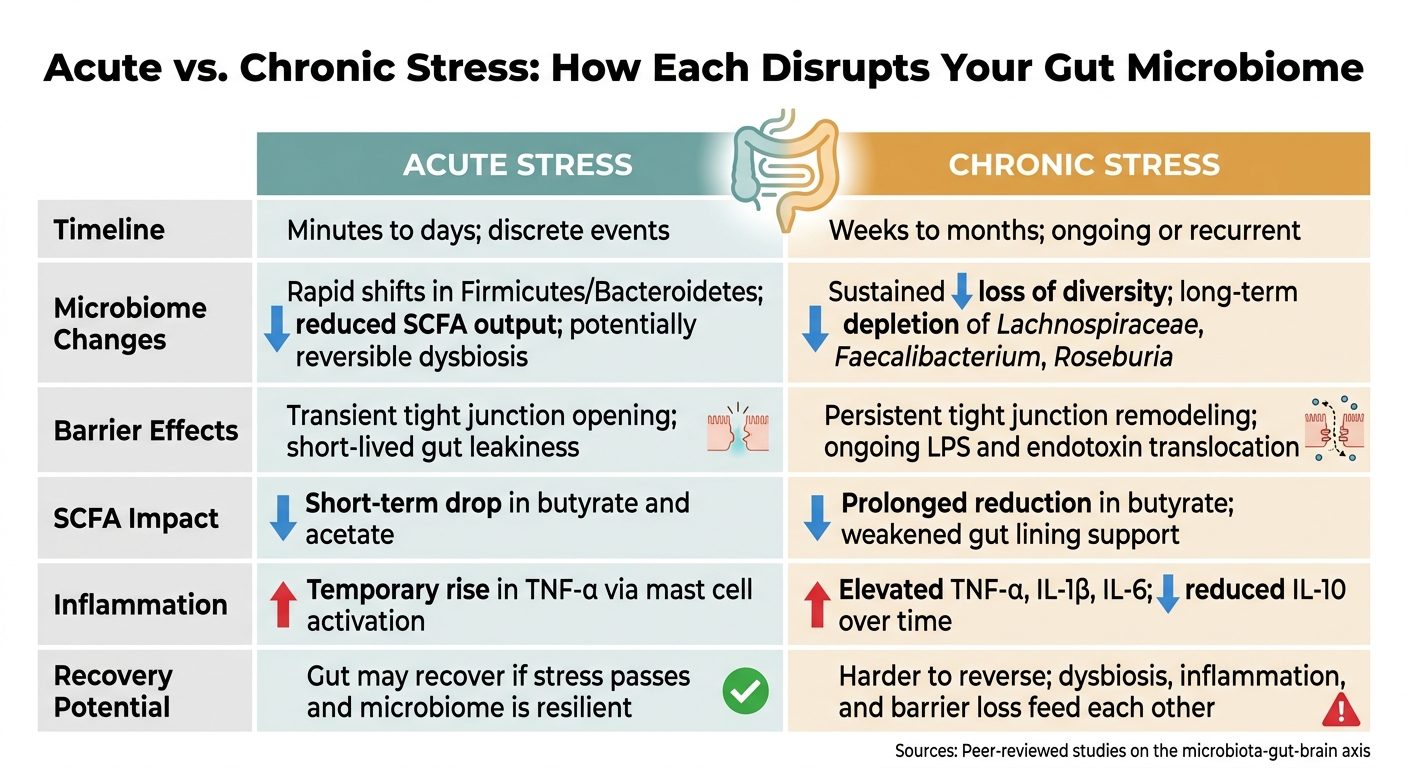
Acute vs. Chronic Stress: How Each Disrupts Your Gut Microbiome
Short-Term Microbial Shifts During Stress
Acute stress can change the gut microbiome FAST. In rodent studies, short stressors like restraint changed which microbes were most common within hours. Researchers saw shifts in major bacterial groups, including Firmicutes and Bacteroidetes, along with rises in microbes more closely tied to inflammation. [3]
It’s not just about which bacteria are there. It’s also about what they do.
Short-term stress has been shown to lower cecal levels of butyrate and acetate, two short-chain fatty acids (SCFAs) made when gut bacteria ferment dietary fiber. [12] That matters because SCFAs help support the gut lining. When SCFA output drops, that support weakens. So these stress-driven shifts affect microbial function, not just species totals.
And once microbial activity changes, the gut barrier starts to feel it too.
Stress Hormones, Tight Junctions, and Gut Permeability
Tight junctions act like seals between intestinal cells. They help control what stays in the gut and what passes through. During acute stress, those seals begin to loosen.
One major signal is corticotropin-releasing factor (CRF). In the gut wall, CRF activates mast cells. Those mast cells then release inflammatory mediators such as tryptase and TNF-α, which set off signaling pathways, including myosin light chain kinase (MLCK), that pull tight junctions apart. [13][20] Stress chemicals like norepinephrine can also alter tight-junction proteins such as occludin and claudin-1. [5][13]
The end result is a leakier gut barrier. Small gaps open between cells, and substances that would normally stay inside the gut lumen can slip through. LPS and other bacterial fragments can then reach immune cells in the gut wall and enter the bloodstream. [1][14]
Human data point in the same direction. In healthy adults, a randomized crossover study found that a single acute psychological stressor increased small-intestine permeability. Peripheral CRH infusion produced the same effect, and both responses were blocked by the mast-cell stabilizer cromolyn sodium. [17][18][19]
When stress keeps hitting over and over, these “short-term” changes stop being so easy to shake off.
Acute vs. Chronic Stress: Key Differences
The biggest difference comes down to recovery. Here’s what the current evidence shows. [11][12][15][16]
| Feature | Acute Stress | Chronic Stress |
|---|---|---|
| Timeline | Minutes to days; discrete events | Weeks to months; ongoing or recurrent |
| Microbiome changes | Rapid shifts in bacterial balance; reduced SCFA output; potentially reversible dysbiosis | Sustained loss of diversity; long-term reduction in protective taxa |
| Barrier effects | Transient tight junction opening; short-lived leakiness between cells | Persistent tight junction remodeling; ongoing bacterial and endotoxin translocation |
Acute stress usually causes a temporary disruption, and the gut may recover if the stress passes and the microbiome has enough resilience. Chronic stress stacks these effects over time, making it much harder for the gut ecosystem to bounce back. [12][16]
How Long-Term Stress Reshapes the Microbiome
Acute stress can shake things up for a short time. Chronic stress is different. It keeps pressure on the gut for weeks or months, which gives the microbiome less room to bounce back. Over time, that can change which microbes take over, reduce key functions, and push the gut toward inflammation and dysbiosis.
The next two subsections look at which microbes tend to change, how metabolites shift, and why those shifts matter.
Lower Diversity and Loss of Protective Bacteria
Chronic stress is linked with lower microbial diversity. In plain English, that means fewer types of microbes, a less balanced spread across those microbes, and a different overall community pattern in people under long-term stress.[1][22][23][27]
One pattern shows up again and again: long-term stress often depletes SCFA-producing taxa such as Lachnospiraceae, Faecalibacterium, and Roseburia.[22][23][26][27][31] When these microbes drop, SCFA production drops with them, and barrier support gets weaker.
At the same time, taxa tied to inflammation often increase. This includes members of Proteobacteria, Enterobacteriaceae, and Streptococcaceae.[32][33][35] So it’s not just that “good” microbes go down. In many cases, the balance also shifts toward microbes that can add more inflammatory pressure.
Changes in Microbial Metabolites and Inflammation
Lower butyrate availability can hit the gut on several fronts. Colon cells may get less energy, tight junctions can weaken, and intestinal permeability can increase.[21][22][27][28][30] That barrier matters. Once it becomes more permeable, bacterial components such as lipopolysaccharide can move into circulation.
From there, immune signaling can ramp up. Studies link this process to higher pro-inflammatory cytokines such as TNF-α, IL-1β, and IL-6, along with more brain immune signaling.[1][22][27][28][30]
This is where the cycle gets sticky: dysbiosis, inflammation, and barrier loss can feed into each other. Chronic stress doesn’t just alter which bacteria are present. It also changes what those bacteria produce and how they behave, and those effects can stretch well beyond digestion.
What Different Study Designs Show
Human and animal studies point in the same direction, but they don’t all answer the same kind of question. Some show patterns in daily life. Others test cause and effect more directly.
| Study Type | Key Findings | Main Value / Main Limit |
|---|---|---|
| Observational human studies | Lower alpha diversity (fewer species, less evenness) in chronically stressed groups; enrichment of pro-inflammatory taxa; depletion of SCFA producers.[23][24][26][29] | Shows patterns in human populations; cannot establish causality because stress, diet, sleep, and medications often shift at the same time. |
| Controlled human trials | Greater baseline microbial diversity links to more regulated cortisol responses; microbiome-focused interventions can shift SCFA production and barrier markers.[21][25][28][30] | Gives stronger directional evidence; sample sizes are often small, and long-term stress exposure cannot be tested freely for ethical reasons. |
| Animal models | Chronic social defeat and restraint stress reduce diversity, deplete Lachnospiraceae and Roseburia, lower SCFA levels, and raise gut permeability and inflammatory cytokines; fecal transplants from stressed animals can transfer depression-like behaviors to unstressed recipients.[22][27][28][31] | Strong causal evidence; species differences mean the findings need careful translation to humans. |
Animal research helps map the biology behind these changes. Observational data shows how they appear in human groups. Controlled trials test whether changing stress exposure or the microbiome can shift the result.
How These Changes Affect Digestion, Mood, and Immune Response
These shifts can affect digestion, mood, and immunity. They also help explain why stress doesn't stay "in your head" for long. It can show up as gut symptoms, mood changes, and immune activity.
Digestive Effects: Bloating, Bowel Changes, and Sensitivity
When stress changes the microbiome and gut motility, the result can be pretty physical: bloating, diarrhea, constipation, or a back-and-forth mix of symptoms.[37][9] There's also a second part to this story: sensitivity.
Low-grade inflammation can make intestinal nerves more reactive, which means normal amounts of gas or stool may feel uncomfortable or even painful.[9][39] This is called visceral hypersensitivity. In plain English, the gut starts overreacting to signals that might not have felt like a big deal before.
That helps explain why people under chronic stress often report digestive discomfort. Irritable bowel syndrome (IBS) is one common example. It's described as a microbiota–neuroimmune gut-brain axis disorder, where changes in microbiota composition and activity influence motility, visceral sensitivity, secretion, and immunity.[45][4][46]
The same gut-brain signaling doesn't stop with digestion. It also reaches mood.
Mood and the Microbiome-Gut-Brain Axis
Stress-related inflammation can divert tryptophan away from serotonin and melatonin synthesis.[39][41][42] That matters because less tryptophan going toward serotonin means less raw material for mood regulation and sleep.
Human studies often find that people with anxiety or depression show different microbial profiles, along with markers of low-grade inflammation, compared with healthy controls.[38][40][7] The relationship is bidirectional. Stress can change the microbiome, and those microbiome shifts can feed back into the HPA axis, alter cortisol rhythms, and make the stress response harder to regulate.[2][41][43]
Researchers are careful here. They don't present this as one single cause of anxiety or depression. It's one part of a much bigger picture.
That gut-brain-immune link becomes easier to spot when the barrier starts leaking and inflammation climbs.
Immune Effects and Whole-Body Inflammation
When the barrier leaks, LPS can trigger immune cells. That can push IL-6 and TNF-α up while bringing IL-10 down.[9][8] Over time, that kind of inflammatory tone has been linked to fatigue, reduced mental clarity, worse mood, and flare-ups in conditions with an immune component, such as inflammatory bowel disease.[38][39][42][8]
People don't all react the same way. Some feel it mostly in the gut. Others notice mood changes more than digestive symptoms. A lot depends on the rest of the picture, including diet, sleep, physical activity, and early-life stress.[36][6][38]
What Current Research Suggests About Restoring Balance
Diet, Stress Reduction, and Microbiome Support
Once stress throws the microbiome off, the big question is simple: how does it get back on track? So far, diet stands out as one of the strongest places to start.
Fiber-rich foods seem to do the most heavy lifting. Prebiotic fiber from vegetables, fruits, legumes, and whole grains supports butyrate production and helps strengthen the gut barrier.[44][48] Fermented foods like yogurt with live cultures, kefir, and kimchi have also been tied to lower inflammation in some trials.[44]
Daily habits matter too. Regular moderate exercise helps regulate the stress response and supports a healthier microbiome.[50][51] Sleep plays a big role as well. Getting seven to nine hours on a steady schedule supports microbiome resilience.[47][44][10] On the flip side, poor sleep can reduce helpful taxa and make dysbiosis worse.[10][48]
Researchers are also looking at mind-body practices such as mindfulness and breathing exercises. The idea is straightforward: if these methods lower stress hormones, they may also reduce stress-related gut disruption. The early data is interesting, but the evidence is still taking shape.[52]
Synbiotics and Microbiome Reset Approaches Under Study
Researchers aren't just studying lifestyle changes. They're also testing direct gut-focused options.
One area getting a lot of attention is synbiotics. These pair specific bacterial strains with the prebiotic substrates those strains feed on. Early work suggests this pairing may help with barrier function, inflammation, and stress markers.[10] For example, combinations of Lactobacillus acidophilus and Bifidobacterium animalis with inulin have been linked to better stress-related outcomes.[10]
Some clinical trials have reported results that stand out. Lactobacillus gasseri CP2305 taken daily for 4 weeks improved anxiety, depression, sleep, cortisol, and gut microbiota.[53] In another study, Bifidobacterium longum 1714 at 1 × 10⁹ CFU/day over two 8-week crossover periods improved sleep quality and duration in healthy male students under chronic exam stress.[34]
That helps explain why gut-focused interventions are still a major area of study. At the same time, there isn't one set formula yet. Strain choice, dose, and duration still differ a lot from study to study.
Conclusion: What the Evidence Says So Far
The main takeaway isn't a single cure. It's support from several angles at once.
Current research keeps pointing in the same direction: acute stress can quickly disrupt the microbiome and gut barrier, while chronic stress is linked with more lasting dysbiosis and inflammation.[44][10][47][49] Recovery seems to be less about a hard "reset" and more about building a gut ecosystem that's better able to handle future stress.[47][44]
Right now, the main paths under study are stress reduction, sleep, exercise, and microbiome-targeted support. The science is still moving, and there still aren't standard protocols, but this part of gut health research is moving fast and drawing a lot of attention.
FAQs
Can stress really change my gut that fast?
Yes. Stress can change your gut microbiome fast.
Research suggests that stress hormones like norepinephrine can increase pathogenic bacteria by as much as 10,000 times within 14 hours.
Lack of sleep tied to stress can also shrink microbial diversity by 21% in just three nights.
Those shifts may increase intestinal permeability and inflammation.
How do I know if stress is affecting my gut?
Stress can take a toll on your gut in ways that are hard to miss. Digestive discomfort, fatigue, and a weaker immune response are common signs. And because the gut and brain are tightly linked, chronic stress can also show up as bloating, mood shifts, and sleep problems.
When stress hormones stay high for too long, they can weaken the gut barrier and add to inflammation. Rebirth RE-1 may help rebalance the microbiome and support a steadier gut-brain connection.
What can I do to help my gut recover from stress?
To help your gut recover from stress, take a multi-part approach. Start with a Mediterranean-style diet that includes plenty of fiber, fruits, vegetables, and fermented foods like kimchi and yogurt. Then back that up with steady sleep, regular exercise, and stress relief habits like meditation or deep breathing.
For extra support, Rebiirth RE-1™ is a 3-in-1 eubiotic synbiotic made to help restore microbiome balance, strengthen the gut barrier, and reduce inflammation.