

Psychobiotics may help with sleep and stress, but they aren’t an insomnia treatment. My starting advice: add fiber slowly, keep a steady sleep schedule, and judge a supplement by studies of its exact formula - not its CFU count.
A 2026 review found a 0.71-point average improvement in reported sleep quality, but the evidence was rated very low certainty. Feeling better rested also doesn’t always mean longer sleep or fewer awakenings.
Here’s how I’d approach gut support:
- Start with food: Try small portions of fiber-rich foods, yogurt with live cultures, or kefir.
- Check supplements carefully: Review strains, dose, expiration, allergens, and research on the finished formula. [Synbiotics such as Rebirth RE-1 combine gut-support ingredients](https://www.rebiirth.com/blogs/news/mental-health-benefits-synbiotics-clinical-evidence); that alone doesn’t establish sleep effects.
- Track sleep and digestion: Studies often run 4–12 weeks, so one week is too short to judge results. Follow label directions and watch for bloating.
- Keep sleep care first: <u>Persistent insomnia or anxiety needs professional assessment.</u> CBT-I is a first-line treatment for chronic insomnia.
I treat gut support as one part of a sleep routine - not a substitute for care.
Probiotics Improve Anxiety, Depression & Insomnia (September 2023 Research)
sbb-itb-1bbfe7f
How the Gut-Brain Connection May Affect Sleep
Psychobiotics and Sleep: What Human Studies Show
Gut Signals and the Stress Response
When gut bacteria ferment fiber, they produce short-chain fatty acids (SCFAs), including acetate, propionate, and butyrate. These compounds may affect the gut barrier, immune signaling, and vagus nerve activity. These are possible pathways - not proof that more SCFAs lead to better sleep.[11][15]
Gut signals may also affect the hypothalamic–pituitary–adrenal (HPA) axis, the body’s cortisol-based stress response. Microbes may influence GABA and serotonin signaling through activity in the gut, nerve pathways, and precursor metabolism. But neurotransmitters made by microbes don’t simply cross into the brain. The connection works both ways: stress and sleep loss can change gut motility, barrier function, and microbial activity.[11][12][14][15] These pathways help explain why researchers are studying psychobiotics for calmer evenings and sleep.
What Human Studies Show About Sleep
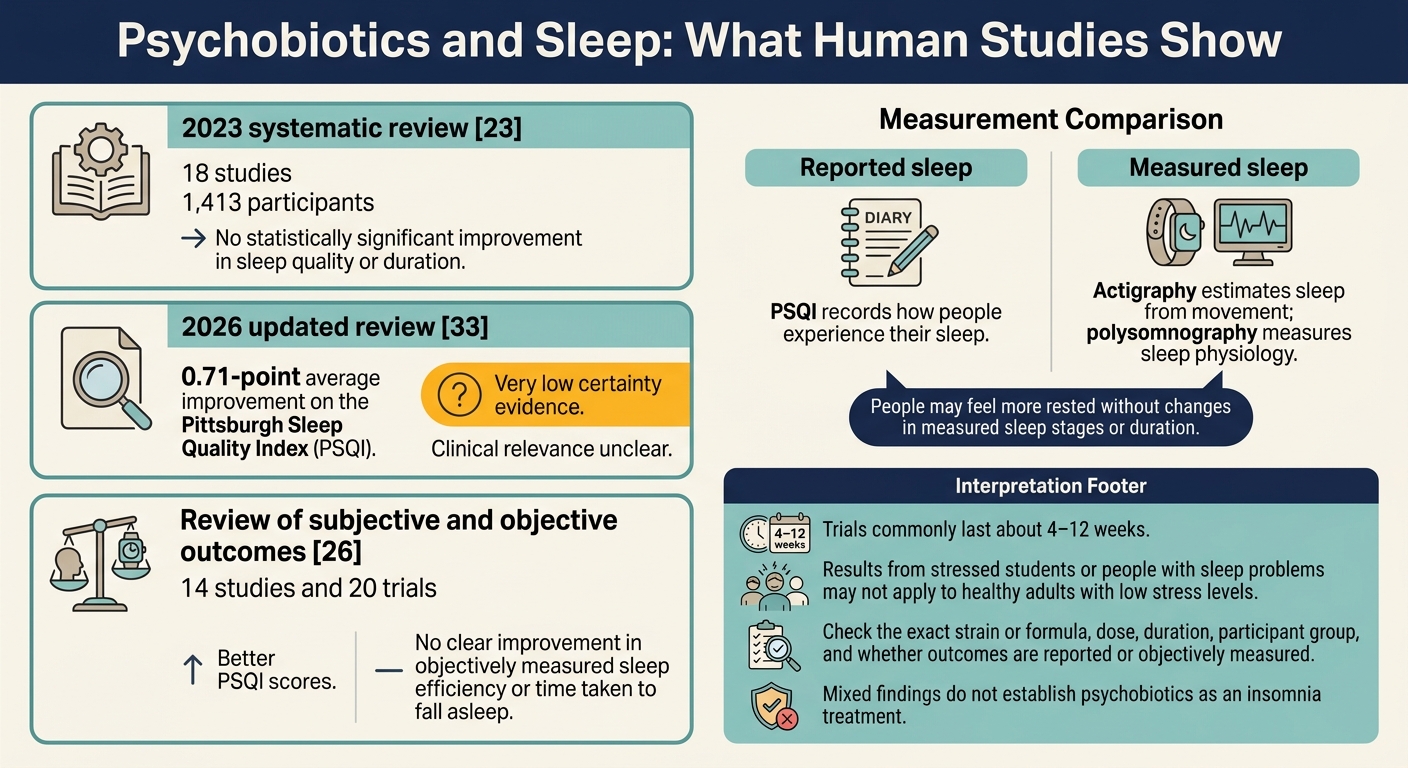
Human study results are mixed. A 2023 systematic review of 18 studies with 1,413 participants found no statistically significant improvement in sleep quality or duration.[7] An updated 2026 review found an average improvement of 0.71 points on the Pittsburgh Sleep Quality Index (PSQI). However, it rated the evidence as very low certainty, with unclear clinical relevance.[13]
The measurement matters. PSQI records how people experience their sleep. Actigraphy estimates sleep from movement, while polysomnography measures sleep physiology. A review covering 14 studies and 20 trials found better PSQI scores but no clear improvement in objectively measured sleep efficiency or time taken to fall asleep. People may feel more rested without changes in measured sleep stages or duration.[9]
Trials commonly last about 4–12 weeks. Results from stressed students or people with sleep problems may not apply to healthy adults with low stress levels. Track how rested you feel separately from bedtime, time taken to fall asleep, and nighttime awakenings.[10][11][15]
When assessing a product or study, check the exact strain or formula, dose, duration, and participant group. Also check whether sleep outcomes reflect personal reports or objective measurements. The word “probiotic” alone doesn’t tell you those details; strain, dose, and format matter more than the label.
Food and Supplement Options for Gut Support
To support sleep through gut health, start with a format that fits your digestion and daily routine. Choose the option least likely to upset your stomach at night.
| Format | Role in a Sleep Routine | Key Consideration |
|---|---|---|
| Prebiotic foods | Feed helpful gut microbes | Increase gradually to limit bloating |
| Fermented foods | Add food variety and may provide live cultures | Live cultures aren’t always present |
| Probiotic supplements | Provide identified live microbes at a stated dose | Higher CFU counts don’t guarantee better sleep |
| Postbiotic ingredients | Provide inactivated microbes or their components | Sleep-specific research is limited |
| Synbiotics | Combine live microbes with fibers they can use | Check evidence for the complete formula and digestive tolerance |
These options are support tools, not insomnia treatments. Foods are usually the easiest place to start.
Prebiotic Foods and Fermented Foods
Oats, beans, onions, asparagus, and slightly underripe bananas provide prebiotic fiber. Start with small portions, increase slowly, and drink enough fluids.
For fermented foods, try plain yogurt labeled live and active cultures or kefir. Fermentation alone doesn’t mean a food contains live cultures. People with IBS, IBD, or major food sensitivities may need advice tailored to their needs.
If you opt for a supplement, look beyond the category name and read the label.
What to Check on a Probiotic Label
Check the strain, dose, expiration date, storage instructions, and allergens. Also look for human studies that tested the same finished formula, rather than individual ingredients alone.
Confirm the serving size and dose in colony-forming units (CFU). Choose a product that states its CFU count through expiration - not just at manufacture.
A synbiotic can bring several types of gut support together in one formula, often providing more comprehensive benefits than probiotics alone.
Rebirth RE-1 as a Synbiotic Example
A synbiotic combines live microbes with fibers they can use.
As one synbiotic example, Rebirth RE-1 combines prebiotics, probiotics, and postbiotics, according to the brand, with 500 billion CFU per serving and 4.5 grams of GOS and inulin fiber. Its added fiber may cause gas or bloating if you start too fast. Evidence for the complete formula and the specific outcome matters - not the number of ingredient categories.
After choosing a format, focus on timing and consistency.
Add Gut Support to Your Sleep Routine
Follow Label Timing and Add Fiber Slowly
After choosing a formula, or using a tool to find your ideal probiotic strain, focus on consistent use and how your gut responds. If an evening dose causes bloating, take it earlier only if the label allows. Add one fiber-rich food every few days, and stay within the supplement’s directions. Talk with a healthcare professional if digestive symptoms persist or worsen.
Track Sleep, Worry, and Digestion
Most trials last 4–12 weeks, so a 7-day reset is too short to judge whether sleep improves.[16] Follow the labeled course and look for trends over several weeks.
Keep a brief diary of how long it takes to fall asleep, nighttime awakenings, morning restfulness, evening worry, digestive symptoms, and dose timing. Rate evening worry from 0–10 to help spot patterns. A diary can show changes, but it cannot prove what caused them.
Keep Good Sleep Habits
Keep your sleep habits steady as you add gut support. Wake up at a regular time, get morning daylight, and wind down quietly with fewer bright screens and stimulating activities.
Caffeine about 6 hours before bed can disrupt sleep, while alcohol near bedtime may lead to more awakenings.[19] Adjust these habits - and large late meals - if they interfere with your sleep.
When to Get Professional Help
Seek an evaluation for persistent insomnia, loud snoring, breathing pauses, gasping, panic symptoms, or severe daytime sleepiness. Cognitive behavioral therapy for insomnia (CBT-I) is a first-line treatment for chronic insomnia; sleep hygiene alone does not treat it.[17]
Before starting a supplement, review its ingredients, allergies, and possible medication interactions with a clinician. Be sure to do this if you’re pregnant, immunocompromised, seriously ill, or taking medications. Stop using the supplement and seek medical advice if reactions persist or concern you.
Conclusion: Gut Support Is Part of Sleep Care
Psychobiotics may help support calmer evenings and better sleep, but they’re supportive care - not an insomnia treatment. Human studies suggest modest benefits, and results from one formula don’t apply to others.[8][20]
Rebirth RE-1 is one synbiotic example combining prebiotics, probiotics, and postbiotics within a sleep-support routine - not a treatment for sleep problems or anxiety.
Keep the routine simple: add gut support gradually, follow label directions, and track sleep and digestion over time. Persistent sleep difficulty or anxiety calls for professional assessment.[18]
FAQs
Could psychobiotics help me feel calmer without improving sleep?
Yes, psychobiotics may help you feel calmer without improving sleep. They act through the gut-brain axis, influencing neurotransmitters such as GABA and serotonin that help regulate mood and stress [1][2][3]. They may also help you feel calmer by regulating the body’s stress response and reducing inflammation - separate from any effects on sleep [1][2][4].
Rebiirth RE-1™ supports this balance with a 3-in-1 eubiotic synbiotic formula designed to restore gut health and support calming pathways [5][6].
How can I tell if gut support is helping my sleep?
Track your sleep for 4–6 weeks, the period when many people start noticing improvements [1]. Keep a weekly journal of your bedtime, wake time, nighttime awakenings, and daytime energy. These notes can help you spot patterns [2].
For more detail, track wearable data such as sleep latency, total sleep time, deep sleep, and heart rate variability. The Pittsburgh Sleep Quality Index (PSQI) can also help you measure changes [1][3]. Pair these tracking habits with consistent synbiotic use and good sleep hygiene [2][1][4].
Should I pause gut support if bloating disrupts my sleep?
Not necessarily. Mild digestive changes are common as your microbiome starts to rebalance [1]. Try taking your supplement in the morning to help avoid gas or bloating that could interrupt your sleep [2].
Consistency matters for long-term results. But if discomfort continues or becomes severe, talk with a healthcare professional to check whether your supplement routine fits your needs [1].