

If your stomach feels off, a 7-day reset can help you get back to a steady routine. I’d keep it simple: eat regular meals, add fiber slowly, drink more water, and cut back on alcohol, ultra-processed foods, high-fructose corn syrup, and artificial sweeteners for one week.
Here’s the core idea in plain English:
- Days 1–3: oats, berries, chia, quinoa, chickpeas, leafy greens, salmon, lentils, walnuts, fruit, water, ginger tea
- Days 4–5: yogurt or dairy-free yogurt, oats, tart cherries, brown rice, black beans, chicken or tempeh, roasted vegetables, water
- Days 6–7: simple repeats like omelets, oatmeal, grain bowls, salmon or tofu, sautéed greens, seeds, water only
- Daily routine: eat on a schedule, drink water through the day, and track bloating, bowel habits, energy, sleep, and stress
- What to expect: some people notice less bloating or easier bowel movements in 24–48 hours; changes often continue through 7 days
- Who should check with a clinician first: anyone pregnant or lactating, or with celiac disease, GI disease, GI bleeding, severe pain, long-lasting diarrhea, food allergies, or unexplained weight loss
This plan is not about eating perfectly. It’s about making meals steady and easy on your gut. I’d focus on four parts at most meals: protein, produce, a whole grain or starchy vegetable, and a small amount of unsaturated fat.
If fermented foods work for you, you can include them. If they don’t, skip them. If your fiber intake is low now, start low and go slow so you don’t end up more bloated.
A short morning habit can help too. The article also mentions a synbiotic sachet routine taken once each morning with water before breakfast, plus a small self-check through the week for bloating, stool changes, and energy.
Bottom line: if I wanted a one-week gut reset, I’d keep meals plain, repeat what sits well, drink more water, and watch for small changes over 1 week instead of expecting overnight fixes.
Reset Your Gut in 7 Days: A Doctor’s Step-by-Step Protocol to Lose Weight
sbb-itb-1bbfe7f
Core Food Rules for Digestive Restoration
Build each meal around protein, produce, a whole grain or starchy vegetable, and a little unsaturated fat. If fermented foods work for you, you can add them too. If they don’t, skip them. No need to force it.
Key Gut-Supportive Foods to Eat
Focus on these food groups throughout the week:
- Prebiotic fibers such as inulin and GOS
- Colorful produce
- Unsaturated fats
- Fermented foods only if you tolerate them
This keeps meals simple. You’re not trying to eat perfectly. You’re just giving your gut a steadier mix of fiber, nutrients, and fats that tend to be easier to build into daily meals.
Hydration Tips and What to Cut Back on for One Week
For this one-week stretch, cut back on alcohol, ultra-processed foods, high-fructose corn syrup, and artificial sweeteners. That short reset can make the meal plan much easier to follow, especially if your stomach has been feeling off.
Hydration matters too. Plain water is a good default. Think of it as helping everything move along the way it should.
How to Add More Fiber Without Causing Discomfort
If your current diet is low in fiber, add prebiotic fibers gradually to feed gut bacteria and help digestion. Start low and go slow. That part matters.
Going from very little fiber to a lot all at once can backfire and leave you feeling bloated or gassy. A steadier ramp-up usually works better. Then you can use the 7-day plan below as your template.
The 7-Day Anti-Inflammatory Meal Plan
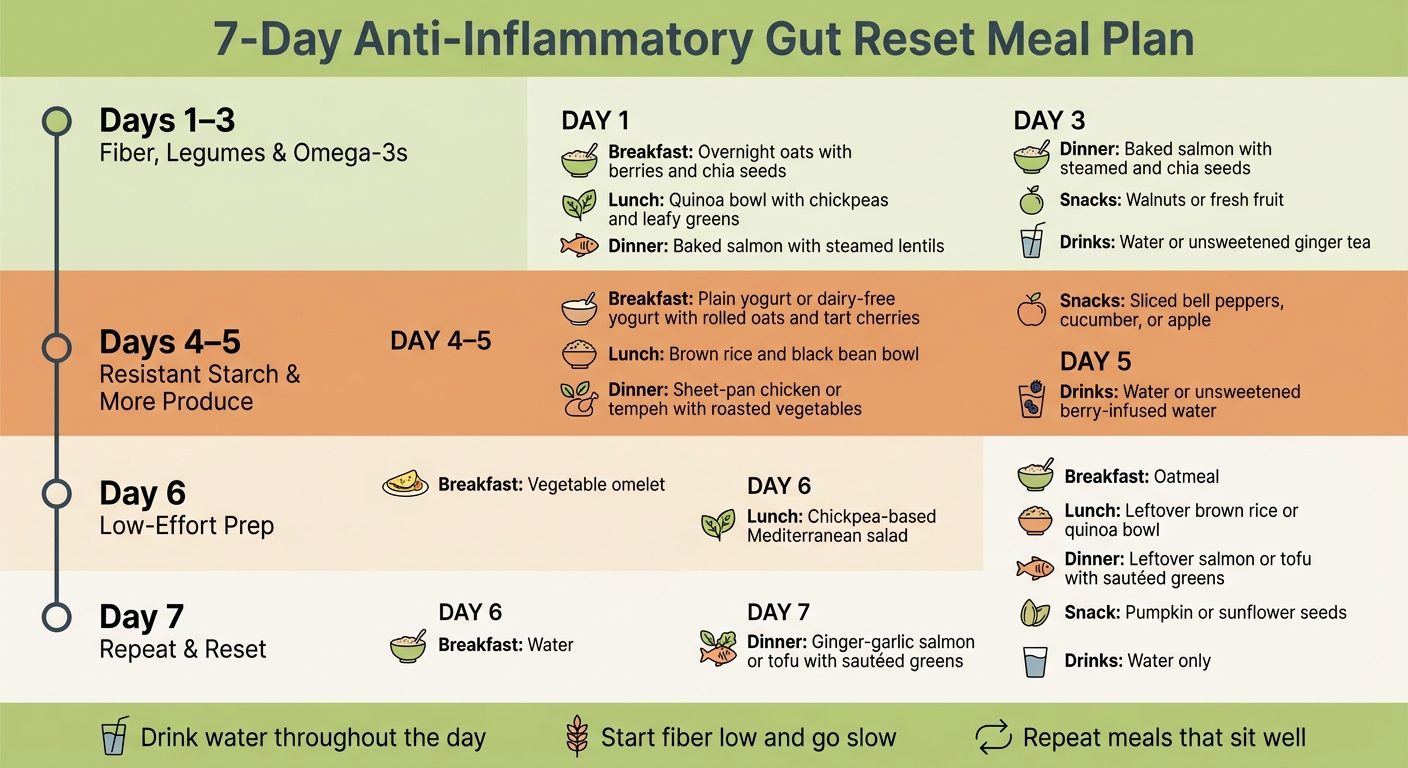
7-Day Anti-Inflammatory Gut Reset Meal Plan at a Glance
Use the food rules above to swap proteins, grains, or produce based on what you tolerate.
Days 1–3: Fiber, Legumes, Fermented Foods, and Omega-3 Foods
Days 1–3 focus on fiber, legumes, fermented foods, and omega-3 foods. The idea is simple: start with meals that are easy on your system and easy to repeat.
Breakfast can be overnight oats with berries and chia seeds. They travel well, and you can make them the night before. Lunch is a quinoa bowl with chickpeas and leafy greens. It comes together fast and works well for leftovers. Dinner is baked salmon with steamed lentils, or another legume if that sits better for you. For snacks, go with walnuts or fresh fruit. Drink water or unsweetened ginger tea.
Days 4–5: Whole Grains, Resistant Starch, and More Produce
After the first three days, shift toward more resistant starch and a broader mix of produce. Breakfast is plain yogurt or unsweetened dairy-free yogurt with rolled oats and tart cherries. Lunch is a brown rice and black bean bowl that’s easy to pack. Dinner is sheet-pan chicken or tempeh with roasted vegetables.
Snacks can be sliced bell peppers, cucumber, or an apple. For drinks, stick with water or unsweetened berry-infused water.
Days 6–7: Low-Effort Prep and a Repeatable Eating Pattern
Finish the week with a low-prep pattern you can stick with without much thought.
| Day | Breakfast | Lunch | Dinner | Snack | Hydration Focus |
|---|---|---|---|---|---|
| 6 | Vegetable omelet | Chickpea-based Mediterranean salad | Ginger-garlic salmon or tofu with sautéed greens | Pumpkin or sunflower seeds | Water |
| 7 | Oatmeal | Leftover brown rice or quinoa bowl | Leftover salmon or tofu with sautéed greens | Pumpkin or sunflower seeds | Water only |
Days 6–7 lean on leftovers and simple meals. Repeating meals keeps prep easy and steady.
Next, pair this menu with the microbiome reset routine.
How to Pair the Meal Plan With a Microbiome Reset Routine
The meal plan is your base. A short daily routine makes the full 7 days easier to stick with.
Using Rebirth RE-1 Alongside the 7-Day Plan
If you want a bit more structure, pair the meal plan with a simple morning routine. Rebirth RE-1 is a 7-day eubiotic synbiotic sachet made with prebiotics, probiotics, and postbiotics. Each serving contains 500 billion CFU and uses Lyosublime™ delivery. [1]
In a 7-day self-assessment of 35 healthy adults, most people reported less bloating and abdominal pain. [1] The easiest way to use it? Make it your morning starting point, then keep the rest of the day focused on food first.
A Simple Daily Sequence to Stay on Track
Take one sachet each morning with water before breakfast. Tie it to one fixed habit, like your first glass of water, so it doesn't slip through the cracks.
Keep the routine simple enough to work with a commute, a desk lunch, or a late dinner. Since fiber intake goes up during the reset, drink plenty of water through the day. [1]
What to Track During the Week
Log a few daily markers so you can spot patterns as the week goes on.
| Tracking Category | What to Watch For | When to Expect It |
|---|---|---|
| Digestive comfort | Reduced bloating, less abdominal pain | 24–48 hours to 7 days [1] |
| Bowel regularity | Improved stool hydration, easier evacuation | 24–48 hours [1] |
| Energy and mood | Less fatigue, better mental clarity | Within 7 days [1] |
It also helps to track sleep and stress, since both can affect digestion. Those notes can help you fine-tune portions, fiber, and meal timing for the next week.
Prep Tips, Adjustments, and Key Takeaways
Batch Prep for Busy Weekday Schedules
Use the meals that felt easiest earlier in the week and make them ahead of time. Batch-prep breakfasts, lunches, and snacks so your mornings don’t need extra thought. Stick with the breakfasts and lunches you already handled well. That keeps the week centered on digestive repair, not last-minute food choices.
Easy Food Swaps Based on What You Can Tolerate
If a meal felt too heavy, pull it back instead of ditching the plan. Cut down portions of fiber-rich foods, legumes, fermented foods, or raw vegetables if they sit poorly, then add more back little by little. The goal is simple: comfort, regularity, and meals you can repeat without stress.
Conclusion: The Daily Habits That Make the 7-Day Reset Work
Finish the week by repeating the habits that felt easiest to keep up with. Keep water where you can see it, and keep meals simple. Stress, poor sleep, and ultra-processed foods can slow progress, so it helps to keep your routine steady.
If you use Rebirth RE-1, take one 5 g sachet each morning with water and do not exceed the recommended dose. Some people notice changes in bloating and regularity within 24 to 48 hours, though fuller results may take longer than 7 days. [1]
FAQs
Can I repeat this 7-day gut reset for longer than one week?
Yes. You can keep the gut reset going past one week if you want deeper, longer-lasting results.
After the 7-day rapid reset, you can move into a 4-week stabilization plan or a 3-month regimen to support long-term microbiome balance. Consistency matters here. Gut changes that last often take steady effort over time.
What should I do if more fiber makes me feel bloated?
If fiber tends to leave you feeling bloated, go slow. Add fiber-rich foods bit by bit so your digestive system has time to adjust.
It also helps to spread fiber across your meals instead of loading up in one sitting. For many people, fiber feels easier to handle with meals than on an empty stomach.
Drink plenty of water, too. And if raw vegetables feel a little rough on your stomach, try lightly cooking them first.
If bloating sticks around, Rebiirth RE-1 may help support microbiome balance during the transition.
How do I know if this meal plan is helping my gut?
You’ll usually notice the 7-day plan is helping when digestion starts to feel calmer and more regular. That can mean less bloating, less abdominal discomfort, and, if relevant, easier digestion and bowel movements that feel more comfortable.
Meal timing matters too. Eating on a steady schedule and skipping late-night meals can help support microbial diversity and gut barrier integrity. If you use Rebirth RE-1, 7-day clinical reporting noted reduced bloating and abdominal pain in 94% of participants.