

My starting advice: choose varied plant foods, start with small portions, and let your symptoms set the pace. Beans, oats, onions, and fruit can supply fibers that gut microbes use - but more fiber isn’t always better.
In this guide, I cover how to:
- Shop and build meals with legumes, whole grains, vegetables, fruit, nuts, and seeds.
- Cook and store food safely. Cooling cooked starches may increase resistant starch, but refrigerate within 2 hours - not after leaving them on the counter.
- Keep supplements optional. I explain prebiotics, probiotics, and synbiotics, plus where Rebiirth RE-1™ may fit without replacing food.
- Adjust to your tolerance. Start small, track symptoms, and seek care for persistent problems or warning signs.
My focus is food first, safe preparation, and <u>comfort over fiber targets</u>.
5 PREBIOTIC FOODS AND HOW TO COOK THEM | BEAT THE BLOAT
Understanding how prebiotics work can help you better manage digestive comfort while increasing your intake of these fiber-rich foods.
sbb-itb-1bbfe7f
How to Shop for Prebiotic Foods
Once you know how different fiber types affect the gut, choose foods that fit your budget, tolerance, and cooking habits.
Shop for variety - not one “best” ingredient. For the week, pick 2–3 vegetables, 2 fruits, 1–2 legumes, 1–2 whole grains, and one nut or seed. Rotate them across meals to spread fermentable fiber through the week. Compare unit prices, and buy forms you'll actually use.
Vegetables and Fruit
Keep garlic, onions, and leeks on your shopping list. Look for firm asparagus with compact tips. Buy Jerusalem artichokes in small amounts until you know how well you tolerate them. Apples and berries add variety. Choose greener bananas for more resistant starch and riper bananas if you'll eat them soon.[6][7]
Buy only what you can use before it spoils. Unsweetened frozen berries and plain frozen asparagus give you options when produce costs more or might go to waste. Check frozen-food packages for added sugar, sauces, and sodium.
Legumes, Whole Grains, Nuts, and Seeds
Use this table to distinguish foods with stronger support for prebiotic effects from other fiber-rich plant foods.
| Food | Principal fiber or starch | Convenient form | Shopping considerations |
|---|---|---|---|
| Garlic, onions, leeks | Inulin-type fructans | Fresh, frozen, or prechopped | Choose firm, dry bulbs and amounts you can use. |
| Asparagus; Jerusalem artichokes | Fructans, including inulin | Fresh; frozen asparagus | Frozen asparagus can reduce waste; buy Jerusalem artichokes in small amounts. |
| Apples; berries | Pectin and other fermentable fibers | Fresh, unsweetened frozen, or unsweetened applesauce | Choose forms that fit planned breakfasts and snacks. |
| Green bananas | Resistant starch | Fresh | Match ripeness to when you'll use them. |
| Beans, lentils, chickpeas | GOS and resistant starch | Canned or dried | Canned saves time; dried usually costs less but takes more preparation. |
| Soybeans | Fermentable carbohydrates | Frozen shelled edamame, canned, or dried | Compare sodium in seasoned or sauced versions. |
| Oats, barley, rye | Beta-glucan, arabinoxylans, and other fermentable fibers | Plain rolled oats, hulled barley, rye berries | Check flavored products for added sugar. |
| Brown rice; whole-wheat foods | Fiber, fermentable carbohydrates, and variable resistant starch | Dry or precooked rice; whole-wheat bread, pasta, or whole-grain berries | Check whole-grain ingredients and fiber per serving. |
| Walnuts, almonds, chia, flax, pumpkin seeds | Mixed fibers | Unsalted nuts, seeds, or ground flax | Smaller packages help limit waste. |
Fiber content alone doesn't establish a prebiotic benefit or how fiber impacts the microbiota overall. Nuts, seeds, and some other foods in the table are broader fiber-rich choices.
Check sodium labels, and drain and rinse canned legumes before eating.[8][9] Choose intact or minimally processed grains when practical. But keep convenient whole-grain bread or pasta on hand if they make meals easier. Look for a whole grain as the first ingredient and compare fiber per serving. Front-of-package fiber claims don't tell you which fiber types a food contains.
Store purchases promptly, including produce and leftovers, to protect food quality and safety.
Cooking and Storage for Fiber and Resistant Starch
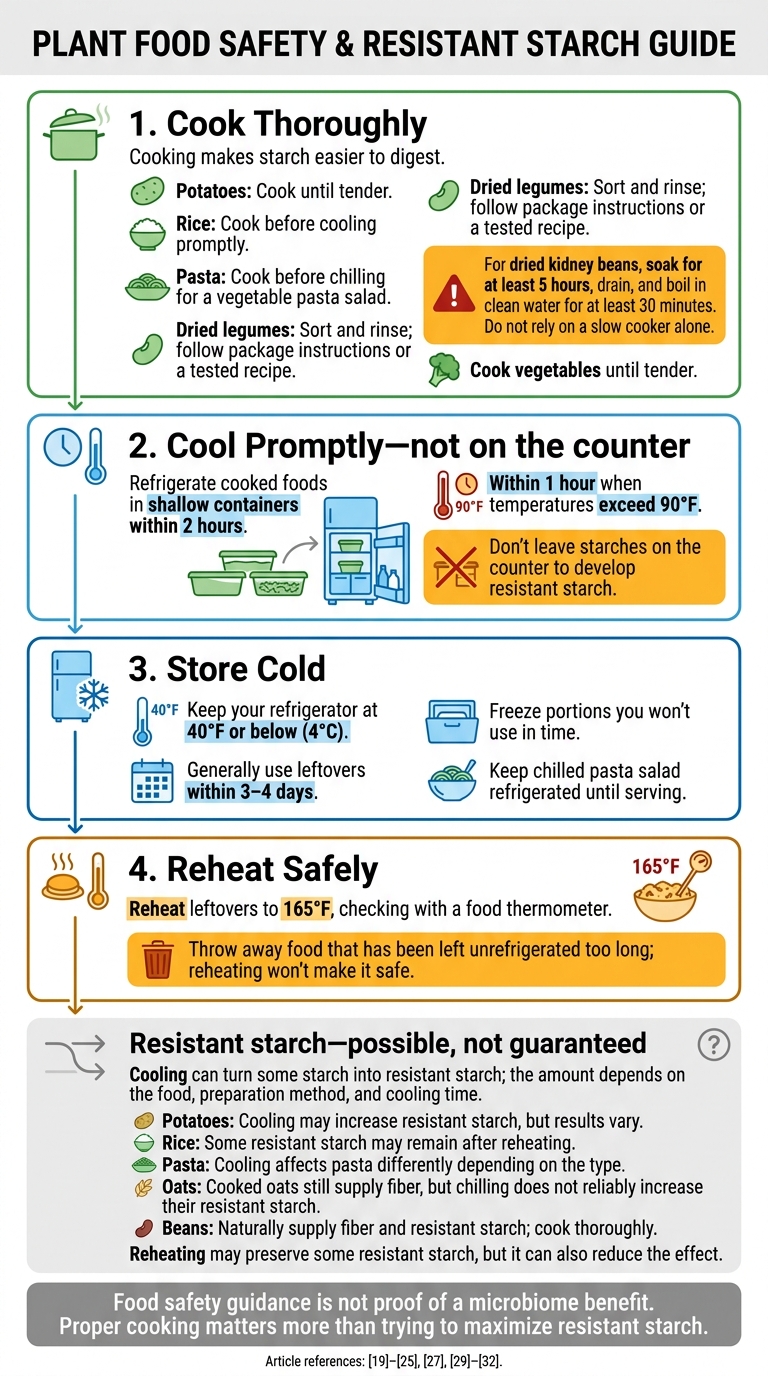
Cook, Cool, Store and Reheat Plant Foods Safely
How you handle prebiotic foods affects what you get from them. Cooking and safe storage help you work these foods into plant-based meals, but they don’t create prebiotics in every food.
Cook, Cool, and Reheat Starches
Cooking makes starch easier to digest. Cooling can turn some of it into resistant starch, though the amount depends on the food, preparation method, and cooling time. Reheating may preserve some of that resistant starch, but it can also reduce the effect. Cooked oats still supply fiber, but chilling does not reliably increase their resistant starch.[13][15][19][21]
| Food | Preparation method | Storage approach | Gut-support note |
|---|---|---|---|
| Potatoes | Cook until tender, then chill for a potato-and-bean bowl | Refrigerate promptly in shallow containers | Cooling may increase resistant starch, but results vary. |
| Rice | Cook, cool promptly, then reheat with beans and vegetables | Refrigerate in shallow portions | Some resistant starch may remain after reheating. |
| Pasta | Cook and chill for a vegetable pasta salad | Keep refrigerated until serving | Cooling affects pasta differently depending on the type. |
| Oats | Cook as oatmeal or prepare refrigerated overnight oats | Refrigerate prepared portions | Chilling does not reliably increase resistant starch. |
| Dried beans | Soak when appropriate, drain, and follow bean-specific cooking directions | Refrigerate cooked portions promptly or freeze | Naturally supply fiber and resistant starch; cook thoroughly. |
| Onions, garlic, leeks | Cook into chili, soups, or sauces | Keep whole onions and garlic cool, dry, and ventilated; refrigerate leeks and cut portions | Supply fermentable carbohydrates. |
| Asparagus | Steam, roast, or sauté | Refrigerate uncooked asparagus and cooked portions | Supplies fiber and fermentable carbohydrates. |
Preparation changes how easily starch is digested. The storage notes above are food safety guidance, not proof of a microbiome benefit.
For legumes and vegetables, proper cooking matters more than trying to get extra resistant starch.
Prepare Legumes and Vegetables
Sort and rinse dried legumes, then follow the package instructions or a tested recipe. For dried kidney beans, soak for at least 5 hours, drain, and boil in clean water for at least 30 minutes. Do not rely on a slow cooker alone. Discarding soaking water may make beans easier to tolerate, as can draining and rinsing canned beans. Cook vegetables until tender. If gas or bloating increases, adjust your portions instead of trying to maximize fermentable fiber.[16][17]
Store Produce and Leftovers Safely
Safe storage keeps cooked plant foods ready for gut-supporting meals. USDA guidance calls for refrigerating cooked foods in shallow containers within 2 hours, or 1 hour when temperatures exceed 90°F. Don’t leave starches on the counter to develop resistant starch. Keep your refrigerator at 40°F or below (4°C), generally use leftovers within 3–4 days, and freeze portions you won’t use in time.[10][11][12]
Reheat leftovers to 165°F, checking with a food thermometer. Throw away food that has been left unrefrigerated too long; reheating won’t make it safe.[14][18][20]
Next, combine these foods into balanced plant-based meals.
Build Plant-Based Meals With Optional Synbiotic Support
Use the foods and cooking methods above to make balanced meals with prebiotic ingredients.
Pair Legumes, Grains, Vegetables, and Fruit
Build meals around several plant-food groups rather than relying on one food.
Try ½ cup cooked lentils, ½ cup cooked barley, and ¼ cup cooked leeks, or ½ cup beans with ½–1 cup brown rice and vegetables. For breakfast, combine ½ cup cooked oats, ½ cup berries, and 1 tablespoon chia seeds.
If your digestion is sensitive, start with 2 tablespoons of legumes or oats alongside familiar foods. Increase portions gradually.
These meals bring together foods with overlapping roles. Legumes, for example, provide several fermentable fibers in one food.[5] A true synbiotic needs evidence for the specific pairing.[23][3]
If you choose supplemental synbiotic support, use it alongside meals - not instead of food.
Use Rebiirth RE-1™ With Plant-Based Meals
Rebiirth RE-1™ is an optional supplement that comes in sachets. The manufacturer lists 4.5 g of GOS and inulin per serving. Check the label for vegan status, allergens, serving size, timing, mixing, storage, and expiration. Avoid very hot liquids unless the directions explicitly allow them. If permitted, mix it into a cool or room-temperature beverage to drink alongside a meal.[22]
Look for human clinical evidence for the specific product, rather than relying on label claims alone.[23] It’s a supplement, not a replacement for plant foods, fluids, or medical care.[22]
Adjust Fiber to Your Tolerance
Start with one fiber source at a time to see what your gut handles best. Follow the guide’s start-small approach, and count supplemental GOS and inulin toward your intake.[26] Drink suitable fluids and track bloating, abdominal discomfort, gas, and stool consistency. Reduce portions if symptoms worsen.
People with IBS or restricted diets should seek guidance tailored to their needs. Anyone who is immunocompromised or seriously ill should consult a clinician before taking live-microorganism supplements. Persistent abdominal pain, significant diarrhea or constipation, blood in stool, or unexplained weight loss warrant medical evaluation.[24][25]
Conclusion: Start Small and Follow Your Symptoms
As you build meals around legumes, grains, vegetables, and fruit, pay attention to how you feel. Focus on variety, not the highest fiber intake. Rotate plant foods through balanced meals, and prepare dried legumes thoroughly. Optional synbiotic support can add to - but never replace - varied plant foods, fluids, safe food handling, or medical care tailored to your needs.
Let symptoms set the pace of change, rather than pushing to eat more fiber.
| Symptom or tolerance pattern | Adjustment | When to seek care |
|---|---|---|
| Gas, bloating, cramping, loose stools, or trouble tolerating legumes or raw vegetables after increasing fiber | Go back to portions that feel comfortable, add fiber gradually, and change one food at a time. Try rinsed canned legumes, well-soaked and thoroughly cooked dried beans, or cooked vegetables. | Seek guidance if symptoms persist, worsen, interfere with daily life, or cause you to restrict more foods. |
| Severe abdominal or rectal pain, blood or black stools, repeated vomiting, dehydration, or unexplained weight loss | Stop making diet changes and seek prompt medical care. Don't assume these are normal effects of adjusting to fiber. | Get a prompt medical assessment.[27] |
Keep a food-and-symptom diary to analyze your digestive symptoms. Record portions, preparation methods, symptoms, bowel changes, and timing. These notes can help you identify foods and portions that felt comfortable, plan your next change, or help a healthcare professional assess persistent problems.[28]
FAQs
How soon might I notice benefits from prebiotic foods?
Many people report less bloating and abdominal discomfort within about seven days of starting prebiotic support. This is especially true when they add prebiotic foods gradually and keep meals simple at first [1][2].
Other benefits may take weeks to develop as your gut adjusts to more fiber. These include more noticeable changes in the gut microbiome and more consistent digestion [3][4].
Which prebiotic foods are gentlest for IBS?
Green bananas may be a gentle prebiotic option for people with IBS. They contain less sugar and fewer fermentable carbohydrates than ripe bananas. Start small - about a quarter of a typical serving - to see how your body responds and limit gas or bloating.
If symptoms occur, try steaming or roasting the bananas to make the fiber easier to digest. Talk with a healthcare provider for advice tailored to your needs.
How do I know if I need a synbiotic?
A synbiotic may help if you have trouble meeting daily fiber recommendations, want to replenish helpful gut bacteria, or prefer a simpler gut health routine. Rebirth RE-1™ combines prebiotic fiber, probiotics, and postbiotics to help restore gut balance, support immune function, and address dysbiosis - an imbalance in gut microbes.
Talk with a healthcare professional before starting any supplement, especially if you have a digestive condition or take medication.