

If I had to sum it up fast: probiotics add live microbes, while synbiotics add live microbes plus the fiber that helps feed them. That means a probiotic may be enough if your digestion is steady and your diet already has fiber. A synbiotic may make more sense if your fiber intake is low, stress tends to affect your gut, or you deal with bloating or irregular stools.
Here’s the short version:
- Probiotics = live microorganisms only
- Synbiotics = probiotics + prebiotic fiber like GOS and inulin
- Best for steady digestion = probiotic-only
- Best for low fiber intake or gut ups and downs = synbiotic
- Some synbiotics also include postbiotics, which may help support the gut lining and immune signals
- In the article example, one synbiotic provides 500 billion CFU and 4.5 grams of prebiotic fiber per serving
If you’re choosing between the two, I’d look at three things first:
- How much fiber you eat each day
- Whether stress affects your digestion
- Whether you often feel bloated or irregular
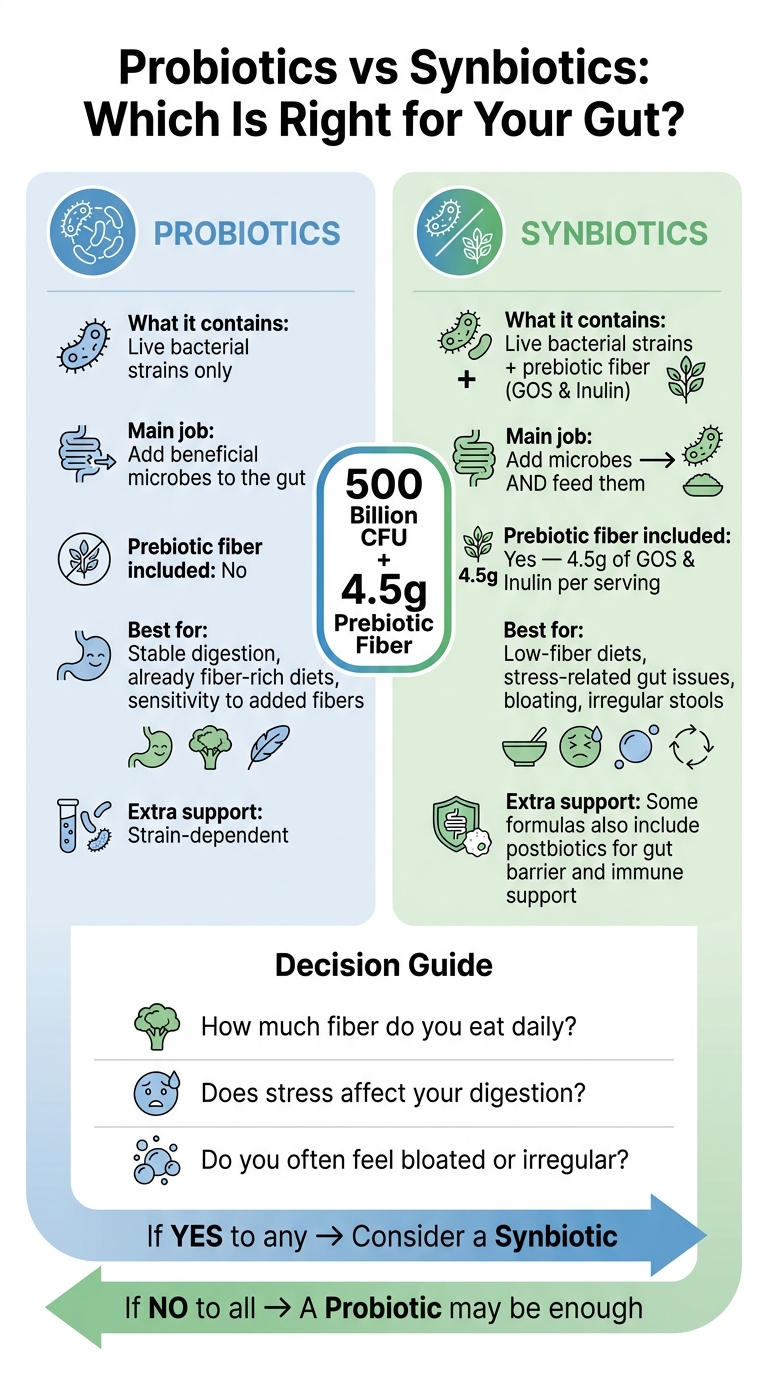
Probiotics vs Synbiotics: Which Is Right for Your Gut?
What are probiotics, prebiotics, & synbiotics? Nutritionist explains...
sbb-itb-1bbfe7f
Quick Comparison
| Point | Probiotics | Synbiotics |
|---|---|---|
| What it contains | Live strains | Live strains + prebiotic fiber |
| Main job | Add microbes | Add microbes and feed them |
| Fiber included | No | Yes |
| Better fit for | Stable digestion | Low-fiber diets, stress-related gut issues, irregular stools |
| Extra support | Depends on strain | Some formulas also add postbiotics |
So the choice is less about which one is “better” and more about which one matches your gut and diet right now. That’s the lens I’d use for the rest of this comparison.
Probiotics: Definition, Formula Design, and Metabolic Effects
Probiotics are live microorganisms that can support health when you take them in adequate amounts. For metabolic support, they may help rebalance the microbiome and support digestion.
One thing matters more than most people think: strain identity. Two products can look almost the same on the label and still lead to different effects. Why? Because different strains do different jobs.
How probiotic formulas are designed
When probiotic formulas are put together, a few factors matter most: strain identity, survivability through the digestive tract, and consistency of use. In plain English, the microbes need to be the right ones, they need to make it through digestion, and you need to take them regularly enough for them to help shape a more stable gut environment.
That point becomes even more important when a formula includes prebiotic fuel.
Standalone probiotics provide beneficial microbes, but they do not provide the selective prebiotic substrates - such as galacto-oligosaccharides (GOS) or inulin - that help feed them [1]. That missing fiber is what separates synbiotics from standard probiotic products.
When probiotics may be the right fit
A probiotic-only formula tends to make the most sense when your diet already includes enough fiber. It can also be a good fit for people who are sensitive to added prebiotic fibers.
That added prebiotic support is the key difference between synbiotics and probiotic-only formulas.
Synbiotics: How Combined Formulas Support the Gut Microbiome
A synbiotic combines live beneficial microbes with a selective food source, such as Galacto-Oligosaccharides (GOS) or Inulin, that those microbes can use to grow and stick around. Put simply, it gives the microbes and the food they need. That pairing is why synbiotics are made to support a healthier microbial balance and why they can work differently from probiotic-only formulas. [1]
How synbiotic formulas differ from probiotic-only products
Probiotic-only products add beneficial bacteria. Synbiotics go a step further by helping feed those bacteria after they arrive. That matters because there’s a big difference between adding microbes and helping them persist.
Some synbiotic formulas also contain postbiotics, which may help support gut barrier function and immune signaling. [1]
When synbiotics may be a better fit
A synbiotic may make more sense for people who eat a low-fiber diet or who deal with bloating or irregular bowel movements. [1]
The next step is weighing those added benefits against formula simplicity and tolerance.
Probiotics vs Synbiotics: Formula Design, Microbiome Effects, and Trade-offs
Composition and metabolic mechanisms compared
The main difference comes down to how the formula is built. Probiotics deliver live bacterial strains on their own. Synbiotics pair those live strains with prebiotic fuel, and some formulas also include postbiotics for extra support. That setup can matter a lot when diet, stress, and digestion affect how well a product works.
| Feature | Probiotics | Synbiotics |
|---|---|---|
| Core Ingredients | Live strains | Live strains + prebiotic fiber; some formulas also include postbiotics |
| Microbiome Impact | Supports specific strains | Supports strain survival and feeding |
| Prebiotic Fermentation | No added prebiotic fuel | Direct prebiotic fermentation |
| Gut Barrier Effects | Strain-dependent | May be broader, depending on postbiotics |
Choosing based on diet, stress, and digestion
This is where formula design starts to matter in daily life. Neither option is better across the board. The better pick depends on what your gut is dealing with from one day to the next.
| Situation | Better Fit | Why |
|---|---|---|
| Low fiber intake | Synbiotic | Provides 4.5g of GOS and Inulin per serving [1] |
| Stress-related digestive issues | Synbiotic | May be a better fit when stress affects digestion |
| Frequent bloating or irregular stools | Synbiotic | Prebiotic fiber supports regularity and comfort |
| Stable digestion | Probiotic | Maintains existing healthy flora |
If your diet is low in fiber, a synbiotic can help fill that gap. If stress tends to throw off digestion, the added prebiotic component may give the formula more to work with. On the other hand, if digestion is already steady, a probiotic may be enough to help maintain the gut flora you already have.
Where Rebirth RE-1 fits within the synbiotic category
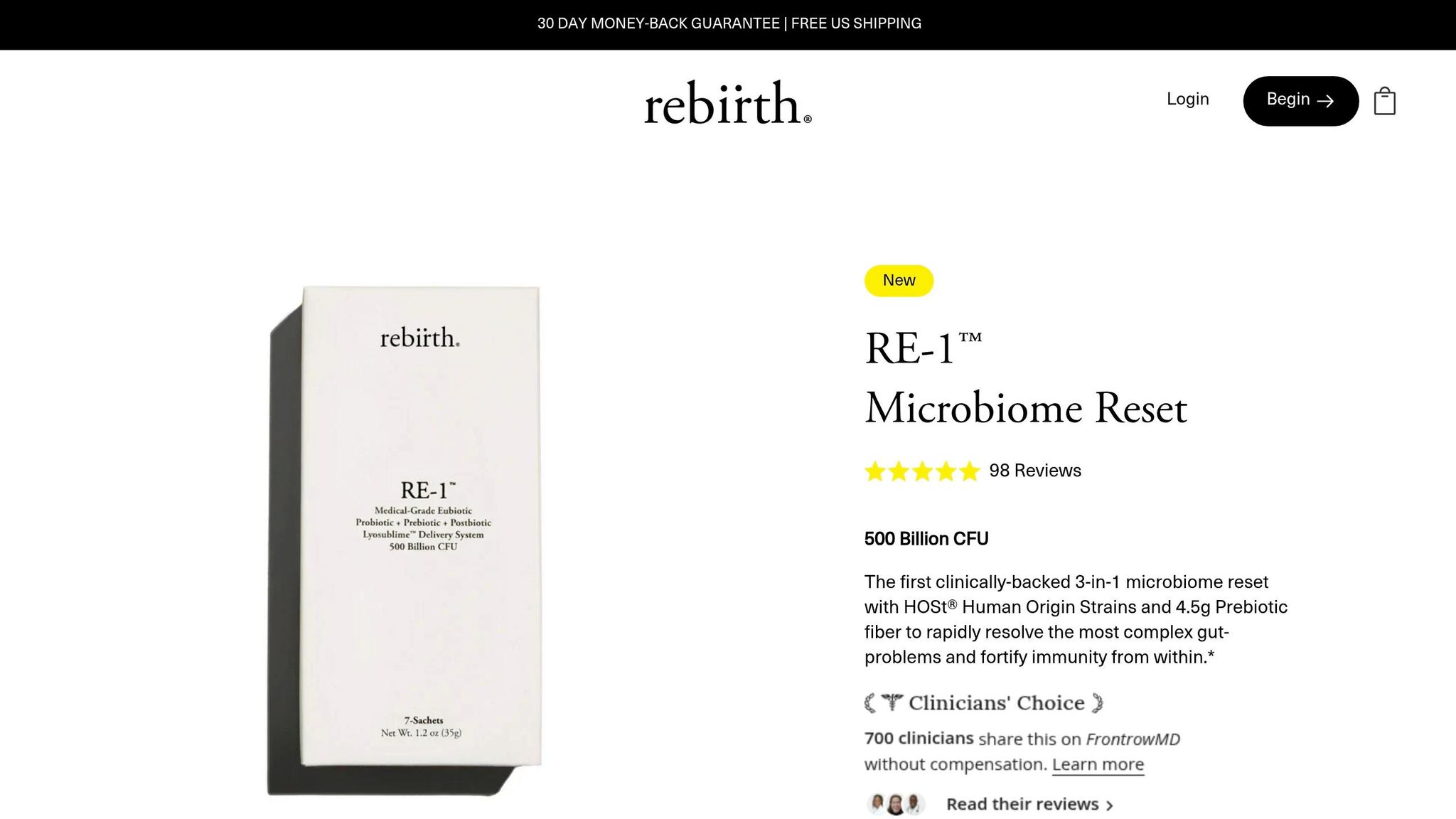
One example of this synbiotic approach is Rebirth RE-1™. It is a clinically-backed 3-in-1 synbiotic that combines prebiotics, probiotics, and postbiotics in a single daily sachet. It uses Human Origin Strains (HOSt™), derived from strains found in the human gut, which may help protect potency through digestion compared with generic probiotic strains [1].
Each serving delivers 500 billion CFU alongside 4.5 g of prebiotic fiber from GOS and Inulin, making it a practical option for people dealing with low fiber intake, stress-related digestive issues, or irregular bowel movements [1].
Conclusion: Which Option May Work Better for Metabolic Support
Neither probiotics nor synbiotics is a cure-all. The better choice depends on your diet, stress, digestion, and how off-balance your microbiome may be.
Key takeaways to remember
After looking at formula design and gut effects, the decision mostly comes down to diet, stress, and digestive tolerance. Probiotics tend to work best when digestion feels steady and you want day-to-day support. Synbiotics include prebiotic fuel, so they may make more sense when fiber intake is low or digestion is under strain.
Whatever you choose, match your supplement with the habits around it. Diet, sleep, and stress management all shape how well a formula works. If you have symptoms that keep coming back or specific metabolic concerns, talking with a healthcare provider is the best next move.
FAQs
How do I know if I need a probiotic or a synbiotic?
It comes down to your health goals and how much gut support you want. Probiotics add helpful bacteria that can support digestion and help keep your gut in balance. Synbiotics go a step further by pairing those bacteria with prebiotics, which act as food for them.
That pairing matters. Prebiotics can help probiotics survive and settle in the gut, so synbiotics may give more complete support. That can be especially helpful after antibiotic use or when you're dealing with more complex gut health issues.
Can prebiotic fiber make bloating worse at first?
Yes. Prebiotic fiber can sometimes cause temporary gas or bloating when you first add it to your routine. That happens because gut bacteria ferment this new fiber source.
A simple way to make things easier: start with a small amount, then increase it little by little over time.
Rebiirth RE-1 includes a clinically backed synbiotic blend made to support digestive comfort and help reduce bloating.
How long does it take to notice gut health changes?
You may start to notice gut health changes within the first week of steady synbiotic use. Early shifts - like easier digestion or relief from mild symptoms - can show up in as little as 7 days.
More complete microbiome restoration often takes steady use for up to 3 months. Structured options like Rebiirth RE-1™ are built to support that timeline, with 7-day, 4-week, and 12-week use periods.