

Stress can change your IBS symptoms in more than one way at once. It can shift gut bacteria, weaken the gut lining, change how fast your bowels move, and make sleep and eating habits worse.
If I had to sum up the article in a few lines, I’d put it like this:
- IBS is a gut-brain condition, which means stress can affect the gut directly
- Stress hormones like cortisol can lower gut bacteria diversity and reduce bacteria such as Bifidobacteria
- Immune and mast cell activity can make the gut lining more leaky and the gut more pain-sensitive
- Motility changes can lead to diarrhea, constipation, urgency, or mixed stool patterns
- Poor sleep and stress eating can add more strain and make flares more likely
- Microbiome support like probiotics, prebiotics, or synbiotics may help some people, but results vary by person and product
- Red-flag symptoms like blood in stool, fever, weight loss, or lasting bowel changes need medical care
A few points stand out. Research links poor sleep with lower microbiome diversity, and the article notes that IBS often comes with visceral hypersensitivity, where normal gas or stretching can feel much more painful. It also points out that intestinal permeability is often higher in IBS-D.
Bottom line: when stress goes up, IBS can flare because the brain, gut, immune system, and microbiome all interact. So if I’m trying to calm stress-linked IBS, I’d think beyond stress alone and also look at sleep, meal timing, caffeine, alcohol, and gut support.
The rest of the article explains how each part of that chain works.
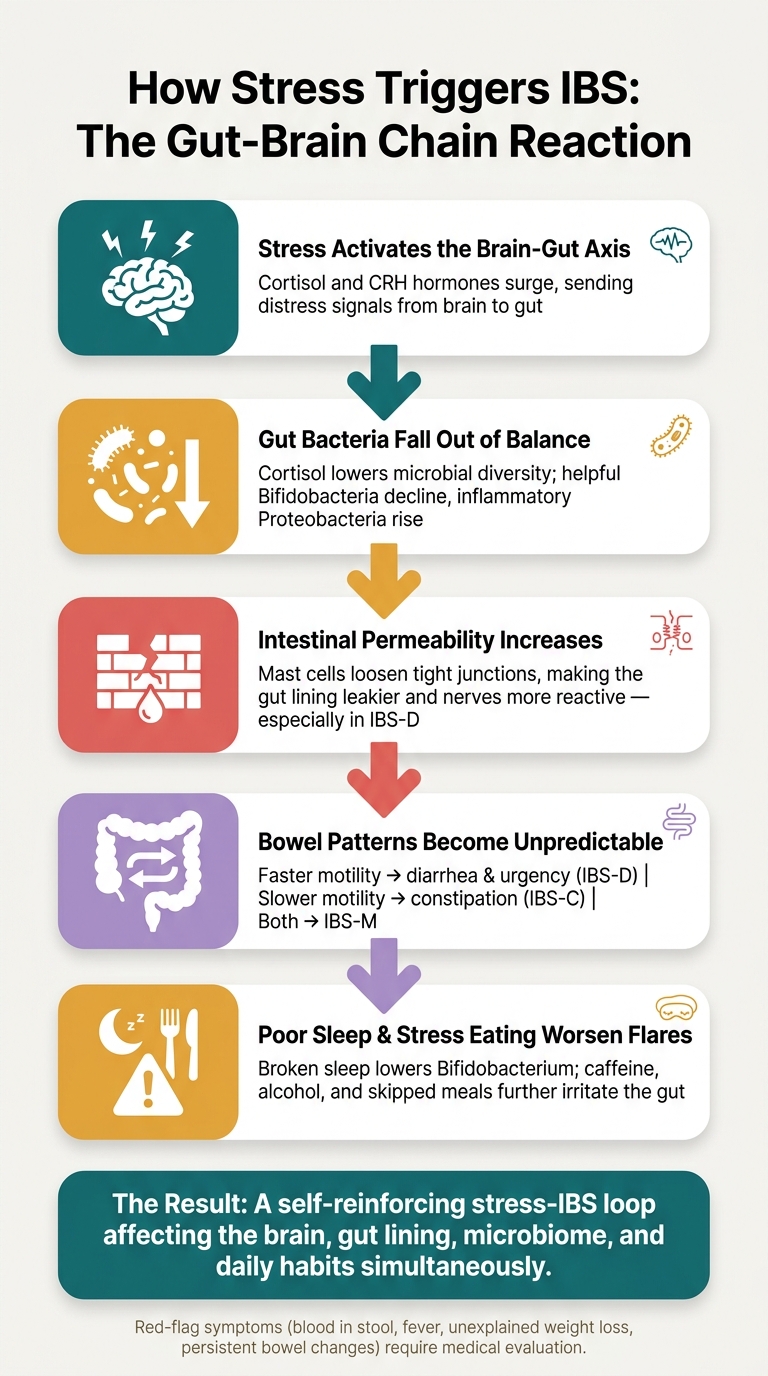
How Stress Triggers IBS: The Gut-Brain Chain Reaction
How Stress Changes the Gut Microbiome in IBS
What Dysbiosis Is and Why It Matters
In IBS, stress can shift the gut microbiome fast, which makes symptoms easier to set off.
Dysbiosis means the gut microbiome is out of balance. That microbiome is the community of microbes living in your digestive tract.
In IBS, dysbiosis often looks like lower microbial diversity, fewer helpful bacteria such as Bifidobacteria, and more inflammatory bacteria like Proteobacteria.[3][4] And that matters. When the microbiome is off balance, IBS symptoms can get worse.
Dysbiosis doesn't cause IBS by itself. Instead, stress and microbiome changes can push each other in a loop.[1][3] Stress can drive that imbalance further by changing hormones and immune signaling.
How Stress Hormones and Immune Activity Shift Gut Bacteria
Under stress, your body turns on its stress-response systems. That leads to higher levels of hormones such as cortisol and catecholamines. Those signals can change gut movement and immune activity.[2][5][6]
Higher cortisol is linked to lower microbial diversity and fewer helpful bacteria.[8]
Stress can also increase inflammatory signaling in the gut even when there isn't an infection. That can favor less helpful bacteria and make the gut more sensitive.[1][7] For people with IBS, that can show up as more bloating, cramping, urgency, or irregular stools during stressful periods.
Stress may also weaken the gut lining and change bowel habits. Next, see how those changes affect the gut lining and bowel patterns.
sbb-itb-1bbfe7f
How Stress Affects the Gut Lining and Bowel Habits
A Weaker Gut Barrier and Greater Sensitivity
Stress doesn’t stop with shifts in the microbiome. It also affects the gut lining itself.
That lining works like a selective barrier, held together by tight junctions. When cortisol and CRH go up, mast cells can loosen those seals and increase intestinal permeability. In plain terms, the barrier gets a bit leakier than it should. Those mast cells release chemicals that loosen tight junctions and increase permeability. That can set off inflammation and make gut nerves more reactive. For people with IBS, that often means more pain and bloating.
Studies show intestinal permeability is higher in IBS-D, and visceral hypersensitivity is common in IBS.[9][10][11] So even small amounts of gas or mild stretching in the gut can feel far more painful than they should.
These barrier changes often show up alongside motility changes. That helps explain why stress can affect both pain and stool patterns at the same time.
Why Stress Can Trigger Diarrhea, Constipation, or Urgency
When stress speeds up motility, the colon has less time to absorb water. The result: looser stool, diarrhea, or sudden urgency. When stress slows motility, stool sits longer, loses more water, and becomes harder to pass. That can lead to constipation or the feeling of incomplete emptying.
This is why stress can worsen IBS-D, IBS-C, or IBS-M. It depends on whether motility speeds up, slows down, or swings between both.
A lot of stress-related bowel changes follow a pattern. Symptoms flare around a known trigger, then ease after it passes. But some signs need medical care, not guesswork:
- Persistent bowel changes
- Blood in the stool
- Unexplained weight loss
- Fever
Sleep loss and irregular eating can make all of this hit harder.
The Gut Doctor: The root cause of IBS – and how to treat it | Dr. Will Bulsiewicz
How Poor Sleep and Diet Strain Can Worsen IBS
Stress can throw off both sleep and eating. And when that happens, IBS symptoms often become more reactive and harder to predict.
How Sleep Loss Adds Stress to the Gut
In IBS, the gut-brain axis is already touchy. Poor sleep can make that touchiness worse.
It may increase gut sensitivity the next day, disrupt the body’s internal clock that helps time digestion and microbial activity, and knock bowel patterns off their usual rhythm [12][16].
Research also shows a clear link between sleep problems and the gut microbiome. Poor sleep quality, low sleep efficiency, and night-to-night changes in sleep length are all tied to lower gut microbiota diversity [13][18]. Chronic sleep disruption has also been linked to lower levels of helpful bacteria like Bifidobacterium and Faecalibacterium, along with more inflammation-linked bacteria [12][14][15].
For people with IBS, that can show up fast. Broken or irregular sleep can mean more bloating, cramping, or urgency the next morning [12][16][17].
How Stress-Driven Eating Habits Feed IBS Symptoms
Sleep problems and eating changes often travel together. That combo can hit the gut from two sides.
Stress often leads to habits like:
- Skipping meals
- Eating late
- Drinking more coffee
- Drinking more alcohol
These patterns can worsen IBS symptoms [16][18][19].
Caffeine can speed up motility and make urgency worse, especially in IBS-D. Alcohol can irritate the gut lining and disrupt sleep. Ultra-processed foods are often low in fiber and higher in ingredients that can add to gas and bloating [18][19].
When sleep and meal patterns keep setting off flares, microbiome support for stress recovery may fit into a broader IBS plan.
When Microbiome Support May Fit Into an IBS Plan
What the Evidence Says About Prebiotics, Probiotics, and Synbiotics
If stress management, sleep, and meal timing still aren’t doing enough, microbiome support may make sense as the next step.
The evidence in IBS is mixed. Some people do feel better with probiotics, but outcomes change from one strain to another, and study quality isn’t always the same. Bifidobacterium and Lactobacillus strains have the steadiest support, and multi-strain products often do better than single-strain options [21][23].
That said, guidelines remain cautious because the research doesn’t point in one clear direction. Still, some people do benefit. For those dealing with stress-linked symptoms and possible dysbiosis, a clinician-guided trial alongside stress management and diet changes is a reasonable next move.
Where Rebirth RE-1 May Fit as Microbiome Support
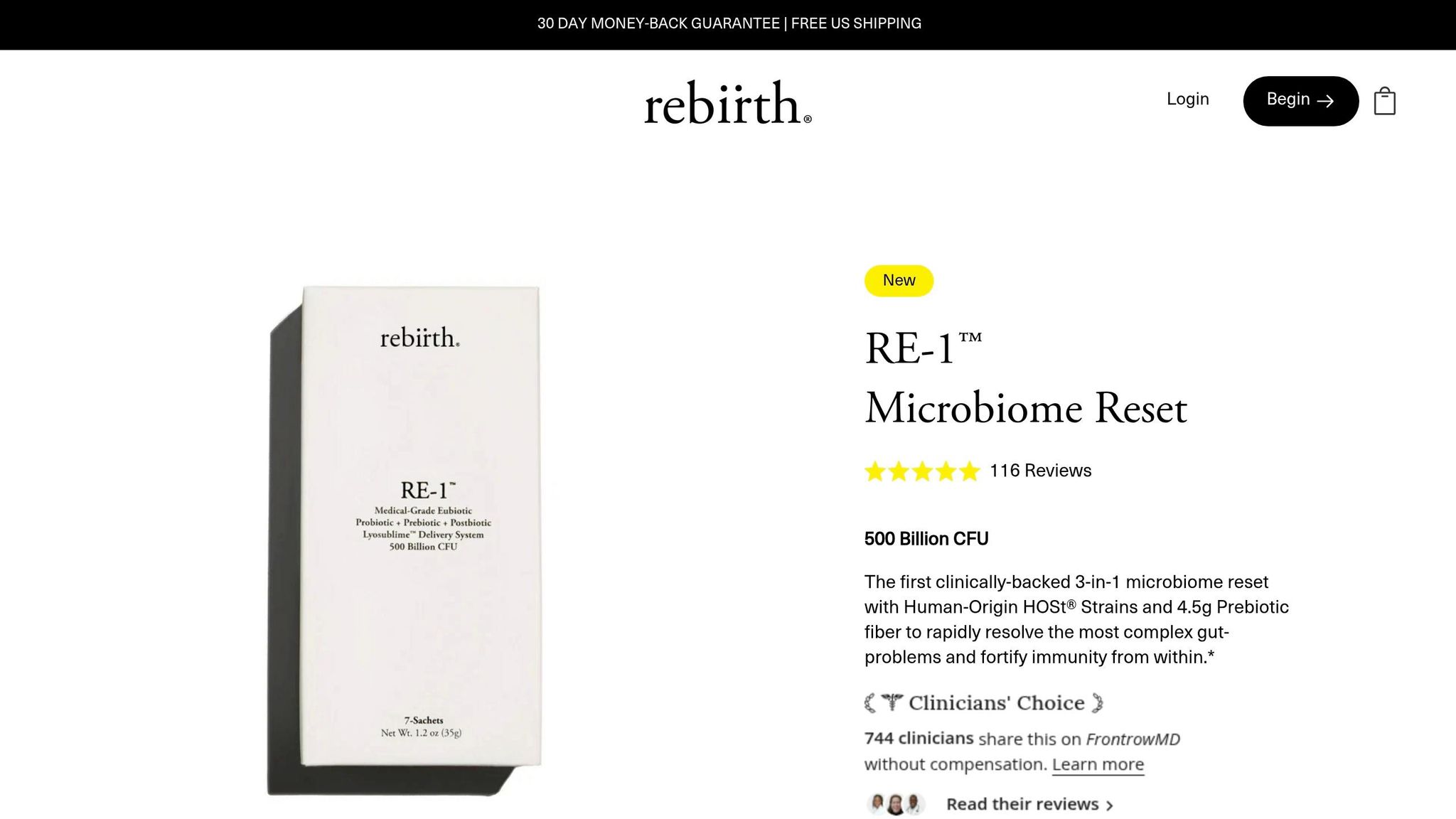
For readers looking for a more structured microbiome reset, Rebirth RE-1 is one option.
If you’ve already worked on sleep, stress, and diet but still deal with bloating, irregular stools, or day-to-day gut instability, Rebirth RE-1 offers a 3-in-1 eubiotic synbiotic and eubiotic in daily sachets with 500 billion CFU. It comes in 7-day, 4-week, and 12-week reset options.
A 7-day reset may fit short-term microbiome support. The 4-week and 12-week plans may be a better match for IBS symptoms that keep hanging around.
Rebirth RE-1 is not a treatment for IBS. It’s microbiome support, and it tends to fit best within a bigger plan that includes stress reduction, steady sleep, individualized nutrition, and medical oversight.
Key Takeaways on Stress, IBS, and Microbiome Health
Stress-linked IBS often calls for both trigger control and microbiome support.
Prebiotics, probiotics, postbiotics, and synbiotics may help ease bloating and irregular stools for some people [20][21][22]. But results differ from person to person, and the science is still changing.
The strongest IBS plan pairs microbiome support with steady stress reduction, enough sleep, evidence-based nutrition, and regular medical follow-up.
FAQs
Can stress alone trigger an IBS flare?
Yes. Stress on its own can plausibly set off an IBS flare by changing the gut microbiome fast and throwing normal gut function off balance.
Stress hormones such as cortisol and norepinephrine may help harmful bacteria grow while helpful bacteria drop. When that happens, the gut barrier can weaken, inflammation can go up, and bowel symptoms can get worse.
Over time, this shift may also play a role in dysbiosis, which can make symptoms more likely and tougher to manage.
Why does stress cause diarrhea for some people and constipation for others?
Stress doesn’t hit everyone’s gut the same way. For one person, it may speed things up. For another, it may slow things down.
That’s because stress can change the gut microbiome, weaken the gut lining, and increase inflammation. Those shifts can push bowel activity in different directions depending on the person.
Lack of sleep from stress can make things worse. So can a messed-up body clock. Both can worsen dysbiosis and disrupt gut-brain signaling, which can make IBS symptoms feel a lot less predictable.
When should I see a doctor for stress-related IBS symptoms?
See a healthcare provider if you have serious health concerns or if your symptoms stick around or get worse after starting a new regimen.
IBS can be tricky. That’s why medical guidance matters. A doctor can help make sure your plan matches your symptoms, health history, and overall needs. If you already have a medical condition, talk with your doctor before adding supplements like Rebiirth RE-1.