

Chronic stress can show up in your gut, your sleep, your mood, and even how often you get sick. If you notice bloating, bowel changes, reflux, brain fog, and poor sleep showing up at the same time, that pattern may point to gut-brain axis strain.
Here’s the short version:
- Stress can affect digestion fast by changing gut movement, sensitivity, and appetite.
- Common gut signs include bloating, gas, constipation, diarrhea, cramping, reflux, and nausea.
- Common non-gut signs include brain fog, low mood, poor sleep, fatigue, headaches, skin flares, and more frequent colds.
- Timing matters: symptoms often flare around work stress, poor sleep, rushed meals, extra caffeine, or late dinners.
- Tracking for 2 to 4 weeks can help me spot links between stress, meals, sleep, and symptoms.
- Red flags need medical care, not just tracking - especially blood in stool, black stools, fever, severe pain, weight loss, vomiting, dehydration, trouble swallowing, or diarrhea that wakes me from sleep.
One stat stands out: more than 40% of people report gut changes during stressful periods, and IBS affects about 7% to 16% of people in the U.S. That helps explain why stress-related gut symptoms are so common - and why they can feel hard to sort out.
What matters most is not one symptom by itself. It’s the cluster: gut symptoms plus sleep, mood, focus, and immune changes that keep coming back during stressful periods.
Below, I’d break this into a simple checklist, what patterns to watch, and when it’s time to call a doctor.
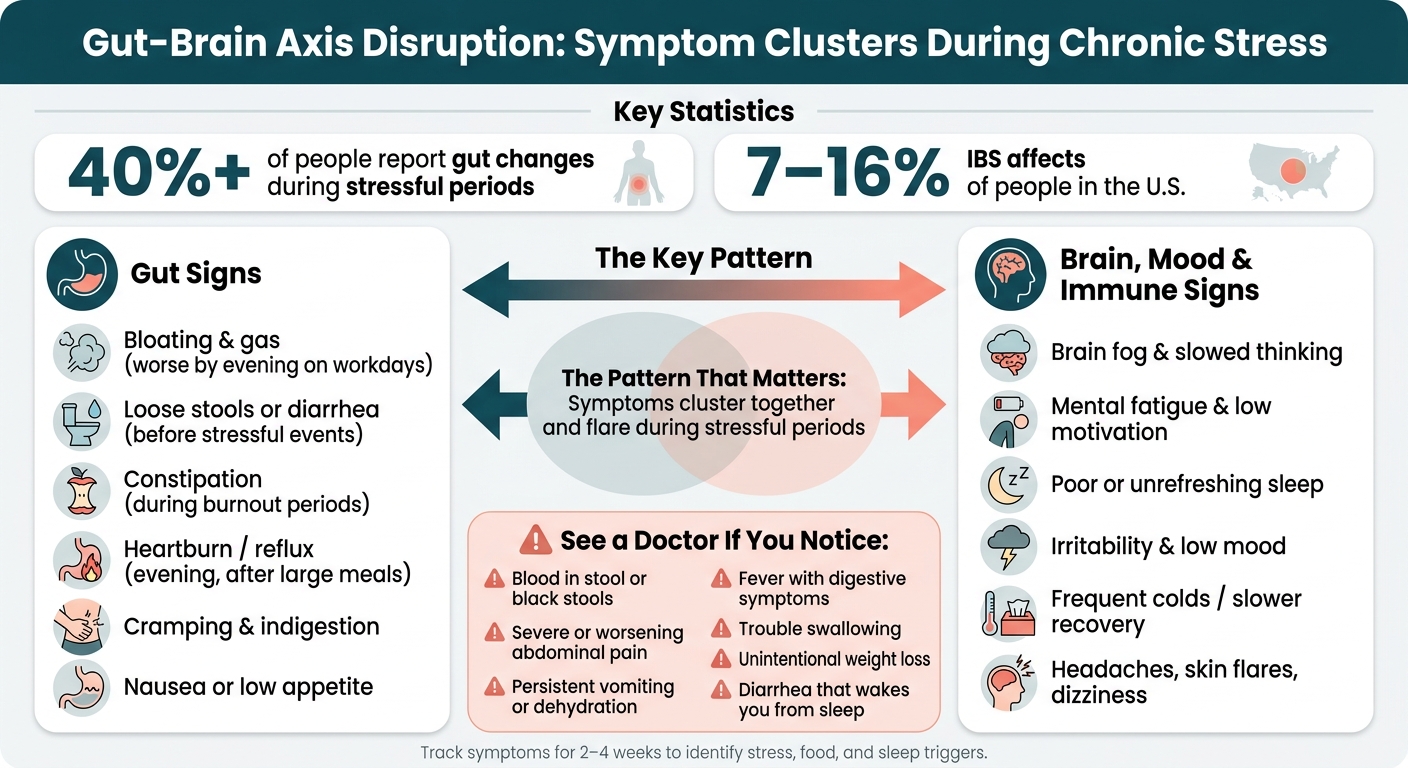
Gut-Brain Axis Disruption: Symptom Clusters During Chronic Stress
Gut-Brain Axis Explained: IBS, Anxiety, Stress & Gut Health Connection
sbb-itb-1bbfe7f
Checklist: Digestive Signs During Chronic Stress
Chronic stress can change how your gut moves, feels, and reacts to food. In fact, more than 40% of people report gastrointestinal changes during stressful periods.[13] This checklist can help you notice when symptoms show up and what seems to set them off.
Bloating, Gas, and a Tight or Knotted Stomach
Bloating often builds as the day goes on, then hits hardest by evening. For a lot of people, it gets worse on high-pressure workdays. That tight, knotted feeling in your stomach before a meeting or deadline may be part of your body’s stress response slowing or disrupting digestion.
Common triggers include rushed meals, skipped meals, and extra coffee. The pattern is often pretty clear: bloating starts about 30 to 120 minutes after eating, then eases on calmer days. This cycle often stems from gut-brain axis dysbiosis affecting how the body processes stress hormones.[2][3][4][6][7][8]
Irregular Stools, Urgency, or Constipation
Stress-related bowel changes can shift from one day to the next. Some people get urgent, loose stools before a presentation or stressful commute. Others notice fewer bowel movements in a week, hard stools, or that frustrating feeling of not being fully done.
Switching back and forth between constipation and diarrhea is especially common. It’s also a hallmark pattern in IBS, which is closely linked to anxiety and depression, which affects an estimated 7% to 16% of people in the U.S.[14][15] It helps to track whether symptoms pile up around stress and then calm down during rest, travel, or vacation.[1][5][8][9]
Cramping, Indigestion, Reflux, or Nausea
These symptoms often show up as a group, especially when stress and poor sleep hit at the same time. Cramping may feel like dull or sharp pain in the middle of the abdomen. It often gets worse during heavy workload days and may ease after a bowel movement.
Indigestion can look like food sitting heavily in your stomach, getting full too early, or belching more than usual. This tends to happen after rushed meals or meals eaten while distracted.
Heartburn and reflux often bunch up in the evening, especially after late or large dinners following a stressful day. Nausea or a drop in appetite before demanding days is another pattern worth watching. One longitudinal study found that psychological distress increased the odds of heartburn and reflux, with odds ratios from 1.9 to 5.4.[12]
Use the summary below to match symptoms with common stress patterns.
| Symptom | Common Stress-Related Triggers | Typical Timing/Pattern |
|---|---|---|
| Bloating and gas | Rushed meals, skipped meals, high-caffeine intake | Starts 30–120 minutes after meals; worse by evening on workdays |
| Loose stools or diarrhea | Pre-presentation anxiety, chronic work pressure | Urgent stools before stressful events; settles during rest |
| Constipation | Prolonged burnout, sedentary desk time, poor sleep | Fewer bowel movements during busy periods; eases with rest |
| Heartburn/reflux | Late-night eating, large meals, caffeine, alcohol | Evening or nighttime burning; clusters during sustained stress |
| Nausea or low appetite | High-pressure mornings, prolonged anxiety, poor sleep | Queasiness before demanding days; reduced hunger during stress peaks |
Digestive symptoms often show up alongside shifts in mood, sleep, energy, and immune function, which the next checklist covers.
Checklist: Brain, Mood, Sleep, and Immune Signs
Chronic stress doesn't just hit the gut. It can also show up as brain fog, rough sleep, low mood, new food sensitivities, and getting sick more often. So if gut symptoms are only one piece of what’s going on, it helps to look at brain, sleep, and immune signs too.
Brain Fog, Mental Fatigue, and Low Mood
Brain fog during chronic stress can look like slowed thinking, poor concentration, forgetfulness, trouble finding words, or trouble getting started on simple tasks. Mental fatigue often feels like low mental energy even after a full night’s sleep. Decisions take more effort. Patience gets shorter. Motivation dips.
The main thing to watch is timing. If these mental symptoms show up on the same days as bloating, irregular stools, or reflux, that overlap matters. Track irritability, overwhelm, anxiety, low mood, and low motivation when they rise along with gut symptoms.
Poor sleep can make these mental changes easier to brush off.
Poor Sleep and Unrefreshing Nights
Trouble falling asleep, waking up often, waking too early, or sleeping through the night but still feeling worn out can point to stress-related gut-brain disruption. Pay attention to restless sleep, vivid dreams, waking unrefreshed, or that very specific feeling of being exhausted but wired at bedtime. Daytime fatigue is also worth flagging, especially when it shows up with digestive complaints.
Food Reactions, Frequent Illness, and Other Body-Wide Signs
Chronic stress can show up outside the digestive tract too. You might notice new food sensitivities, more frequent colds, slower recovery, headaches, skin flares, dizziness, nausea, or unexplained weight changes. These are best viewed as supporting signals. On their own, they may seem random. But when they show up next to gut issues and mood changes, the pattern gets a lot harder to dismiss.
Use the summary below to compare symptom clusters at a glance.
| Symptom Cluster | What It May Look Like |
|---|---|
| Brain and mood | Brain fog, slowed thinking, forgetfulness, poor concentration, mental fatigue, irritability, low motivation, anxiety, low mood alongside gut symptoms |
| Sleep disruption | Trouble falling asleep, frequent waking, waking too early, waking unrefreshed, restless sleep or vivid dreams, daytime fatigue |
| Frequent illness | More frequent colds, slower recovery, feeling run down |
| Body-wide signals | Headaches, dizziness, skin flares, nausea, new food sensitivities, unexplained weight changes |
If these signs keep repeating, track them each day so you can spot triggers and patterns.
Checklist: How to Track Symptoms at Home
Spotting gut-brain patterns from memory is tough. A simple daily log can make a big difference. It usually takes 5 to 10 minutes a day and gives you something concrete to review with your doctor.
What to Record Each Day
Start with the symptom list above, then write down what happened that day. The goal is simple: track gut symptoms, sleep, stress, mood, and immune health. A 0–10 scale helps when you want to rate how bad something felt. And exact times matter more than most people think, because they help you line symptoms up with meals, stress spikes, or a rough night of sleep.
| Category | What to Record | How to Note It |
|---|---|---|
| Digestive symptoms | Bloating, gas, cramping, tight stomach, reflux, nausea, urgency | Type + severity 0–10 + time of onset |
| Stools | Frequency, consistency, urgency, straining, changes from baseline | Bristol Stool Scale 1–7 + time of each bowel movement |
| Sleep | Bedtime, wake time, awakenings, total hours, quality 0–10 | Hours slept + quality 0–10 |
| Stress | Morning and evening stress, main stressor | 0–10 + brief note |
| Mood and brain fog | Mood, focus, mental fatigue, energy | Short descriptor: low / neutral / positive |
Tracking these shifts is vital because chronic stress often triggers the gut-brain axis in anxiety and depression, creating a cycle of physical and mental symptoms. | Food and drink | Meals, snacks, drinks, supplements, and context | Time + portion size + eating context |
Also log medications, supplements, caffeine, alcohol, and gum. Those details can look minor at first, but they can help explain a flare.
How Long to Track Before Patterns Appear
Track for at least 2 weeks. If your symptoms shift with work cycles, travel, or menstrual cycles, go longer - 2 to 4 weeks is better.[16][10][17]
That extra time helps you spot repeat links between a food and a flare, especially when it’s something you only eat once a week or less.[16][7][11][18] After that, look back at the 6 to 24 hours before each flare. If the same food, stressor, or poor sleep keeps showing up before symptoms hit, that’s worth bringing to a clinician.[16][7][11]
When Tracking Helps and When to See a Doctor
Tracking is most useful for recurrent, mild to moderate symptoms that seem tied to stress, food, or sleep.
But there’s a limit. If your notes point to any red flags, don’t keep waiting and logging. Get medical care instead.[19][20][21][22][23][24][25][26][27]
| Red-Flag Symptom | Recommended Action |
|---|---|
| Blood in stool or black/tarry stools | Seek urgent medical care |
| Severe or worsening abdominal pain | Seek same-day medical evaluation |
| Persistent vomiting or signs of dehydration | Seek urgent care |
| Fever alongside digestive symptoms | Contact your doctor promptly |
| Trouble swallowing | Schedule a medical appointment soon |
| Unintentional weight loss | See your doctor for evaluation |
| Nocturnal diarrhea (waking you from sleep) | See a doctor; this is not typical of stress alone |
Conclusion: Use the Checklist to Spot Patterns and Support Recovery
Chronic stress can hit digestion, sleep, mood, and immune function at the same time through the gut-brain axis. And that’s what makes this tricky: one symptom on its own, like bloating or poor sleep, can come from a lot of different things. But when digestive, cognitive, and sleep issues show up together - or flare during stressful periods - that pattern is worth paying attention to.
Tracking symptoms for 2 to 4 weeks can help you spot links between stress, meals, sleep, illness, and how you feel day to day. It also gives you something concrete to bring to a doctor visit, which can make that conversation a lot more useful.
If microbiome support is part of your plan, one clinician-guided option is Rebirth RE-1.
If gut, mood, sleep, or immune symptoms keep coming back, get worse, or start affecting daily life, bring your notes to a healthcare professional. Seek medical care sooner if you notice blood in your stool, unexplained weight loss, fever, severe pain, or persistent diarrhea or constipation.
FAQs
How does stress disrupt the gut-brain axis?
Chronic stress sets off the HPA axis, which leads to the release of cortisol and catecholamines such as norepinephrine. Those stress hormones can throw the gut off balance. In practice, that can mean fewer helpful bacteria and more room for harmful species to grow.
Stress can also wear down the intestinal barrier, making it more permeable and letting toxins pass into the bloodstream. From there, inflammation may increase, short-chain fatty acids may drop, and neurotransmitter production can get disrupted, including serotonin made in the gut.
Can stress cause gut symptoms without IBS?
Yes. Chronic stress can trigger gut symptoms even if you don’t have IBS.
Through the gut-brain axis, stress hormones can change the gut environment, weaken the intestinal lining, increase gut permeability, and throw off the balance of gut microbes.
That can lead to bloating, digestive discomfort, fatigue, and inflammation. Stress management matters if you want to help restore gut-brain balance and ease those symptoms.
What patterns should I look for in a symptom log?
Track the basics each day:
- Bowel movement frequency
- Stool consistency
- Bloating
- Gas
- Abdominal discomfort
- Energy levels
- Meals
- Sleep
- Stress
- When you take Rebiirth RE-1
Then step back and review your notes once a week, not day by day. That bigger view makes it easier to spot patterns, like more steady digestion or less bloating.
Stick with tracking for a few weeks. That can help you see whether your current protocol is helping restore your gut microbiome and gut-brain axis.